Choosing an industrial machinery manufacturer in 2026 requires more than comparing prices and production capacity. The right partner should prove how its machines perform under real operating pressure. Look for documented test results, traceable components, trained technicians, and responsive after-sales support.
As W. Edwards Deming stated, “Quality comes not from inspection, but from the improvement of the production process.” His principle remains highly relevant to industrial machinery manufacturing. A reliable manufacturer should demonstrate controlled processes before equipment reaches your facility. Ask to see calibration records, factory acceptance testing procedures, maintenance instructions, and evidence from comparable installations.
Details matter.
A machining center may look impressive in a showroom. Yet its value depends on repeatable accuracy, energy consumption, spare-part availability, and safe integration with your existing line. Visit the factory if possible. Observe how workers document defects, protect finished surfaces, and handle last-minute design changes. These small actions often reveal operational discipline.
Independent certifications can support your assessment, but certificates alone do not guarantee performance. Speak with current customers, preferably those using similar materials, workloads, and production volumes. Request realistic delivery timelines, warranty exclusions, software update policies, and service response commitments.
Some buyers still choose the lowest quotation. That decision can become expensive when downtime, retraining, or unavailable components appear later. Even experienced procurement teams can miss hidden lifecycle costs. A practical evaluation should compare total ownership costs, technical fit, supplier stability, and improvement capability.
This guide explains how to assess manufacturers with evidence, caution, and a clear understanding of your production goals.
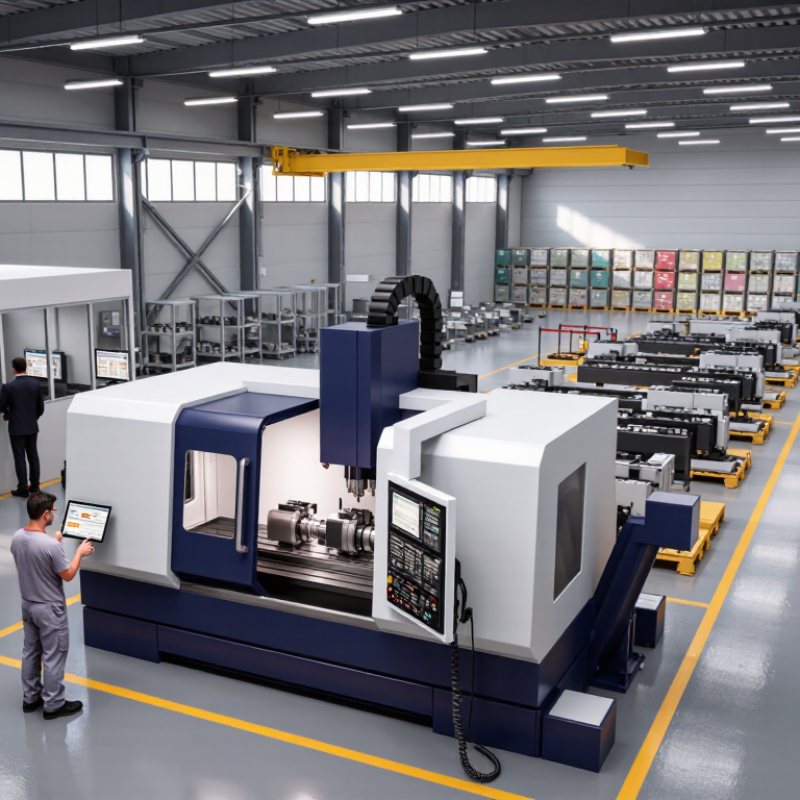
Choosing an industrial machinery manufacturer in 2026 starts with a precise production definition. Do not begin with a catalogue. Begin at the workpiece, process, and daily output. Record material type, dimensions, tolerances, cycle time, shift pattern, and available floor space. Include temperature, dust, humidity, power supply, and operator skill levels. These details shape machine configuration more than headline capacity. A press rated for 500 units per hour may perform differently with fragile materials or frequent changeovers. Your real target matters.
Translate goals into measurable acceptance criteria. Specify throughput, first-pass yield, repeatability, setup time, noise limits, and energy use. Ask how each figure will be tested before delivery. Request sample runs using your actual materials, tooling, and operating sequence. Review inspection records, maintenance plans, training scope, spare-parts access, and software support. An experienced manufacturer should explain assumptions, exclusions, and likely bottlenecks plainly. Vague promises are expensive. Independent engineering review can expose missing utilities or unrealistic output expectations. Verify technical documentation and applicable safety requirements before approval.
Production goals also include resilience. Consider planned expansion, manual backup procedures, cleaning access, and safe changeover time. Calculate total cost across installation, consumables, maintenance, downtime, and disposal. Purchase price alone hides operational risk. In one factory assessment, our initial output estimate was too optimistic because loading time was overlooked. That mistake changed the layout and staffing plan. It was avoidable. Leave room for uncertainty, and document every decision in the technical specification.
Choosing an industrial machinery manufacturer in 2026 requires more than comparing hourly rates. Ask where its engineers have solved problems like yours: abrasive materials, tight tolerances, heat, or continuous shifts. Request project records, not polished promises. A credible team can explain failure modes, maintenance intervals, and design changes made after field feedback. Site visits are useful. Watch how technicians label parts, control drawings, and respond to difficult questions. Vague answers deserve a second look.
Quality systems reveal whether good results are repeatable. Review incoming-material checks, weld procedures, calibration records, and final acceptance tests. Ask how nonconforming parts are isolated and corrected. Traceability should reach critical components, inspection results, and software revisions. If the manufacturer uses digital records, confirm access controls and backup practices. A certificate alone proves limited performance. Audit scope and expiry matter. Speak with quality personnel, not only sales staff. Small gaps can become expensive downtime.
Industry certifications can support trust when matched to actual work. Verify certificates through issuing bodies, check covered sites, and confirm the machinery falls within scope. Relevant standards may address quality management, welding, electrical safety, or environmental controls. Do not treat every logo as equal evidence. Ask for recent audit findings and corrective-action closure, where disclosure is appropriate. The honest answer may be uncomfortable. A manufacturer that admits a recurring defect and shows measured improvement can be more reliable than one claiming perfection. Build a scorecard covering expertise, process discipline, certification validity, service response, and documented references. Procurement spreadsheets rarely capture engineering maturity.
A practical procurement scorecard for assessing manufacturer expertise, quality systems, and industry certifications.
The percentages represent a suggested buyer-defined weighting: quality systems receive the highest priority, followed by technical expertise, relevant certifications, and production traceability.
Machinery performance should be judged under real production conditions, not showroom demonstrations. Ask for verified data on cycle time, energy use, output consistency, and unplanned downtime. Request test records from similar materials and operating temperatures. Measure the details. A machine that runs quickly may still create costly defects. During site visits, inspect maintenance access, noise levels, guarding, and operator controls. These details reveal practical engineering quality.
Customization matters when your process does not fit standard specifications. Discuss tooling, dimensions, control logic, safety interfaces, and future capacity before signing. An experienced manufacturer should explain which changes are reliable and which may increase risk. I have seen projects fail because custom features were accepted without enough production testing. That mistake is easy to repeat. Require a documented acceptance test using representative workloads, not ideal samples.
Technology integration should improve decisions, not add impressive screens. Check compatibility with existing controllers, sensors, data systems, and maintenance software. Confirm communication standards, cybersecurity controls, user permissions, and data ownership. Ask how updates will be managed over the machine’s service life. Test it live. A connected system is not automatically intelligent. Review response times, alarm accuracy, and offline operation with technical staff. No scorecard is perfect, so leave room for operator feedback and independent verification.
Choosing an industrial machinery manufacturer in 2026 requires more than comparing purchase prices. Calculate the total cost across the machine’s expected service life. Include installation, operator training, energy use, tooling, maintenance, spare parts, and downtime. A quotation may look attractive until one delayed bearing stops production for three days. Ask for a cost model with clear assumptions. Then test those assumptions against your own workload, materials, and shift patterns.
Delivery capability deserves practical verification. Request a realistic production schedule, not only a promised date. Check factory capacity, quality-control stages, export experience, and contingency plans for critical components. A factory acceptance test should use samples similar to your actual production materials. Record cycle time, accuracy, noise, and safety performance. Video evidence helps, but an on-site inspection is stronger. Plans can fail.
After-sales support often decides whether equipment becomes an asset or an expensive obstruction. Confirm warranty coverage, remote diagnostic methods, technician response times, and local service arrangements. Ask how many critical spare parts are held regionally, and request prices for common replacements. Speak with recent customers about response quality, not just machine performance. Their experience may reveal slow documentation or unclear responsibility. No evaluation model is perfect. Leave room for risk, especially when the manufacturer avoids specific answers. A dependable supplier provides manuals, training records, maintenance schedules, and a named support contact before the purchase order is signed.
A practical, brand-neutral evaluation framework for comparing industrial machinery manufacturers. Use documented quotations, service records, factory references, and contract terms to validate each figure before making a purchase decision.
| Evaluation Category | Key Metric | Recommended Measurement | Suggested Acceptance Benchmark | Evidence to Request | Suggested Weight |
|---|---|---|---|---|---|
| Total Cost | Purchase price | Compare the complete equipment price, including standard tooling, controls, safety systems, commissioning, packaging, and documented exclusions. | Use a like-for-like quotation with identical technical specifications. | Itemized quotation, technical specification, inclusions and exclusions list, payment schedule. | 15% |
| Total Cost | Five-year total cost of ownership | Calculate purchase price + installation + energy + labor + planned maintenance + spare parts + downtime cost − residual value. | Select the lowest verified five-year cost, not automatically the lowest purchase price. | Five-year cost model, energy consumption data, maintenance schedule, spare-parts price list. | 15% |
| Total Cost | Energy consumption | Measure energy used per operating hour or per finished unit under the same production conditions. | Require a stated operating load, test method, and tolerance; avoid comparisons based only on rated motor power. | Factory test data, operating assumptions, efficiency certificates where applicable, acceptance-test procedure. | 6% |
| Total Cost | Maintenance and spare-parts cost | Review scheduled maintenance hours, consumable replacement intervals, critical-part prices, and expected lead times. | Critical spare parts should have defined availability targets and documented replacement intervals. | Preventive-maintenance plan, parts catalog, service-hour rates, recommended spare-parts inventory. | 8% |
| Delivery Capability | Quoted lead time | Measure the period from receipt of the agreed order information and advance payment to readiness for shipment. | The contract should state a fixed schedule, milestone dates, and consequences for unjustified delay. | Production schedule, capacity statement, milestone plan, contractual delivery terms. | 8% |
| Delivery Capability | On-time delivery performance | Calculate the percentage of comparable projects delivered by the contractual date during the previous 12–24 months. | Target at least 90% on-time delivery for comparable equipment projects. | Redacted project references, delivery-performance report, customer references, delay register. | 8% |
| Delivery Capability | Factory acceptance testing | Confirm that performance, safety, dimensional, control, and documentation checks occur before shipment. | A signed FAT protocol should define test conditions, pass/fail criteria, and corrective-action deadlines. | FAT checklist, inspection-and-test plan, calibration records, sample test report. | 7% |
| Delivery Capability | Installation and commissioning readiness | Assess site requirements, utilities, foundation details, training, commissioning duration, and local technical coverage. | All site prerequisites and responsibilities should be assigned before shipment. | Installation manual, utility schedule, site-readiness checklist, commissioning plan, training agenda. | 6% |
| After-Sales Support | Technical response time | Measure the time from a logged service request to acknowledgement and initial troubleshooting action. | Critical production stoppages: acknowledgement within 1 business hour; non-critical issues: within 1 business day. | Service-level agreement, support-channel details, escalation matrix, service-ticket examples. | 8% |
| After-Sales Support | On-site service capability | Evaluate the availability of trained service engineers within the equipment’s operating region. | Require a documented target for on-site attendance, such as 24–72 hours for critical failures. | Engineer-location map, technician qualifications, travel policy, emergency-service coverage. | 7% |
| After-Sales Support | Parts availability | Review stock locations, order-processing time, standard dispatch time, and obsolescence arrangements for critical parts. | Define a written target for critical-part fulfillment and a minimum support period after delivery. | Parts availability policy, regional inventory list, obsolescence notice procedure, service-parts agreement. | 6% |
| After-Sales Support | Warranty coverage | Compare warranty duration, covered components, labor and travel coverage, exclusions, and claim-response process. | Warranty terms should be specific, measurable, and linked to documented acceptance criteria. | Warranty certificate, exclusions list, claim workflow, response-time commitment. | 6% |
| Risk and Compliance | Safety and regulatory conformity | Verify conformity with the laws, standards, and workplace-safety requirements applicable at the installation site. | No unresolved safety finding should remain at final acceptance. | Risk assessment, conformity documentation, safety-circuit validation, operating and maintenance manuals. | 5% |
| Risk and Compliance | Cybersecurity and data access | Assess remote access controls, user permissions, backup procedures, software-update policy, and data ownership. | Remote access must be authorized, logged, revocable, and separated from unrestricted network access. | Network architecture, access-control policy, backup procedure, software-license and update terms. | 5% |
Scoring method: Rate each metric from 0 to 5 using verified evidence, multiply the rating by the suggested weight, and compare the resulting weighted scores. Treat the benchmarks as procurement targets rather than universal legal requirements; adapt them to machine type, production risk, location, duty cycle, and applicable regulations.
Choosing an industrial machinery manufacturer in 2026 requires evidence, not polished brochures. A factory audit should examine production areas, testing benches, and spare-parts storage. Ask to see calibration certificates, maintenance logs, operator training records, and recent nonconformance reports. Real details matter. Can the team explain a delayed shipment without changing the subject? Observe one machine during a test cycle. Listen for unusual vibration. Check whether measurements match the inspection report. Remote audits save time, but an in-person visit often reveals workflow problems hidden on video. Still, an audit is only a snapshot.
References should come from operations similar to yours. Request two or three recent customers, not only selected testimonials. Ask how the equipment performs after six months, not on delivery day. Discuss downtime, response speed, training quality, and whether promised output was achieved. I once treated a glowing reference as sufficient. That was a mistake. The customer had different materials, shift patterns, and tolerance ranges. A useful reference call needs comparable conditions. Request permission to view running equipment, if practical. Photos help, but live evidence is stronger. Also verify who actually provides service. Sales promises may not reflect the support team’s capacity.
The contract should convert technical promises into measurable duties. Specify capacity, cycle time, acceptable defect rates, delivery milestones, installation scope, and documentation. Include factory acceptance testing with agreed procedures and recorded results. Define correction timelines for missed performance and confirm spare-parts availability. Payment stages can follow verified progress rather than optimistic dates. Have qualified legal and engineering advisers review unclear language. I would not rely on a handshake. Yet detailed contracts cannot repair weak communication. Ask the manufacturer to explain every critical clause in plain English. Their answers often expose assumptions neither side documented.
Arsun Engineers is the well-known manufacturer, exporter, and supplier of highly operational machines.