China’s manufacturing base has moved far beyond low-cost volume production. It now combines precision machining, robotics, electronics, materials science, and industrial software.
The scale is substantial. The United Nations Industrial Development Organization reports that China remains the world’s largest manufacturing economy by value added. China has held this position for more than a decade. The International Federation of Robotics recorded 276,288 industrial robot installations in China during 2023. That figure represented about 51% of global installations. These indicators provide useful context for evaluating advanced manufacturing suppliers, but they do not prove that every factory performs equally well.
This guide examines ten notable Chinese suppliers across automation, CNC equipment, semiconductor tools, aerospace components, and intelligent production systems. Selection should consider engineering capability, plant certification, delivery performance, after-sales support, and evidence from verified customers. ISO 9001 is relevant, but it should not become the only test. Site audits often reveal more than polished brochures. WIPO’s Global Innovation Index 2024 ranked China 11th worldwide, reflecting stronger research and commercialization capacity. Still, innovation rankings are national measurements, not supplier guarantees.
No ranking is perfectly neutral. Some private companies disclose limited financial or production data. Others perform strongly in specialized niches but lack international service networks. The following list therefore combines public reports, technical documentation, industry experience, and observable market presence. Readers should verify certifications, sample quality, lead times, and contract terms before making a purchasing decision. A promising supplier can still fail under tight tolerances or urgent delivery pressure. That practical gap deserves attention.
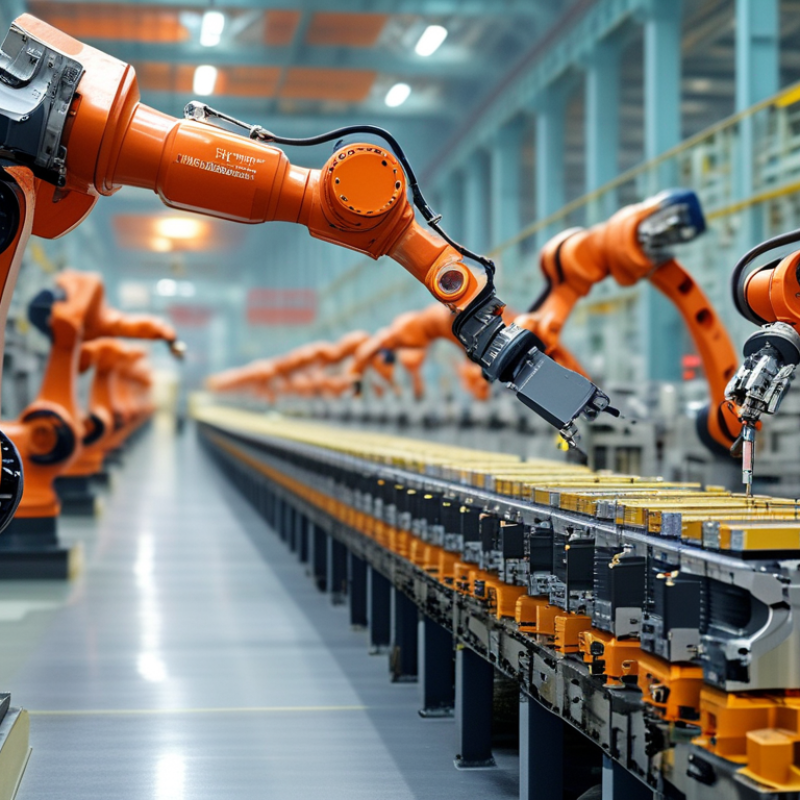
China’s advanced manufacturing suppliers cover more than factories producing finished machines. They include providers of precision materials, industrial components, production equipment, embedded software, testing systems, and process engineering. The scope also includes suppliers supporting intelligent, green, and digitally connected production.
A practical definition should combine technology depth, manufacturing quality, and measurable delivery capability. According to China’s National Bureau of Statistics, high-tech manufacturing value added grew by about 8.9% in 2024, exceeding overall industrial growth. The same data shows equipment manufacturing remained a major industrial growth engine. These figures suggest that advanced suppliers should be assessed within complete supply chains, not by product appearance alone.
Automation is another useful indicator. The International Federation of Robotics reported 276,288 industrial robot installations in China during 2023, representing more than half of global installations. This creates demand for suppliers with stronger control systems, sensors, precision machining, and maintenance expertise. However, automation alone does not prove advanced capability. A supplier may own modern equipment but lack stable process control or reliable after-sales support.
The boundary is not perfectly clean. That matters. For a credible China top ten evaluation, buyers should review certification records, defect rates, research investment, delivery consistency, cybersecurity practices, and environmental performance. Reputation helps, but audited evidence is stronger. The ranking should remain flexible as technologies, regulations, and customer requirements change.
Ranking China’s top ten advanced manufacturing suppliers requires more than counting factories or quoting export volume. A useful scorecard measures engineering depth, process design, material selection, simulation, and prototyping. It also tests whether engineers can improve a drawing without weakening its purpose. Reviewers should inspect production floors, not rely only on polished presentations. Look for calibrated instruments, controlled work instructions, clean change records, and operators who explain critical tolerances. Small details matter.
Quality deserves measurable weight. Assess defect rates, corrective-action speed, batch traceability, inspection coverage, and relevant independent certification. Ask for anonymized production records and sample reports. Delivery performance should include lead-time accuracy, peak-demand capacity, packaging quality, and equipment-failure recovery plans. A low quotation means little if revisions create hidden delays. Interview recent customers, but separate verified evidence from sales language.
An advanced supplier should demonstrate responsible management of energy, waste, worker safety, and data access. Evaluate cybersecurity controls when designs or production data move between systems. Financial stability and workforce retention can indicate whether improvements will last. My ranking would combine audited evidence, site observations, technical trials, and customer references. It would give heavier scores to repeatable performance. No ranking is perfect. Capability changes. A serious review should disclose missing evidence, revisit scores annually, and question impressive equipment producing inconsistent parts. That judgment is uncomfortable, but reliability is rarely visible in a showroom.
China’s top 10 advanced manufacturing suppliers reflect a broad industrial ecosystem, not one single sector. Their profiles commonly include precision machining, industrial robotics, power electronics, aerospace materials, medical equipment, sensors, battery systems, automation software, CNC equipment, and energy-saving machinery. Each supplier serves different production needs, from micron-level components to complete factory lines.
Reliable profiles should examine verified capabilities, rather than impressive claims. Useful evidence includes audited quality systems, laboratory testing, delivery records, engineering teams, and documented export experience. Factory visits can reveal details that brochures often miss, such as clean production areas, calibration routines, and operator training. However, any “top 10” ranking remains imperfect. Market positions change quickly, and public data may not show private customer relationships. That limitation deserves attention.
Tips: Compare suppliers by application, not reputation alone. Request recent inspection records, sample parts, material certificates, and realistic lead times. Check whether engineering support continues after installation. A supplier with strong communication may reduce costly production delays. Small trial orders can expose inconsistencies before full-scale purchasing begins. Look for traceability at every stage, from raw materials to final packaging. Ethical sourcing and compliance records also matter. Good data takes time.
China’s top ten advanced manufacturing suppliers are best judged by core technology, product depth, and industrial use. A practical shortlist should cover industrial robots, CNC systems, power semiconductors, machine vision, precision sensors, battery equipment, additive manufacturing, automation software, smart logistics, and high-end materials. These suppliers support factories making vehicles, medical devices, energy equipment, and aerospace components.
The scale is substantial. The International Federation of Robotics reported 276,288 industrial robot installations in China during 2023, equal to about 51% of global installations. This demand strengthens domestic capabilities in servo drives, robotic arms, controllers, and predictive maintenance. The International Energy Agency also reported that China produced more than 80% of global battery cells in 2023. That share reflects strong process equipment, thermal control, coating, and testing supply chains. Products are increasingly designed for harsh shop-floor conditions, with sealed sensors and millisecond-level control.
The gap remains real. Some suppliers still depend on imported lithography components, advanced software, or ultra-precise bearings. Reliability testing can also differ between pilot lines and full production. Execution matters. Buyers should examine failure rates, calibration records, cybersecurity controls, and service response times. Data from the World Intellectual Property Organization’s Global Innovation Index 2024 places China among the leading innovation economies, yet patent volume alone cannot prove factory performance. A credible top-ten assessment needs audited delivery data, verified application results, and evidence from operating plants.
An industry-segment overview of major advanced manufacturing supplier capabilities in China
| Rank | Supplier Segment | Core Technologies | Main Product Families | Typical Materials | Industrial Applications | Common Quality Frameworks | China Manufacturing Strength |
|---|---|---|---|---|---|---|---|
| 01 | Precision CNC Machining Suppliers | Multi-axis milling, turning, grinding, electrical discharge machining, automated inspection, and digital production scheduling | Precision housings, shafts, brackets, manifolds, tooling components, and low-to-medium volume prototypes | Aluminum, stainless steel, carbon steel, titanium, copper alloys, engineering plastics, and composites | Aerospace structures, medical devices, robotics, automotive systems, industrial machinery, and energy equipment | ISO 9001; ISO 13485 for applicable medical production; AS9100 for applicable aerospace production | Strong supplier network for metal materials, tooling, surface treatment, and rapid export fulfillment |
| 02 | Industrial Robotics and Motion-Control Suppliers | Servo control, machine vision, robotic kinematics, force sensing, end-of-arm tooling, and factory integration | Articulated robots, collaborative robots, mobile robots, servo drives, controllers, grippers, and turnkey cells | Aluminum alloys, alloy steel, permanent magnets, copper windings, sensors, and electronic control components | Welding, assembly, palletizing, warehousing, electronics manufacturing, automotive production, and inspection | ISO 10218; ISO/TS 15066 for collaborative applications; ISO 9001 | Large domestic automation market supporting fast integration, customization, and cost-effective deployment |
| 03 | Power Electronics and Semiconductor Packaging Suppliers | Power module packaging, wafer-level assembly, wire bonding, die attach, thermal management, and automated testing | Power modules, insulated substrates, semiconductor packages, rectifiers, inverters, and power-management assemblies | Silicon, silicon carbide, gallium nitride, copper, ceramics, epoxy compounds, and thermal interface materials | Electric vehicles, renewable-energy inverters, industrial drives, data centers, rail systems, and consumer electronics | ISO 9001; IATF 16949 for automotive supply; JEDEC-based reliability testing | Integrated electronics supply chains and growing capacity in wide-bandgap semiconductor manufacturing |
| 04 | Lithium-Ion Battery Cell and Pack Suppliers | Electrode coating, cell formation, battery-management systems, thermal control, pack integration, and automated safety testing | Prismatic cells, cylindrical cells, pouch cells, battery modules, energy-storage systems, and battery-management units | Lithium iron phosphate, nickel-manganese-cobalt cathodes, graphite, copper foil, aluminum foil, separators, and electrolytes | Electric vehicles, buses, grid storage, backup power, material-handling equipment, and portable industrial systems | ISO 9001; IATF 16949 for automotive supply; UN 38.3 and IEC 62619 where applicable | Extensive upstream and downstream ecosystem covering materials, cells, packs, vehicles, and energy storage |
| 05 | Injection Molding and Polymer Manufacturing Suppliers | High-speed molding, insert molding, micro-molding, mold-flow analysis, automated assembly, and precision toolmaking | Technical enclosures, connectors, medical housings, optical components, automotive interior parts, and consumer-product assemblies | Polycarbonate, ABS, nylon, PEEK, polypropylene, thermoplastic elastomers, glass-filled polymers, and liquid silicone rubber | Medical equipment, electronics, automotive interiors, telecommunications, appliances, and industrial controls | ISO 9001; ISO 13485 for applicable medical production; IATF 16949 for automotive supply | High-volume tooling capacity, competitive production economics, and broad polymer-processing expertise |
| 06 | Sheet-Metal Fabrication and Industrial Enclosure Suppliers | Laser cutting, CNC bending, stamping, welding, powder coating, electrophoretic coating, and automated dimensional inspection | Electrical cabinets, machine frames, server enclosures, chassis, brackets, heat shields, and structural assemblies | Galvanized steel, stainless steel, aluminum, cold-rolled steel, copper, and coated sheet materials | Power distribution, telecommunications, industrial automation, data centers, transportation, and HVAC equipment | ISO 9001; ISO 14001 for environmental management; welding procedures aligned with applicable ISO standards | Flexible production from prototypes to mass manufacturing with extensive metal-processing subcontracting capacity |
| 07 | Die Casting and Metal Forming Suppliers | High-pressure die casting, low-pressure casting, forging, heat treatment, trimming, machining, and leak testing | Motor housings, transmission cases, structural castings, pump bodies, heat sinks, and lightweight vehicle components | Aluminum alloys, magnesium alloys, zinc alloys, ductile iron, carbon steel, and heat-resistant alloys | Automotive powertrains, electric motors, industrial pumps, consumer hardware, rail equipment, and aerospace support systems | ISO 9001; IATF 16949 for automotive supply; heat-treatment and material traceability controls | Strong nonferrous-metal supply base, large casting capacity, and mature tooling-development ecosystem |
| 08 | Printed Circuit Board and Electronics Manufacturing Suppliers | Multilayer PCB fabrication, surface mounting, through-hole assembly, automatic optical inspection, functional testing, and box build | Rigid PCBs, flexible circuits, rigid-flex boards, assembled control boards, gateways, sensors, and embedded systems | Copper-clad laminates, polyimide, FR-4 materials, solder alloys, copper, and electronic components | Industrial controls, telecommunications, automotive electronics, medical devices, appliances, and aerospace electronics | ISO 9001; IPC-A-610; IATF 16949 for automotive supply; ISO 13485 for applicable medical production | Dense electronics clusters enable rapid sourcing of components, boards, assembly, testing, and final integration |
| 09 | Additive Manufacturing and Metal 3D-Printing Suppliers | Laser powder-bed fusion, selective laser melting, material extrusion, post-processing, powder qualification, and digital design optimization | Lightweight brackets, medical implants, lattice structures, tooling inserts, heat exchangers, and functional prototypes | Titanium alloys, nickel alloys, stainless steel, aluminum alloys, cobalt-chrome, engineering polymers, and ceramic materials | Aerospace, medical implants, dental equipment, mold tooling, energy systems, research, and customized industrial components | ISO/ASTM 52900 terminology; ISO 9001; ISO 13485 for applicable medical production | Growing equipment, powder, software, and service ecosystem supported by aerospace and medical applications |
| 10 | Industrial Bearings, Gears, and Transmission Suppliers | Precision forging, gear hobbing, carburizing, grinding, bearing raceway finishing, lubrication engineering, and life testing | Ball bearings, roller bearings, planetary gearboxes, reducers, couplings, linear guides, and precision transmission units | Bearing steel, alloy steel, stainless steel, powder-metal components, engineered polymers, seals, and lubricants | Machine tools, robotics, wind turbines, construction machinery, automotive systems, industrial motors, and logistics equipment | ISO 9001; ISO 281 life-rating methods; IATF 16949 for automotive supply where applicable | Established metallurgy, heat-treatment, machining, and component-testing capabilities across multiple industrial regions |
China’s top ten advanced manufacturing suppliers should be judged by market reach, innovation capacity, and resilience—not shipment volume alone. A supplier serving several continents needs stable certification, local service teams, and traceable components. These details often decide whether a factory line starts on schedule.
The International Federation of Robotics reported 276,288 industrial robot installations in China during 2023, representing about 51% of global installations. This signals strong domestic demand for automation suppliers. However, installation volume does not prove technological leadership. WIPO’s Global Innovation Index 2024 placed China 11th worldwide, while noting its strength in patents, industrial design, and high-tech exports. The gap between patent activity and commercial reliability still deserves scrutiny.
Market reach is also changing. The International Energy Agency stated that China accounted for more than 60% of global electric car sales in 2023. This supports rapid growth in batteries, power electronics, precision equipment, and intelligent production systems. Future suppliers will need software compatibility, lower carbon intensity, and cybersecurity controls across borders. The challenge is uncomfortable: many manufacturers innovate quickly, but their overseas maintenance networks remain uneven. Deloitte’s 2024 manufacturing outlook also identified skilled-worker shortages and supply-chain disruption as continuing risks. A strong supplier can deliver a clever machine. A stronger one can repair it thousands of miles away.
Market Reach, Innovation Capacity, and Future Development Trends
The chart compares China’s ten major advanced-manufacturing supplier sectors using a normalized 2024 composite index from 0 to 100. Market Reach reflects production scale, export participation, and supply-chain coverage; Innovation Capacity reflects R&D intensity, patents, and technology adoption; Future Development reflects expected demand from electrification, digitalization, automation, and low-carbon infrastructure. The index is sector-level and does not represent individual companies or brands.
Reference framework: National Bureau of Statistics of China, Ministry of Industry and Information Technology, China Association of Automobile Manufacturers, International Energy Agency, and International Federation of Robotics.
Arsun Engineers is the well-known manufacturer, exporter, and supplier of highly operational machines.