Why Are Automation Solutions Essential for Global Buyers?

Global buyers are entering a market shaped by speed, labor shortages, and constant supply-chain pressure. Automation solutions can connect procurement, production, inventory, and delivery with fewer manual handoffs. The International Federation of Robotics reported 541,302 industrial robots were installed worldwide in 2023. Its data also showed more than 4.28 million robots operating globally. These figures reveal a practical shift, not a distant prediction.

The World Economic Forum’s Future of Jobs Report 2023 found that 85% of surveyed organizations expected technology adoption to transform their businesses. For buyers, this means evaluating more than purchase price. Integration, cybersecurity, training, maintenance, and measurable return matter equally. Daniel Dines, UiPath’s founder, has said, “Automation is not about replacing people; it is about giving people superpowers.” That principle remains useful when selecting automation solutions for real workplaces. Picture a warehouse worker receiving an accurate replenishment alert before a production line stops. Small moments create broader resilience.

Still, technology does not repair a confused process. Poor data can make automated decisions faster, not better. Global buyers should question vendor claims, request evidence, and test solutions against local operating conditions. Regulations, workforce skills, and infrastructure vary sharply across regions. The best automation solutions therefore combine reliable software, capable equipment, and informed human oversight. No system is perfect. That is the uncomfortable part. Careful buyers leave room for review, adjustment, and responsible improvement.
Why Are Automation Solutions Essential for Global Buyers?

What Automation Solutions Mean for Global Buyers

For global buyers, automation solutions mean more than faster clicks. They connect sourcing, quotation review, order tracking, and payment records in one controlled workflow. A buyer in Berlin can request pricing while a supplier in Seoul is offline. The system can record time zones, currencies, product specifications, and approval steps. This reduces repeated emails and makes decisions easier to audit. In my experience, clear data fields prevent costly misunderstandings, especially when technical terms change across languages. Automation also helps teams compare delivery dates, minimum order quantities, and inspection requirements using consistent information.

Tips: Start with one repetitive process. Define required fields clearly. Keep human approval for unusual prices, quality concerns, or incomplete documents. Test alerts before depending on them. Small trials reveal hidden problems.

Automation is not magic. A poorly designed workflow can repeat errors at impressive speed. I have seen teams trust an attractive dashboard while ignoring outdated inventory data. Global buyers should review permissions, backup procedures, and supplier records regularly. They should also measure practical results, such as fewer correction emails, shorter approval times, and more accurate delivery forecasts. Some manual checks remain useful. That may feel inefficient, but reliability matters more than complete automation when purchases cross borders and several departments share responsibility.

How Automation Simplifies International Procurement

International procurement often slows down in ordinary places: a supplier’s quotation arrives by email, a currency is entered incorrectly, or an approval waits overnight. Automation connects these scattered steps. It can extract product details, compare quotations, convert currencies, and route requests to the right reviewer. Procurement teams gain clearer records and spend less time copying data between spreadsheets.

The practical value appears during busy purchasing cycles. A workflow can check required documents, flag unusual prices, and track delivery milestones across time zones. It also keeps an audit trail, showing who approved each change and when. This improves accountability without forcing every employee to learn complex systems. Small details matter. A missing unit can change an entire order.

Automation is not a substitute for judgment. It may misunderstand regional terms, duplicate a supplier record, or approve information that looks complete but is outdated. Human review remains essential for unusual specifications, quality concerns, and changing commercial conditions. That weakness deserves attention. Teams should test workflows with real procurement examples, set permission controls, and review exception reports regularly. Reliable automation grows through correction, not blind confidence. A clear fallback process also helps when systems fail, data conflicts, or a supplier sends an unexpected revision.

Key Benefits for Cost, Speed, and Operational Efficiency

Global buyers face rising costs, tight delivery windows, and complex supplier coordination. Automation solutions help reduce repetitive work across purchasing, inventory checks, and order tracking. A digital workflow can compare approved quotations, flag price changes, and route exceptions to the right employee. Small delays multiply.

Cost savings come from fewer manual entries and better use of staff time. For example, an automated purchase request can move from approval to supplier confirmation within minutes, rather than waiting in several inboxes. Faster processing also improves cash planning, because teams can see open orders, expected arrivals, and payment dates more clearly. Data must be trusted. Regular checks are still necessary.

Operational efficiency depends on more than speed. Reliable automation records each action, limits unauthorized changes, and creates a clear review trail. This supports consistent decisions across time zones and helps global teams follow internal controls and applicable trade requirements. However, automation is not flawless. Poorly structured data can produce inaccurate forecasts or send an incorrect request at high speed. Human review remains essential for unusual prices, delayed shipments, and supplier information that looks incomplete. The best systems are adjusted through real working feedback, not assumptions made during implementation.

How Automation Improves Quality, Compliance, and Risk Control

Why Are Automation Solutions Essential for Global Buyers?

How Automation Improves Quality, Compliance, and Risk Control

Global purchasing teams manage thousands of product records, supplier documents, and inspection results. Manual review often misses small but costly details, such as an incorrect material grade or an expired certificate. Automation compares specifications, flags unusual measurements, and creates consistent approval records. This improves quality before goods leave the factory.

Compliance also becomes easier to verify. Automated workflows can check required documents, production milestones, testing data, and shipment approvals against internal standards. Every change receives a timestamp and user record. This creates a clearer audit trail. From practical sourcing experience, searchable records save hours during supplier reviews. They also reduce reliance on scattered spreadsheets and email attachments.

Tips: Set clear acceptance rules before activating automation. Review alerts weekly. Keep a human approval step for unusual results. Automation is not flawless. A poorly configured rule can reject acceptable goods or overlook a new risk. Teams should test the system with real inspection cases, update thresholds, and investigate repeated warnings instead of ignoring them. Small gaps matter. Reliable automation combines accurate data, trained users, and regular process reviews.

Why Are Automation Solutions Essential for Global Buyers?

Automation improves quality, compliance, and risk control by reducing manual processing, standardizing workflows, and creating traceable purchasing records.

The chart presents a normalized operational impact index from 0 to 100. Higher scores indicate stronger performance. The comparison reflects a typical global-buying workflow before and after implementing automated controls; actual results vary by process, supplier network, and data quality.

Factors Global Buyers Should Consider When Choosing Automation Solutions

Why Are Automation Solutions Essential for Global Buyers?

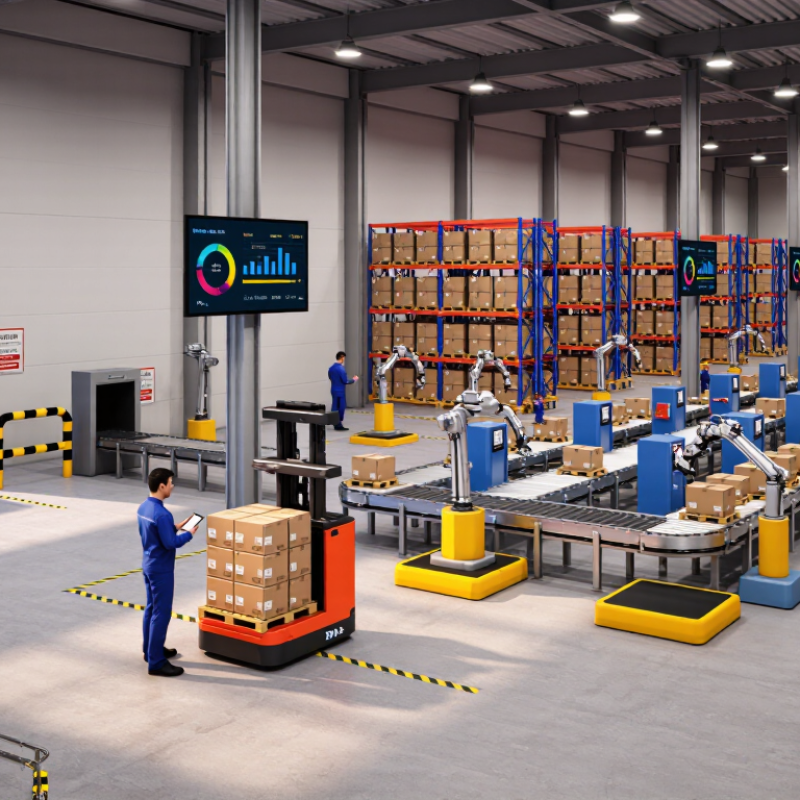
Global buyers need automation solutions that fit real operations, not impressive demonstrations. A warehouse may have uneven floors, mixed product sizes, and limited technical staff. During pilot projects, these details often affect performance more than advertised speed. The best solution should match workflow, labor skills, and local infrastructure. It must also support different languages, units, and operating habits. Small details matter.

Scalability deserves careful testing. Ask whether the system can handle seasonal demand without expensive redesigns. Review integration with existing software, sensors, and production equipment. Request clear data on uptime, maintenance intervals, and recovery procedures. Cybersecurity also requires attention, especially when systems exchange operational data across borders. Compliance requirements can differ between markets. Reliable suppliers should explain these differences plainly.

Total cost is more than the purchase price. Include installation, training, spare parts, software updates, energy use, and technical support. Check how quickly support teams respond in each target region. A local service network can reduce long production delays. I once underestimated training time in a deployment, and adoption suffered. That mistake changed my evaluation process. Now, I ask operators to test the solution before approval. Their feedback can expose awkward controls, unclear alerts, or unsafe workarounds. A flexible trial is valuable. It reveals weaknesses early.

Why Are Automation Solutions Essential for Global Buyers? - Factors Global Buyers Should Consider When Choosing Automation Solutions

Evaluation Dimension Relevant Global Data or Requirement What Global Buyers Should Evaluate Recommended Decision Metric Priority Reference
Labor Productivity and Capacity 162 industrial robots per 10,000 manufacturing employees was the global average robot density reported for 2023. Assess whether automation can increase output, stabilize production quality, and support higher-volume or mixed-model manufacturing without relying solely on additional labor. Units produced per labor hour; throughput increase; cycle-time reduction; capacity utilization. High International Federation of Robotics
Workplace Safety The International Labour Organization estimates approximately 2.93 million work-related deaths and around 395 million non-fatal work injuries occur globally each year. Prioritize solutions that remove people from repetitive, heavy, hazardous, or high-temperature tasks and provide documented risk assessments and safety functions. Recordable incidents; lost-time injuries; ergonomic risk reduction; compliance with applicable machinery-safety requirements. High International Labour Organization
Return on Investment Automation investment results vary significantly by process, labor cost, utilization rate, maintenance expense, and product mix; no single payback period is valid for every market. Request a total-cost-of-ownership model covering equipment, integration, software, training, spare parts, energy, downtime, upgrades, and end-of-life costs. Net present value; internal rate of return; total cost per unit; sensitivity analysis under low, expected, and high utilization. High ISO 15686 Life-Cycle Cost Principles
Scalability and Flexibility Global supply chains commonly require shorter product cycles, regional customization, and rapid changes in demand and product specifications. Choose modular systems with reusable tooling, configurable software, recipe management, quick changeover capability, and expansion options. Changeover time; number of supported product variants; percentage of reusable modules; time required to add a new production cell. High ISO 22400 Manufacturing Operations Management Metrics
Interoperability and Data Integration Automation systems increasingly need to exchange information across shop-floor equipment, manufacturing systems, enterprise systems, and cloud or edge platforms. Verify support for open communication protocols, documented application programming interfaces, structured data models, and secure data ownership arrangements. Integration time; number of supported interfaces; percentage of data available in standardized formats; manual data-entry reduction. High ISO 23247 Digital Twin Framework for Manufacturing
Cybersecurity and Resilience Connected automation expands the potential attack surface because production equipment, control networks, remote access, and business systems may exchange data. Evaluate network segmentation, identity management, secure remote maintenance, vulnerability handling, backup procedures, incident response, and recovery testing. Recovery time objective; recovery point objective; percentage of assets with current security controls; number of unresolved critical vulnerabilities. High NIST Cybersecurity Framework
Energy and Environmental Performance Energy performance should be measured across the complete system rather than by equipment nameplate ratings alone, including idle, peak-load, compressed-air, heating, and cooling demand. Compare energy consumption under equivalent production conditions and require monitoring at machine, cell, and facility levels where practical. Kilowatt-hours per unit; peak demand; energy consumption during idle periods; carbon emissions per unit of output. Medium ISO 50001 Energy Management Systems
Reliability and Maintenance Unexpected downtime can affect production schedules, delivery performance, labor utilization, and customer service across multiple regions. Review preventive and predictive-maintenance functions, spare-parts availability, remote diagnostics, service response times, and local technical support coverage. Overall equipment effectiveness; mean time between failures; mean time to repair; planned versus unplanned downtime. High ISO 22400 Manufacturing Performance Measurement
Workforce Skills and Change Management Automation changes job tasks and increases the importance of skills in programming, maintenance, process analysis, data interpretation, and safety management. Confirm the availability of training materials, multilingual documentation, simulation tools, operator-friendly interfaces, and a structured competency-development plan. Training hours per employee; certification completion rate; time to achieve independent operation; number of qualified maintenance personnel. Medium International Labour Organization Skills Resources
Regional Compliance and Localization Automation equipment may be deployed across jurisdictions with different requirements for electrical safety, machinery safety, data protection, labor practices, and environmental reporting. Verify conformity documentation, local inspection requirements, language support, export controls, installation standards, and after-sales service capability in each target market. Percentage of required certifications completed; localization lead time; local service response time; number of open compliance actions. High International Organization for Standardization
Note: Benchmarks and requirements should be validated against the buyer’s industry, production volume, local regulations, labor structure, and operating conditions before final investment approval.
Scroll to Top