Top 10 Types of CNC Metal Parts for Global Sourcing?
Global sourcing for cnc metal parts is no longer judged by price alone. Buyers now examine tolerances, material traceability, surface finish, production capacity, and delivery risk. A part may look perfect in a sample photograph, yet fail during assembly because its ±0.02 mm tolerance was never verified.
Deloitte’s 2024 Advanced Manufacturing Industry Outlook identifies supply-chain resilience, skilled labor, and digital production as continuing priorities for manufacturers. The World Economic Forum’s Global Lighthouse Network reports also show how connected factories use automation and data to improve productivity and quality. These findings matter when selecting suppliers for aluminum brackets, stainless-steel shafts, brass fittings, titanium components, and other precision parts.
W. Edwards Deming, a foundational manufacturing quality expert, offered a useful warning: “Without data you’re just another person with an opinion.” That principle applies directly to cnc metal sourcing. Reliable suppliers should provide inspection records, material certificates, process capability evidence, and clear corrective-action procedures.
This guide examines ten common types of CNC metal parts used across industrial equipment, automotive systems, electronics, robotics, and energy applications. Each category has different machining risks. Thin walls can distort. Deep holes can wander. Hard alloys can shorten tool life.
The ranking is not universal. A medical-device buyer may value traceability above speed, while a machinery builder may prioritize cost and repeatability. That limitation deserves attention. The best supplier is rarely the cheapest one; it is the supplier that can repeatedly meet the drawing, document the process, and communicate problems before shipment.
CNC Metal Parts: Definition, Functions, and Global Sourcing Value
Top 10 Types of CNC Metal Parts for Global Sourcing?
CNC Metal Parts: Definition, Functions, and Global Sourcing Value
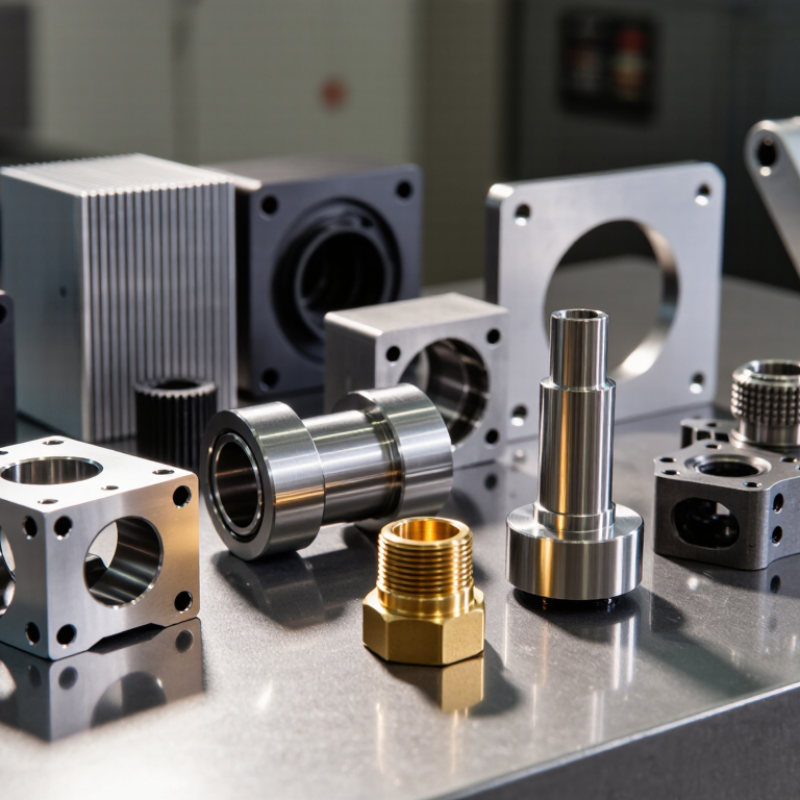
CNC metal parts are components shaped by computer-controlled cutting, milling, turning, or drilling. The machine follows digital design data to remove material with consistent accuracy. Common types include brackets, shafts, housings, plates, manifolds, gears, flanges, connectors, frames, and prototypes. Each part serves a practical role, from supporting loads to guiding motion or protecting internal assemblies. Small tolerances matter.
Their value depends on more than geometry. A turned shaft may transmit rotation, while a milled housing can protect sensitive components from dust and impact. Brackets hold structures in place, and manifolds control fluid routes through carefully machined channels. Material choice also changes performance. Aluminum reduces weight, while stainless steel can improve corrosion resistance. Surface finishing may further support wear control and appearance.
For global sourcing, CNC parts offer repeatable production across qualified suppliers. Buyers can compare drawings, materials, tolerances, inspection reports, and lead times more clearly. A reliable sourcing process should confirm raw material certificates, dimensional checks, packaging methods, and communication procedures. I have found that clear drawings prevent more problems than impressive machinery. Yet specifications are not always perfect. Designers sometimes overlook tool access, burr removal, or realistic tolerances. That mistake can increase cost and delay shipment. Reviewing manufacturability before ordering is a modest step, but it often protects the entire supply plan.
The Top 10 CNC Metal Part Categories by Design and Application
Top 10 Types of CNC Metal Parts for Global Sourcing
The Top 10 CNC Metal Part Categories by Design and Application
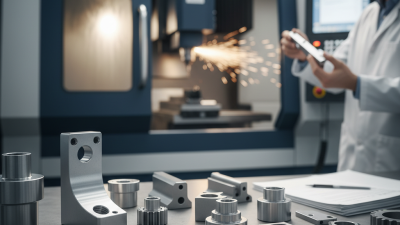
CNC metal parts usually fall into ten practical categories: turned shafts, milled housings, precision plates, mounting brackets, gears and splines, fluid manifolds, flanges, heat sinks, medical instruments, and aerospace structures. Each category reflects a different design priority. Shafts demand concentricity. Housings need stable walls and accurate bores. Manifolds require clean internal passages, often created through angled drilling and secondary sealing.
Application changes the sourcing decision. Aluminum heat sinks favor thin fins and fast milling. Stainless medical components need traceable material and controlled surface finishing. Aerospace brackets often require lightweight pockets, tight tolerances, and documented inspection. Prototype enclosures may accept broader tolerances, but production housings cannot. Small details matter.
The 2024 World Robotics report recorded 541,302 industrial robot installations worldwide in 2023. That growth supports automated loading, inspection, and repeatable CNC production. A 2024 global smart-manufacturing survey found that 86% of manufacturers expect smart operations to strengthen competitiveness within five years. The figures are encouraging, though not every supplier has equal digital maturity. Buyers should request capability studies, material certificates, first-article inspection records, and sample measurements. A polished website proves little. Real evidence does. Drawing interpretation can still fail, especially around datums, threads, and surface-finish symbols. A careful sourcing process checks those points before machining begins.
Key Materials, Tolerances, and Finishing Options for CNC Parts
Common CNC metal parts include housings, brackets, shafts, plates, manifolds, gears, clamps, flanges, enclosures, and custom blocks. Each form favors a different material choice. Aluminum suits lightweight housings and plates. Stainless steel handles corrosion, washdown, and repeated handling. Carbon steel supports strong brackets and shafts when surface protection is added. Brass machines cleanly for fittings and small valves. Material certificates should match the purchase order, not memory.
Tolerance strategy separates a reliable part from an expensive one. A general ±0.05 mm tolerance may suit non-critical faces, but not every feature. Critical bores, bearing seats, and mating faces need tighter, clearly specified limits. Do not tighten every dimension. It increases machining time, inspection effort, and rejection risk. Confirm datums, thread standards, flatness, and concentricity on the drawing. For global sourcing, request inspection records with measured values, not only pass statements. Micrometers, gauges, and coordinate measurement can support different checks. Temperature still matters.
Finishing protects the surface and controls appearance, friction, and corrosion resistance. Anodizing works well for aluminum enclosures and brackets. Passivation helps stainless parts resist contamination after machining. Plating can improve wear or conductivity, while powder coating adds a durable colored layer. Specify thickness, masked areas, edge coverage, and acceptable cosmetic marks. A sample part exposes problems early. I would not approve a finish from photographs alone. That choice can be inconvenient, but it prevents costly surprises. Even careful specifications need review after the first production run.
How to Evaluate CNC Metal Part Suppliers Across Global Markets
Global sourcing often begins with familiar CNC metal parts: brackets, housings, shafts, plates, manifolds, gears, flanges, frames, heat sinks, and custom prototypes. The part list matters, but supplier evaluation matters more. A polished website proves little. Request material certificates, process records, inspection reports, and recent sample photos. Ask how the supplier controls aluminum, steel, brass, or titanium from receipt to shipment.
Check equipment and measurement discipline. A capable supplier should explain machine capacity, tolerance control, surface finishing, and coordinate measuring methods in clear language. Request a first-article inspection report for critical dimensions. Compare its measured values with your drawing, not with general claims. Small details matter, such as a 0.02 mm bore tolerance or a visible tool mark near a sealing face.
Communication reveals operational maturity. Send the same drawing and questions to several suppliers across different regions. Compare response speed, technical questions, lead-time logic, and change-control procedures. A reliable team will identify unclear datums before production starts. It should also explain packaging for sharp edges, corrosion protection, and moisture-sensitive finishes. Cheap pricing can hide weak inspection or unstable scheduling. I have found that fast replies sometimes create false confidence. The better test is consistent evidence over several conversations. Even a careful evaluation can miss local subcontracting risks, so supplier audits and small pilot orders remain necessary.