Top 10 Well Drilling Machines for Sale Worldwide?

Reliable water access is driving demand for drilling equipment across farms, communities, construction sites, and remote projects. The WHO and UNICEF Joint Monitoring Programme reported that 2.2 billion people lacked safely managed drinking water services in 2022. This figure gives well development a serious human and commercial context. UNESCO’s United Nations World Water Development Report 2022 also identified groundwater as a major source of drinking water worldwide. Yet demand alone does not make every well drilling machine a wise purchase.

This guide examines ten well drilling machine options available in international markets. It considers drilling depth, torque, mast strength, rod capacity, compressor requirements, mobility, and maintenance access. A compact hydraulic rig may suit a narrow farm entrance. A crawler-mounted rotary machine may perform better on uneven ground. Air drilling can be efficient in hard rock, while mud rotary systems often provide better borehole support in loose formations. These differences matter.

No machine fits every site. That is the difficult part. Local geology, water-table depth, climate, transport limits, and operator experience can change the decision completely. FAO AQUASTAT data show how strongly agriculture depends on water withdrawals, but national averages cannot predict one drilling location. Buyers should verify manufacturer specifications, service coverage, spare-parts availability, and applicable safety standards before ordering. Product rankings can simplify research, but they cannot replace a professional site survey or a realistic operating-cost estimate. Some published performance claims also deserve closer questioning. A machine that reaches impressive depths in ideal ground may deliver very different results beside a rocky hillside, under a hot compressor load, or during a long maintenance delay.
Top 10 Well Drilling Machines for Sale Worldwide?

What Well Drilling Machines Are and How They Work

Top 10 Well Drilling Machines for Sale Worldwide?

A well drilling machine converts rotary or percussive energy into controlled ground penetration. Common commercial categories include rotary, mud rotary, air rotary, down-the-hole hammer, top-drive, auger, cable-tool, reverse-circulation, sonic, and compact hydraulic rigs. Each machine suits different formations. Loose sand, fractured rock, and clay demand different drilling responses.

Rotary rigs turn a drill string while pumping water, air, or drilling mud through the bit. The fluid cools the bit and carries cuttings to the surface. In hard rock, a down-the-hole hammer strikes directly behind the bit. It sounds like repeated metal impacts. Air rotary systems often deliver fast cutting removal, but dust control and compressor capacity matter. Auger rigs remove soil through helical flights and work well in softer, shallow ground.

UNESCO’s United Nations World Water Development Report 2022 states that groundwater supplies nearly half of global drinking water and about 25% of total water withdrawals. That demand makes accurate borehole design essential. Field experience shows that buyers should compare torque, pullback force, drilling depth, mast length, pump output, and transport weight. A larger rig is not automatically better. It may damage fragile formations or raise operating costs. Selection is rarely perfect. Soil logs can be incomplete, and real ground conditions often challenge the original plan. A competent operator still adjusts rotation speed, fluid pressure, and penetration rate during drilling.

Top 10 Well Drilling Machines for Sale Worldwide: What They Are and How They Work

Well drilling machines use rotary, percussive, auger, cable-tool, or sonic action to penetrate soil and rock. Air, water, drilling mud, or casing is used to remove cuttings and stabilize the borehole. The chart compares representative maximum drilling depths commonly associated with different machine configurations and drilling methods.

Depth figures are indicative industry ranges rather than guaranteed capacities. Actual performance depends on geology, tooling, borehole diameter, rig power, drilling fluids, casing requirements, and site conditions.

Key Machine Types and Their Best Drilling Applications

Top 10 Well Drilling Machines for Sale Worldwide?

Key Machine Types and Their Best Drilling Applications

A practical machine choice begins with ground conditions, not sales rankings. Rotary drilling rigs suit soft soil, clay, and weathered rock. They work well for water wells and construction-site investigations. Mud rotary systems use drilling fluid to carry cuttings upward. They are effective in unstable formations, where open holes may collapse quickly.

Air rotary and down-the-hole hammer rigs perform better in hard rock. The hammer strikes at the bit, creating clean, deep holes for water supply or geothermal projects. Cable tool machines drill slowly, but they offer simple maintenance and reliable performance in unconsolidated ground. Auger rigs fit shallow wells, soil sampling, and environmental monitoring. Their low operating complexity can matter more than maximum depth.

Sonic rigs use high-frequency vibration to reduce friction around the drill string. They are useful for difficult sampling and mixed layers. Core drilling machines recover cylindrical rock samples for geological analysis. Reverse circulation rigs improve sample recovery in large mineral or water-well projects. Directional drilling equipment reaches offset targets beneath roads or buildings. Geothermal rigs require strong torque, cooling systems, and accurate depth control.

Specifications can mislead. A powerful rig may perform poorly with unsuitable tooling or weak site access. Buyers should check torque, mast height, pump capacity, transport limits, and local service support. Dust control and noise protection also influence daily productivity. I would still allow extra capacity, because ground conditions often change without warning. A smaller rig may be cheaper, yet downtime can erase that saving.

Top 10 Well Drilling Machines Available Worldwide

Top 10 Well Drilling Machines Available Worldwide

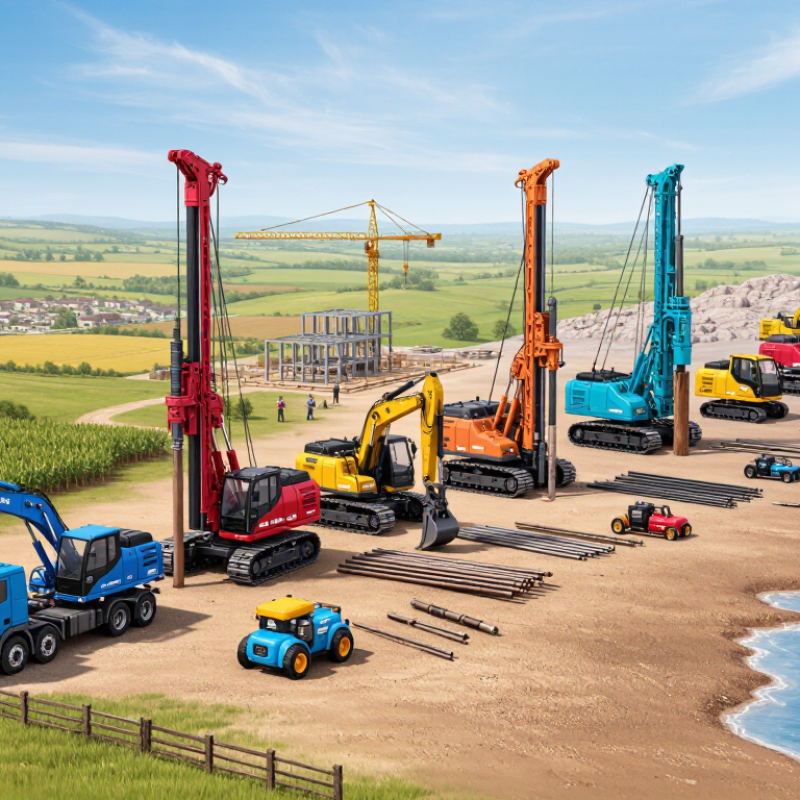
A practical worldwide shortlist includes rotary, mud rotary, air rotary, DTH, cable tool, auger, sonic, reverse circulation, truck-mounted, and crawler-mounted drilling machines. Each design suits different ground conditions. Rotary rigs handle many formations and support deep boreholes. Mud rotary machines stabilize loose layers with drilling fluid. Air rotary systems work efficiently in harder, drier rock. DTH rigs deliver strong penetration through fractured formations.

Cable tool machines remain useful where simplicity and low operating costs matter. Auger rigs suit shallow water wells and softer soils. Sonic machines reduce vibration and can produce clean samples, although their purchase price is often higher. Reverse circulation rigs support large-diameter drilling and improve cuttings removal. Truck-mounted units move quickly between sites. Crawler-mounted models provide better stability on uneven ground. Availability varies by region, transport access, and local service support.

A reliable purchase decision starts with a site investigation, not a brochure. Check expected depth, casing diameter, rock hardness, groundwater level, and daily fuel use. Ask for maintenance records, spare-part lead times, operator training, and verified performance data. Safety controls should include emergency stops, guarded moving parts, dust management, and stable mast systems. One detail is often underestimated: the compressor or mud pump can limit the entire rig. Bigger is not always better. Some buyers choose excessive power, then face higher fuel costs and difficult transport. I would also allow time for mistakes, because early geological assumptions are rarely perfect.

Top 10 Well Drilling Machines for Sale Worldwide? - Top 10 Well Drilling Machines Available Worldwide
No. Machine Type Typical Drilling Method Typical Drilling Depth Common Hole Diameter Mobility Primary Applications Key Advantages
1 Truck-Mounted Rotary Water Well Rig Rotary mud drilling and air rotary drilling Approximately 300–600 m 152–444 mm Highway-mobile truck chassis Municipal water wells, agricultural wells, and production wells Fast relocation, integrated power system, and strong productivity on large projects
2 Crawler-Mounted Hydraulic Rotary Rig Rotary drilling with mud, foam, or air Approximately 200–500 m 115–350 mm Tracked undercarriage for rough terrain Remote water wells, construction sites, and uneven ground conditions Excellent off-road mobility, stable setup, and precise hydraulic control
3 Down-the-Hole Hammer Rig Compressed-air DTH hammer drilling Approximately 150–500 m 152–406 mm Truck, crawler, or trailer mounted Hard-rock water wells, deep boreholes, and fractured formations High penetration performance in hard rock and relatively straight boreholes
4 Top-Head Drive Water Well Rig Rotary drilling with direct top-head drive Approximately 150–400 m 100–350 mm Trailer, truck, or crawler mounted Residential wells, irrigation wells, and general-purpose drilling Versatile rod handling, adjustable rotation, and suitability for mixed formations
5 Trailer-Mounted Compact Drilling Rig Rotary mud drilling or air rotary drilling Approximately 80–250 m 100–300 mm Towable by a suitable utility vehicle Small farms, domestic wells, rural water supply, and light exploration Lower transport cost, compact footprint, and easier access to confined sites
6 Reverse Circulation Water Well Rig Reverse circulation with dual-wall drill pipe Approximately 200–600 m 200–600 mm Usually truck or crawler mounted Large-diameter production wells and high-yield groundwater projects Efficient cuttings removal, strong sample recovery, and large borehole capability
7 Sonic Drilling Rig High-frequency resonant drilling Approximately 100–300 m 100–300 mm Truck, crawler, or specialized carrier Environmental wells, unconsolidated formations, and accurate sampling Reduced borehole deviation, limited drilling fluid use, and high-quality core or sample recovery
8 Cable Tool Percussion Rig Repeated impact with a heavy drilling bit Approximately 50–300 m 150–600 mm Trailer, skid, or stationary platform Shallow to medium-depth water wells in unconsolidated formations Simple mechanical design, low drilling-fluid demand, and easy maintenance
9 Geothermal Water Well Drilling Rig Rotary, DTH, or mud rotary drilling Approximately 200–1,000 m 152–444 mm Heavy-duty truck or crawler mounted Ground-source heating systems, geothermal exchange wells, and thermal-water wells High torque capacity, long mast options, and compatibility with deep borehole programs
10 Multipurpose Exploratory and Water Well Rig Rotary, core drilling, air drilling, or DTH drilling Approximately 150–500 m 76–350 mm Truck, crawler, or modular carrier Water wells, geological investigation, monitoring wells, and site assessment Flexible tooling, broad formation capability, and reduced need for separate equipment
Data reference: Depth, diameter, and performance figures are typical industry ranges and vary according to formation hardness, drilling method, tooling, casing design, operator experience, and local regulations. Actual equipment specifications should be confirmed with the seller before purchase.

Technical Features, Performance, and Operating Costs Compared

Top 10 Well Drilling Machines for Sale Worldwide?

Comparing ten drilling machines requires more than checking maximum depth. Review torque, mast capacity, rotary speed, compressor output, mud-pump pressure, and transport weight. A compact rotary rig may suit shallow water wells, while a crawler-mounted DTH machine handles hard rock more effectively. These are different tools, not direct substitutes. The U.S. Department of Energy’s GeoVision analysis indicates drilling and well construction can represent roughly 30–50% of geothermal project costs. Therefore, small efficiency gains can materially affect project economics.

Operating cost depends on fuel, drill bits, labor, maintenance, and downtime. Track liters of diesel per drilled meter, not only hourly consumption. A high-powered machine may drill faster, yet consume more fuel and wear bits quickly.

Automated rod handling can reduce manual exposure and improve cycle consistency, but it adds purchase and maintenance costs. IADC drilling guidance also stresses monitoring torque, penetration rate, and pressure trends during operations.

Tips: Request operating logs from comparable ground conditions. Ask for total cost per meter, including mobilization and consumables. Check service access before buying. A machine with impressive specifications may perform poorly on steep terrain or fractured formations. My comparison is not perfect; local geology can overturn a neat ranking. Leave room for that uncertainty.

How to Choose the Right Well Drilling Machine for Your Project

Choosing among the top 10 well drilling machines for sale worldwide requires more than comparing prices. The right machine must match your ground conditions, drilling depth, borehole diameter, and transport limits. A compact rotary rig may suit soft soil and shallow water wells. Hard rock often demands a hydraulic crawler rig with down-the-hole capability. Ask for verified drilling data, service records, and tested performance in similar geology.

Power matters, but usable power matters more. A machine with a large engine can still struggle if its compressor, feed system, or torque rating is inadequate. Check fuel consumption, mast height, pipe length, and maintenance access. Confirm that the rig can handle casing installation, because unstable formations may collapse during drilling. Local regulations, groundwater protection rules, operator training, and site access should influence the purchase. A machine that cannot reach a narrow rural site is expensive equipment sitting unused.

Tips: Request a geological assessment before choosing the rig. Compare total ownership costs, not only the sale price. Inspect welds, hydraulic lines, controls, and drilling tools in person when possible. Ask how quickly replacement parts can arrive. One detail is easy to miss: noise and dust control can affect nearby communities and working hours. My practical view is cautious; advertised depth is rarely the same as reliable production depth. A smaller, well-supported machine may outperform a larger unit when the crew understands the formation.

Scroll to Top