Choosing the best well drilling machine begins with the ground beneath your boots. Clay, fractured granite, loose sand, and weathered rock demand different drilling responses. A machine that performs beautifully in one formation may struggle badly in another. That uncomfortable fact is often overlooked.
Dr. John A. Cherry, a respected groundwater scientist, has emphasized, “A well is an engineered system, not simply a hole in the ground.” His principle applies directly to equipment selection. The right well drilling machine must match the target depth, borehole diameter, geological conditions, water yield, and available working space. Rotary rigs can offer strong performance in softer formations, while down-the-hole systems may provide better penetration in hard rock. Mud pumps, air compressors, torque ratings, feed force, and mast stability also deserve careful comparison.
Specifications alone do not tell the whole story. On a real site, a narrow access road, unstable soil, or sudden water loss can change the drilling plan within minutes. Operator experience matters. So do maintenance access, spare-part availability, fuel consumption, noise, and local technical support. A compact machine may reduce transport costs, yet its limited feed capacity could increase drilling time. A powerful rig may finish faster, but its size might make the project impractical.
There is no perfect choice. That is the point worth questioning. Reliable selection combines geological data, verified field experience, manufacturer documentation, and honest cost calculations. This guide examines those factors clearly, while acknowledging an important limitation: even careful planning cannot remove every uncertainty below ground.
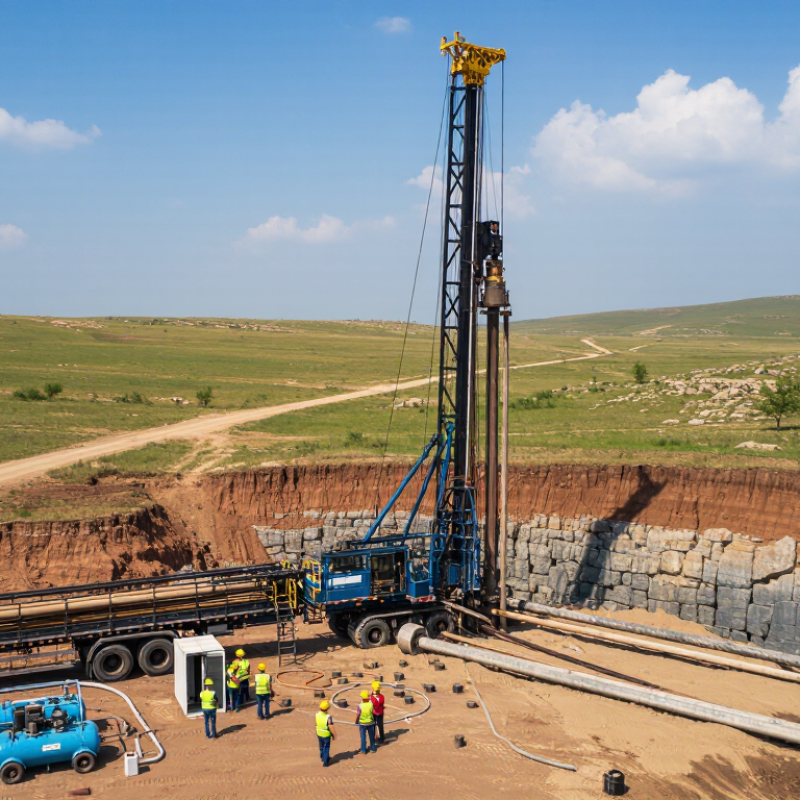
Choosing a well drilling machine starts with the water objective, not the machine catalogue. Define the required flow rate, target depth, casing diameter, and expected drilling method. A domestic well may need a compact rotary rig, while fractured rock can demand higher torque and stronger downhole tools. According to the U.S. Geological Survey, groundwater supplies about 49% of drinking water in the United States. The resource is important. Small design errors are not.
Study the site before selecting equipment. Review geological maps, nearby well logs, groundwater levels, access roads, slope, overhead cables, and soil stability. The U.S. Geological Survey also reports that groundwater provides about 43% of irrigation water nationally. That figure shows why yield testing matters. A machine that reaches the planned depth may still fail to produce useful water. Hard lessons happen here.
Match the rig to real working conditions. Check mast height, transport width, compressor capacity, torque, pullback force, and noise limits. Rotary drilling suits many unconsolidated formations, while air-hammer systems often perform better in competent rock. Confirm whether the site can support the machine’s weight after rain. Mud circulation also needs space, water, and controlled disposal. OSHA identifies respirable crystalline silica as a serious drilling hazard, so dust suppression and suitable respiratory controls require planning. Do not rely only on sales specifications. Local drilling records and an experienced hydrogeological assessment may reveal conditions that a brochure misses.
Define your well drilling requirements and site conditions before selecting equipment. Ground stability, formation hardness, drilling depth, and water-table conditions strongly influence the appropriate drilling method.
The values show representative planning conditions rather than guaranteed field performance. Actual drilling speed and equipment selection depend on geology, borehole diameter, depth, groundwater pressure, and site access.
Choosing a well drilling machine starts with geology, not horsepower. Rotary drilling suits soft to medium formations, using rotation and circulating fluid to remove cuttings. Down-the-hole hammer machines work better in hard rock, where compressed air drives a hammer near the bit. Auger rigs are practical for shallow, unconsolidated ground. Sonic drilling produces cleaner samples, but equipment and operating costs can rise quickly.
The drilling method also changes borehole quality. Mud rotary supports unstable formations, while air rotary is faster in competent rock. Cable-tool drilling remains useful for shallow wells, although it is slower. The U.S. Geological Survey reports that groundwater supplies about half of U.S. drinking water and supports roughly 43% of irrigation withdrawals. That scale demands careful site investigation, not guesswork. A machine that performs well in dry granite may struggle badly in saturated sand. No method wins everywhere.
Tips: Match the rig to expected depth, rock strength, water pressure, and access limits. Request penetration-rate records from comparable sites. Check compressor capacity for air drilling. Confirm whether drilling fluids could affect sampling or groundwater quality. A smaller rig may reduce transport costs, yet it can lose productivity at depth. Bigger is not automatically better. Industry reports often simplify these trade-offs, and that is where buyers can make expensive mistakes. Always compare total drilling cost, not only the machine’s purchase price.
Machine power should match the formation, depth, and drilling method. In field work, excessive power often increases fuel use and operating stress. The U.S. Geological Survey reports that groundwater supplies nearly half of the United States population’s drinking water. Reliability matters. Check torque, rotary speed, compressor output, and hydraulic pressure together. A powerful engine cannot compensate for poor torque control. Use performance curves, not only peak horsepower figures.
Capacity must reflect the completed well, not just the pilot hole. The 2024 United Nations World Water Development Report states that agriculture accounts for roughly 70% of global freshwater withdrawals. This demand can require deeper, larger, and more productive wells. Ask for rated drilling depth, maximum casing diameter, rod length, and spoil removal rate. Also inspect continuous operating limits. A machine rated for 200 metres may perform poorly in fractured rock. I have seen specifications hide this weakness. That was an expensive lesson.
Mobility and compatibility decide whether the machine reaches the worksite. Measure gate widths, turning space, slope angles, and ground pressure before delivery. Crawler units suit soft ground, while truck-mounted rigs move faster between prepared sites. Confirm compatibility with casing, drill rods, mud pumps, compressors, and available power. Small details matter. I would also check spare-part access and operator training records. A technically capable rig can still fail when the site layout or tooling is wrong. My own preference is cautious selection, because neat specifications can mislead.
Safety should guide your equipment choice, not just drilling depth. Check for an accessible emergency stop, stable guards, automatic shutdowns, and clear pressure gauges. A wide base reduces movement on uneven ground. Inspect the mast, cables, hoses, and hydraulic fittings before every shift. Small leaks can become dangerous failures. Noise and dust controls also protect operators during long drilling sessions. Choose a machine with documented safety procedures and practical operator training.
Maintenance needs affect both productivity and reliability. Ask how often filters, belts, drill bits, and hydraulic fluids require inspection or replacement. Look for easy access to service points. A machine that requires hours of disassembly may lose valuable working time. Keep a maintenance log with dates, operating hours, and replaced parts. I have seen teams overlook simple filter changes, then blame the machine for poor performance. That judgment is often unfair.
Tips: Calculate the full operating cost, including fuel, electricity, water, labor, transport, spare parts, and downtime. Compare routine costs over one year, not only the purchase price. Test the controls in a real work area when possible. Listen for unusual vibration. Check whether local technicians can support repairs. A cheaper machine may demand more maintenance than expected. My own assessment can also be incomplete, so confirm technical claims with the operating manual and qualified safety professionals.
Choosing a well drilling machine is not only a matter of engine power or maximum depth. A reliable supplier should understand your soil, water table, transport limits, and daily drilling schedule. Ask for a written recommendation based on those conditions. Vague advice is a warning sign. Request operating records from similar projects, not polished promises. Speak with two or three working customers. Their comments about breakdowns often matter more than showroom specifications. Good suppliers explain why a machine fits your formation and where it may struggle. That honesty shows practical knowledge. Keep records.
Before signing, inspect the after-sales system in detail. Confirm warranty length, covered components, labor rules, and travel charges. Ask how quickly a technician can respond when the rig stops beside a remote site. A clear service agreement should name contact methods, response times, and escalation steps. It should also list common spare parts, delivery times, and prices. Filters, seals, drill pipes, and hydraulic fittings can stop a project when unavailable. Request a maintenance schedule written for your exact machine. Generic manuals are not enough. They confuse new operators.
Supplier training deserves equal attention. Ask for hands-on instruction covering setup, torque control, flushing, shutdown, and safe fault checks. Photos, inspection forms, and video support can reduce avoidable mistakes. Still, remote help has limits. A local technician network is safer when hydraulic pressure falls unexpectedly. Check whether diagnostic tools and replacement parts remain available after the warranty expires. Test the support line before purchase. Send a technical question and measure the response. Slow replies reveal future frustration. No checklist is perfect. Revisit it after speaking with operators who use similar equipment.
Arsun Engineers is the well-known manufacturer, exporter, and supplier of highly operational machines.