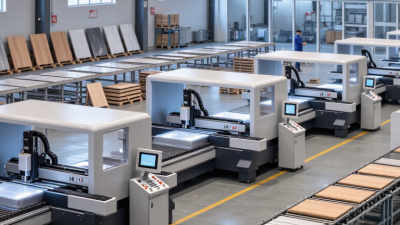
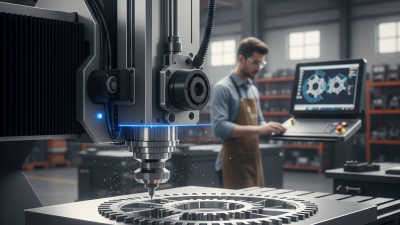
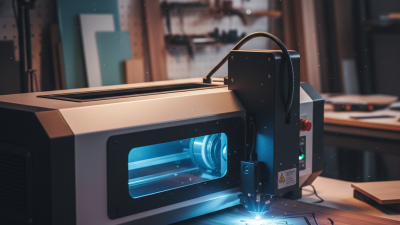
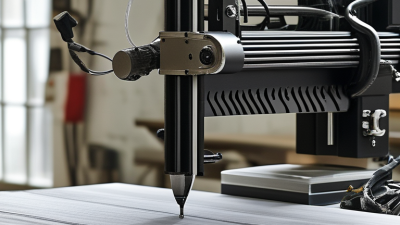
Industrial engraving is no longer limited to marking simple serial numbers. In 2026, manufacturers may choose fiber laser, CO2 laser, rotary, dot-peen, or CNC engraving systems. Each industrial engraving machine serves different materials, tolerances, and production speeds. Fiber lasers often suit stainless steel, aluminum, and coated metals. CO2 systems remain practical for wood, acrylic, rubber, and selected nonmetal surfaces. Rotary machines can create controlled depth on plates, tools, and machine parts.
The right choice depends on more than price or advertised wattage. Operators must examine material hardness, surface finish, mark depth, batch size, software compatibility, and maintenance access. A dusty workshop may expose weaknesses that a showroom demonstration hides. Production experience also shows that fixture design can affect accuracy as much as machine power. It is easy to overlook this.
This guide compares the leading industrial engraving machine types expected to matter in 2026. It considers real workshop conditions, including heat buildup, ventilation, alignment, noise, and operator training. Safety features, traceability, and dependable supplier support also deserve careful attention. Specifications can change between brands, so buyers should verify test samples and current certifications before committing. Some categories overlap, and no single machine fits every factory. That uncertainty matters. A reliable selection process balances technical evidence with practical experience, rather than following trends blindly.
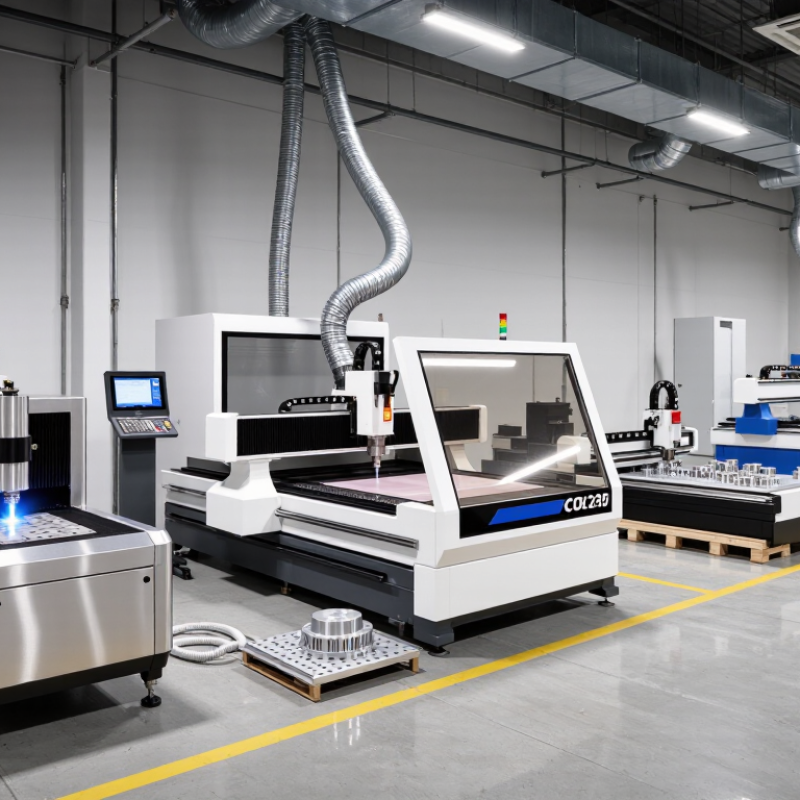
Industrial engraving machines are production systems that create permanent marks by removing, displacing, or altering surface material. Their scope covers metal, plastic, glass, wood, and coated components. Core functions include text engraving, serial numbering, logos, barcodes, depth cutting, and traceability marking.
In 2026, common industrial types include fiber-laser, CO2-laser, rotary CNC, and dot-peen machines. Fiber lasers suit steel, aluminum, and high-speed identification. CO2 lasers work better with many organic materials and selected coatings.
Rotary CNC machines physically cut grooves, making them useful for deeper lettering and molds. Dot-peen systems form impact-based marks on rough metal surfaces. They are simple and durable.
Data supports continued demand for automated marking. The MarketsandMarkets Laser Marking Market report estimated growth from about USD 3.0 billion in 2022 to USD 4.1 billion by 2027, representing a 6.6% compound annual growth rate. Grand View Research also identifies traceability, automation, and manufacturing quality control as major market drivers. These figures describe laser marking broadly, not every engraving machine.
That distinction matters. A laser can produce a crisp code, but reflective metal may require careful power control. Rotary cutting offers depth, yet tool wear can distort small characters. Dot-peen marking tolerates harsh surfaces, though it may appear less refined. In practice, material tests, cycle-time checks, ventilation, and operator training should guide selection. Reported market growth is useful evidence, not a complete engineering answer.
What Are the Top Industrial Engraving Machine Types in 2026?
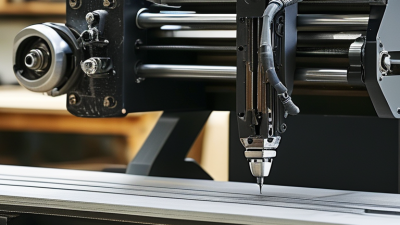
CNC rotary engraving machines remain important for deep and three-dimensional marking. Unlike laser systems, rotary cutters physically remove material from the surface. This creates visible depth, sharp edges, and tactile lettering on aluminum, brass, plastics, and engineered panels. A carbide cutter can follow a programmed path while controlling spindle speed, cutting depth, and feed rate. The result depends heavily on rigid workholding. Small movement can ruin a precise relief pattern.
Industry data supports continued investment in computer-controlled production. MarketsandMarkets estimates that the global CNC machine market may grow from USD 88.1 billion in 2023 to USD 112.8 billion by 2028. The International Federation of Robotics reported 541,302 industrial robots installed worldwide in 2023. These figures do not measure engraving alone. However, they show stronger demand for repeatable automation and digital workflows.
In practical use, rotary engraving suits nameplates, control panels, molds, and sculpted signage. CAD/CAM software converts a drawing into layered toolpaths. Operators must still check cutter wear, material hardness, and chip evacuation. Deep cuts generate heat. Poor extraction leaves debris around narrow grooves. I have seen attractive samples fail during production because the fixture was too flexible. That assumption is incomplete. Three-dimensional quality also requires careful Z-axis calibration, gradual depth passes, and inspection with gauges or a digital microscope. Faster is not always better.
Comparative overview of widely used industrial engraving technologies and their typical capabilities.
| Machine Type | Primary Motion or Process | Typical Marking Depth | Suitable Materials | Typical Accuracy | Best Industrial Uses | Key Advantages | Main Limitations |
|---|---|---|---|---|---|---|---|
| 3-Axis CNC Rotary Engraving Machine | A rotating cutting tool moves along X, Y, and Z axes. | Approximately 0.1–10 mm per pass, depending on tool, material, and spindle power. | Aluminum, brass, copper, plastics, wood, acrylic, engineering polymers, and some steels. | About ±0.02–0.10 mm on properly configured industrial equipment. | Control panels, nameplates, molds, signage, fixtures, serial plates, and recessed lettering. | Cost-effective deep engraving, clean edge definition, and broad material compatibility. | Limited access to complex curved surfaces without additional rotary or tilting equipment. |
| 4-Axis CNC Rotary Engraving Machine | Three linear axes plus a rotary axis for cylindrical or indexed workpieces. | Approximately 0.1–8 mm per pass, subject to tooling and material conditions. | Aluminum, brass, stainless steel, plastics, wood, and cylindrical composite parts. | About ±0.03–0.12 mm, including rotary positioning variation. | Round shafts, tubes, tools, handles, cylinders, rings, and wraparound identification. | Engraves around cylindrical parts and reduces manual repositioning. | Indexed rotary motion may not provide fully continuous multi-angle cutting. |
| 4- or 5-Axis Simultaneous CNC Engraving Machine | Multiple linear and rotary axes move simultaneously to follow contoured surfaces. | Approximately 0.05–5 mm per pass, depending on geometry and cutting conditions. | Aluminum, titanium, stainless steel, tool steel, composites, plastics, and graphite. | About ±0.01–0.05 mm on high-quality industrial systems with suitable calibration. | Aerospace components, turbine parts, medical instruments, molds, dies, and 3D relief surfaces. | Supports complex three-dimensional engraving and improved tool access. | Higher purchase cost, more complex programming, and greater operator skill requirements. |
| Fiber Laser Engraving Machine | A focused fiber laser changes or removes the material surface without mechanical contact. | Usually surface marking to approximately 0.1–0.5 mm, with deeper ablation possible in multiple passes. | Stainless steel, carbon steel, aluminum, brass, copper, titanium, and certain coated materials. | Often around 0.01–0.05 mm line or feature detail, depending on optics and settings. | QR codes, barcodes, serial numbers, traceability marks, logos, and fine metal text. | Fast, non-contact operation with minimal consumable tooling and strong repeatability. | Less suitable for substantial material removal and some transparent or highly reflective materials. |
| CO₂ Laser Engraving Machine | A gas laser thermally vaporizes, chars, or cuts non-metallic materials. | Typically approximately 0.1–3 mm for engraving, depending on material and power. | Wood, acrylic, rubber, leather, glass, paper, textiles, and selected coated metals. | Approximately 0.05–0.20 mm for common industrial configurations. | Packaging, plaques, wood components, acrylic displays, rubber stamps, and decorative products. | Excellent for organic materials, detailed graphics, and combined engraving and cutting. | Limited direct capability on bare metals and may produce heat-affected or discolored edges. |
| Dot Peen Marking Machine | A pneumatically or electrically driven stylus creates a series of permanent indentations. | Approximately 0.1–0.5 mm, depending on marking force and material hardness. | Steel, stainless steel, aluminum, cast iron, and other durable metals. | Typically about 0.1–0.3 mm character positioning accuracy. | VINs, batch codes, serial numbers, compliance marks, and heavy industrial components. | Reliable on rough, dirty, painted, or uneven metal surfaces and highly durable. | Produces visible dot patterns rather than smooth engraved lettering or 3D reliefs. |
| Electrochemical Etching System | An electrical current and electrolyte selectively darken or etch a stencil-defined area. | Usually less than 0.05 mm, primarily producing surface contrast rather than deep relief. | Stainless steel, carbon steel, nickel alloys, titanium, and other electrically conductive metals. | Typically about ±0.1–0.3 mm, depending on stencil quality and setup. | Tool identification, food-processing equipment, medical components, and corrosion-sensitive parts. | Low mechanical stress, compact equipment, and attractive contrast on stainless steel. | Requires conductive surfaces, stencils, electrolyte handling, and generally offers limited depth. |
Fiber, CO₂, and UV Laser Engravers for Precision Surface Processing
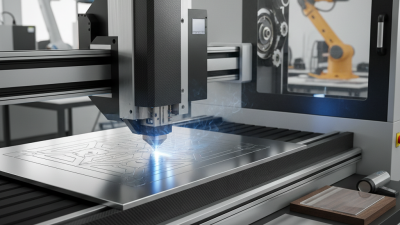
In 2026, industrial engraving depends on material, detail, and production speed. Fiber laser engravers suit stainless steel, aluminum, brass, and other reflective metals. Their focused beam creates sharp serial numbers, deep marks, and durable identification codes. Practical testing shows excellent contrast on treated metal surfaces. Yet fiber systems can overheat thin parts when power settings are too aggressive. Small adjustments matter.
CO₂ laser engravers work well with wood, acrylic, rubber, glass coatings, and selected polymers. They produce broad, clean marks across larger nonmetallic surfaces. UV laser engravers use shorter wavelengths for delicate plastics, coated metals, glass, and electronic components. Their reduced heat impact helps limit melting, discoloration, and edge distortion. The finish is often impressive. Still, results vary with coating thickness and surface contamination. No machine solves every material problem.
Tips: Test a small sample before full production. Record power, speed, frequency, and focal distance. Clean the surface carefully, especially before UV processing. Use proper extraction and shielding for the material being engraved. Inspect edges under angled light. This reveals roughness that normal lighting can hide. Allow time for calibration. A rushed setup may look acceptable, but it can create inconsistent marks later. Review failed samples honestly; they often expose weak assumptions in the process.
Fiber, CO₂, and UV laser engravers use different wavelengths, which strongly affects material absorption, heat input, and surface-processing precision.
The chart compares representative industrial laser wavelengths: UV lasers typically operate at 355 nm, fiber lasers at 1,064 nm, and CO₂ lasers at 10,600 nm. Shorter wavelengths generally support finer, lower-heat marking on sensitive materials, while longer-wavelength CO₂ systems are widely used for organic materials such as wood, acrylic, paper, and plastics.
In 2026, industrial identification increasingly requires marks that survive heat, oil, abrasion, and repeated cleaning. Production trials often highlight two dependable options: dot peen and scribe engraving machines. Both create permanent identification, but they suit different materials, depths, and production rhythms. That distinction matters.
A dot peen machine uses a carbide or diamond-tipped pin to strike individual dots. The result can include alphanumeric text, serial numbers, Data Matrix codes, and traceability information. This method works well on steel plates, castings, chassis parts, and uneven components. Operators can adjust impact force, dot spacing, and stroke speed for thin or hardened materials. Excessive force may distort small characters or stress edges. No method is perfect.
A scribe engraver presses a carbide tip across the surface, creating continuous, clean lines. Its quieter operation often suits polished metal, nameplates, and safety-critical components. Scribe marks usually provide strong visual contrast, especially under angled light. They can also produce less loose debris than impact marking. However, deep scribing may weaken thin stock, while poor part support can cause vibration and inconsistent lines. Regular stylus inspection and machine calibration improve repeatability. I would verify readability after coating, blasting, or corrosion testing, not only at the machine. That is where specifications meet reality.
Electrochemical engraving systems remain valuable for specialized metal marking. They use a stencil, electrolyte, and controlled electrical current. The process darkens or etches stainless steel without removing large amounts of material. It suits serial numbers, tool identification, safety plates, and traceability marks. According to MarketsandMarkets, the industrial marking and coding market is projected to grow from about USD 3.0 billion in 2023 to USD 4.3 billion by 2028. That growth reflects stronger demand for durable identification across manufacturing.
In practical production, electrochemical marking creates sharp results on flat and slightly curved surfaces. Operators can change stencils quickly, reducing setup time for small batches. The equipment is also quieter than many mechanical engraving machines. However, electrolyte control affects contrast, depth, and repeatability. A mark may look excellent on polished steel but weaker on a contaminated surface. This is where real workshop experience matters. Cleaning, current settings, and stencil pressure need documented checks. The assumption that every alloy behaves similarly can fail.
Tips: Test the exact alloy before production. Keep a sample plate for comparison. Record voltage, marking time, electrolyte condition, and cleaning steps. The International Organization for Standardization recommends controlled processes and documented quality procedures through ISO 9001. Still, certification alone does not guarantee a readable mark. Inspect edges under consistent lighting, and review faded samples after handling, washing, or heat exposure.
Arsun Engineers is the well-known manufacturer, exporter, and supplier of highly operational machines.