Top Industrial Automation Solutions for Global Buyers

Global manufacturers are investing in automation to improve output, consistency, and workplace safety. The International Federation of Robotics reported 541,302 industrial robots were installed worldwide in 2023. More than 4.28 million robots were operating in factories globally. These figures show strong demand for industrial automation solutions, but adoption is not simply a race to buy more robots.

The best solution must fit production volume, product variation, labor skills, and local service capacity. A compact packaging line may need vision inspection and collaborative robots. A metalworking plant may require programmable logic controllers, robotic arms, motion systems, and predictive maintenance software. Each choice affects installation time, cybersecurity, energy use, and future expansion. Small details matter.

Deloitte’s 2024 Smart Manufacturing and Operations Survey found that manufacturers continue prioritizing smart technology, while many still face workforce and implementation challenges. The World Economic Forum’s Global Lighthouse Network also shows how leading factories combine automation with data, human expertise, and disciplined process redesign. Technology alone is not enough.

This guide examines the top industrial automation solutions for global buyers, including robotics, control systems, machine vision, industrial IoT platforms, and digital twins. It considers measurable factors such as cycle time, downtime, total ownership cost, interoperability, and supplier support. Buyers should verify claims through factory trials, reference sites, and transparent performance data. No report can predict every plant. That limitation deserves attention. A cheaper system may become expensive when spare parts arrive slowly or operators lack training. Reliable automation begins with practical evidence, not impressive specifications.
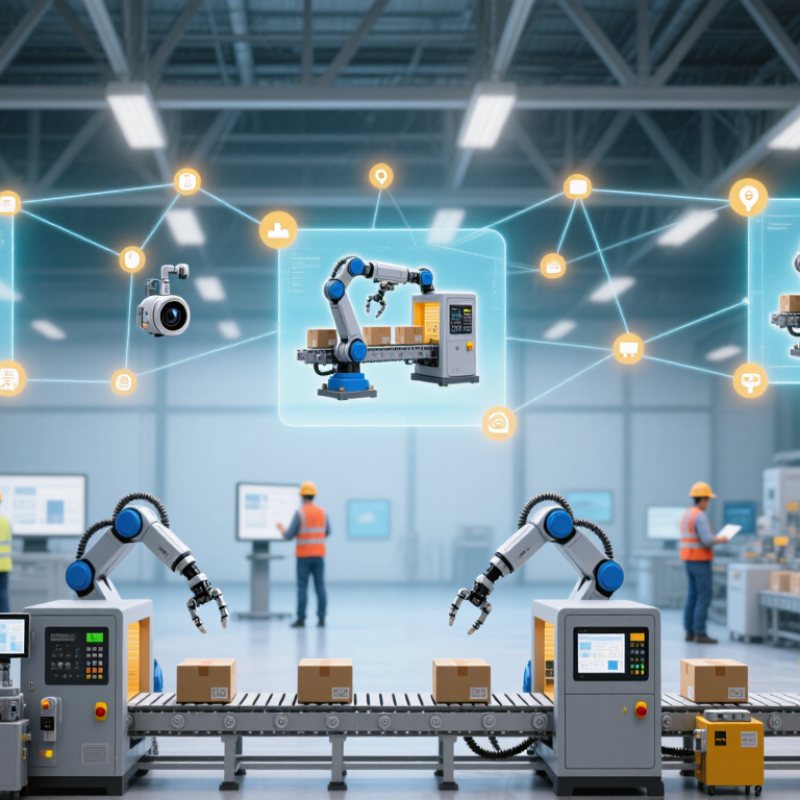
Top Industrial Automation Solutions for Global Buyers

What Industrial Automation Solutions Include

Industrial automation solutions include the hardware, software, and services that help factories control production with greater consistency. They may include programmable logic controllers, industrial sensors, motor drives, robotic equipment, and machine vision systems. These components collect operating data and coordinate actions on the production floor. A temperature sensor, for example, can detect a rise in a processing tank before quality declines.

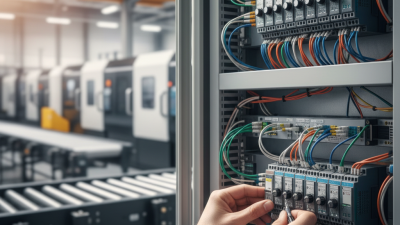
Supervisory control and data acquisition software can display alarms, trends, and equipment status in one control room. Manufacturing execution systems can connect production schedules with material use, inspection results, and operator records. Industrial networks allow machines to exchange information, but compatibility must be checked carefully. A system that works well in one facility may need different communication protocols elsewhere. Regional electrical standards also affect panel design, installation, and maintenance.

Safety functions are part of a complete solution, not an optional extra. Emergency stops, protective barriers, access monitoring, and safe motion controls help reduce workplace risks. Reliable suppliers should provide technical documentation, commissioning support, training, and replacement planning. Maintenance teams need clear wiring diagrams and realistic service intervals. Automation is not magic. Poor data, rushed retrofits, or unclear responsibilities can still create expensive stoppages. Even experienced engineers sometimes underestimate operator training. A practical assessment of existing machines, workforce skills, and future production needs usually produces better decisions than buying the most advanced equipment available.

How Key Automation Technologies Work

Industrial automation solutions connect machines, people, and production data into one working system. A programmable logic controller reads sensor signals and sends timed commands to motors, valves, and safety devices. For example, a photoelectric sensor can detect a box on a conveyor within milliseconds. The controller then stops the belt or redirects the box.

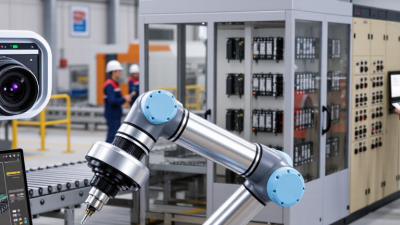
Industrial networks move this information between controllers, robots, drives, and monitoring software. Human-machine interfaces display temperatures, cycle times, and alarm conditions on an operator screen. Machine vision adds another layer. Cameras inspect labels, dimensions, or surface defects without touching the product.

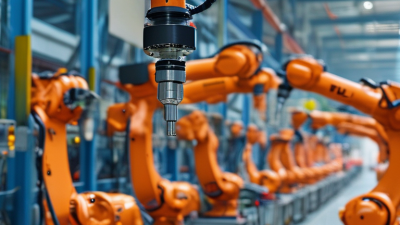
Robotics can repeat precise movements, but they still depend on correct programming, stable fixtures, and clean sensor lenses. Automation is not magic. Small installation errors can create large production losses.

In my experience, commissioning teams should test normal cycles and unusual failures. A perfect factory model rarely survives contact with dust, vibration, or changing materials.

Tips:

Match each technology to a measurable problem. Check sensor response time, network compatibility, maintenance access, and staff training before purchase. Ask suppliers for test data under realistic conditions.

Keep manual controls available during commissioning. Review alarm records weekly, because ignored warnings often become expensive downtime.

Admittedly, predictive maintenance can be overused. If a simple inspection finds a loose bearing, complex analytics may add little value.

Where Global Buyers Apply Automation Systems

Top Industrial Automation Solutions for Global Buyers

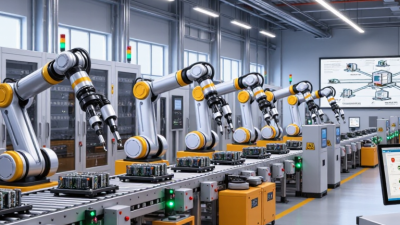
Global buyers apply automation where repetition, risk, and production delays are expensive. Automotive plants use robots for welding, painting, and material handling. Food factories automate filling, inspection, and packaging. Warehouses depend on sensors, conveyors, and autonomous mobile equipment. The International Federation of Robotics reported 541,302 industrial robot installations worldwide in 2023. Asia represented most new deployments, but demand is spreading across Europe and the Americas. The reason is practical: stable output matters when labor shortages disrupt schedules.

Automation also supports pharmaceuticals, electronics, metals, and water treatment. Vision systems inspect tiny defects under controlled lighting. Programmable controllers coordinate motors, valves, and safety devices. The International Energy Agency reports that industry accounts for about 37% of global energy use. Therefore, buyers increasingly assess automation through energy monitoring, not only speed. A system that runs quickly but wastes power is not truly efficient. This is where procurement teams sometimes misjudge value.

Tips: Map the process before choosing equipment. Measure cycle time, downtime, energy use, and operator movement. Request open communication standards and local maintenance support. Test one production cell first. Small pilots reveal integration problems early. However, a pilot can create false confidence if product variations remain untested. McKinsey research has repeatedly identified integration and workforce skills as major barriers to industrial transformation. Train technicians beside the installation, not months later. Keep spare sensors, clear safety procedures, and readable operating records.

How to Evaluate Automation Suppliers and Equipment

Top Industrial Automation Solutions for Global Buyers

Global buyers should evaluate automation suppliers beyond product catalogs and attractive pricing. A capable supplier explains how equipment performs in real production conditions. During factory visits, inspect wiring, safety guarding, software access, and maintenance areas. Ask for measured cycle times, not estimated figures. Request references from facilities with similar materials, volumes, and working environments. The supplier should also explain testing procedures, installation support, training, and response times. Clear technical answers matter more than polished presentations.

Tips: Ask for a sample acceptance test. Compare energy use, changeover time, spare-part availability, and total ownership cost. Check whether manuals are complete and written in a language your operators understand. A short live demonstration can reveal vibration, noise, or unstable controls that photographs hide. Do not accept vague promises.

Equipment selection requires practical judgment. Confirm compatibility with existing conveyors, sensors, networks, and production software. Review safety functions with qualified engineers before signing a contract. Reliable suppliers disclose limitations and document performance assumptions. I once focused too heavily on purchase price and overlooked operator training. That mistake was expensive. A lower-cost system may create longer downtime if troubleshooting skills, spare parts, or remote support are unavailable. Even strong evaluations can miss site-specific problems, so include a realistic pilot or factory acceptance test whenever possible.

What Global Buyers Should Consider Before Purchasing

Before purchasing industrial automation, global buyers should define the production problem, not simply count features. The International Federation of Robotics reported 541,302 industrial robots installed worldwide in 2023. That scale signals strong demand, but it does not guarantee a suitable investment. A fast robot may still fail when feeding systems, sensors, software, or operators cannot support its cycle time.

Check interoperability in a live test. Require documented communication standards, spare-parts availability, training, and remote-service limits. The International Society of Automation identifies cybersecurity as a lifecycle responsibility, not a final inspection task. Buyers should therefore request patch procedures, user-access controls, network segmentation, and incident-response contacts before signing. Small omissions become expensive later. They often do.

Total cost matters more than the purchase price. Include integration, tooling, energy, calibration, downtime, compliance checks, and technician hours. A 2024 report from the International Federation of Robotics noted that robot density varies sharply between economies, showing that infrastructure and skills influence results. A solution designed for one factory may underperform elsewhere because voltage, labor capability, floor layout, and maintenance routines differ.

Ask suppliers to disclose measured availability, test conditions, and excluded costs. Independent references from similar plants are more reliable than polished demonstrations. I would also challenge optimistic payback models. They often assume perfect uptime and stable demand. Real factories are less tidy. A cautious pilot, with agreed acceptance criteria, can reveal integration risks before a full rollout.

Top Industrial Automation Solutions for Global Buyers - What Global Buyers Should Consider Before Purchasing

A practical comparison of major industrial automation solution categories, their typical applications, integration requirements, and purchasing considerations.

Solution Category Primary Function Typical Applications Key Benefits Important Limitations Common Integration Requirements Best Purchase Considerations
Programmable Logic Controller (PLC) Executes real-time control logic for machines, production cells, and discrete processes. Assembly lines, packaging equipment, conveyors, material handling, and machine tools. Fast deterministic control, modular expansion, strong industrial durability, and broad field-I/O support. Large systems may require specialized programming skills and careful lifecycle planning. Digital and analog I/O, industrial Ethernet, fieldbus networks, human-machine interfaces, and safety circuits. Check scan performance, I/O capacity, environmental ratings, programming standards, spare-part availability, and local technical support.
Distributed Control System (DCS) Coordinates continuous and batch process control across multiple plant areas. Chemical processing, power generation, water treatment, food processing, and other process industries. Centralized plant visibility, advanced process control, redundancy options, and structured alarm management. Higher implementation complexity and cost than a small standalone control system. Process instruments, remote I/O, operator stations, engineering stations, historians, and redundant networks. Evaluate lifecycle support, system redundancy, migration path, cybersecurity architecture, and operator training requirements.
Supervisory Control and Data Acquisition (SCADA) Collects operational data and provides supervisory monitoring, visualization, alarms, and reporting. Utilities, distributed infrastructure, manufacturing plants, water networks, and remote facilities. Centralized monitoring, historical trends, remote visibility, alarm handling, and operational reporting. It does not replace field-level control and depends on reliable communications and accurate data mapping. PLCs or RTUs, industrial communication protocols, databases, user authentication, and network segmentation. Confirm protocol compatibility, historical-data capacity, alarm performance, remote-access controls, and system scalability.
Manufacturing Execution System (MES) Manages production orders, work-in-process, traceability, quality records, and performance information. Discrete manufacturing, regulated production, batch operations, and multi-site production management. Improved production visibility, electronic records, genealogy, workflow control, and standardized reporting. Benefits depend on clean master data, disciplined processes, user adoption, and integration with shop-floor systems. Enterprise resource planning, SCADA or PLC data, quality systems, barcode or RFID devices, and secure databases. Assess workflow flexibility, audit trails, data ownership, implementation methodology, reporting needs, and multi-site support.
Industrial Robots Automates repetitive, hazardous, or high-precision movement and handling tasks. Welding, palletizing, machine tending, painting, assembly, packaging, and material handling. Consistent repeatability, reduced exposure to hazardous work, higher throughput, and continuous operation capability. Requires safety design, suitable fixturing, application engineering, programming, and regular maintenance. End effectors, safety equipment, robot controllers, vision or force sensing, PLC communication, and guarding. Compare payload, reach, repeatability, cycle time, ingress protection, programming ease, safety functions, and service coverage.
Machine Vision Systems Uses cameras, lighting, optics, and image-processing software for inspection or guidance. Defect detection, dimensional checks, label verification, identification, robot guidance, and sorting. Fast non-contact inspection, consistent criteria, data capture, and reduced dependence on manual inspection. Performance can vary with lighting, surface finish, product variation, camera placement, and image quality. Cameras, lenses, lighting, triggers, industrial networks, inspection software, and reject mechanisms. Test representative samples, define acceptable false-reject rates, verify lighting stability, and plan recipe management.
Industrial Internet of Things (IIoT) Gateway Connects industrial equipment to local analytics platforms or cloud services for data collection and monitoring. Asset monitoring, predictive maintenance, energy management, remote diagnostics, and multi-site analytics. Adds connectivity to existing assets, supports edge processing, and enables cross-site data comparison. Poorly governed connectivity can increase cybersecurity risk and generate inconsistent or low-value data. Legacy interfaces, industrial protocols, secure remote access, edge computing, data models, and cloud or local platforms. Prioritize read-only access where appropriate, encrypted communications, device management, offline operation, and clear data ownership.
Safety Instrumented System (SIS) Moves equipment or processes to a safe state when predefined hazardous conditions occur. Process plants, high-energy machinery, hazardous material handling, and critical industrial operations. Reduces risk through independent safety functions, defined response logic, and monitored protective actions. Requires formal hazard analysis, validation, proof testing, documentation, and competent safety engineering. Safety sensors, final elements, emergency shutdown devices, safety-rated logic, diagnostics, and compliance records. Verify required safety integrity, independence, certification, proof-test intervals, fault diagnostics, and local regulatory compliance.
Motion Control and Variable-Speed Drives Controls motor speed, torque, position, synchronization, and acceleration or deceleration profiles. Packaging, printing, converting, winding, indexing, material handling, and coordinated machine axes. Improves positioning, process consistency, energy management, and machine throughput. Poor sizing, mechanical backlash, electrical noise, or inadequate tuning can reduce performance. Motors, drives, encoders, gearboxes, motion networks, mechanical transmission, and control software. Review load profile, speed and torque range, positioning accuracy, regenerative energy needs, thermal conditions, and commissioning support.

Global Purchasing Checklist: Confirm applicable electrical and machinery regulations, regional voltage and frequency requirements, language support, cybersecurity controls, interoperability, spare-parts availability, warranty terms, training, commissioning resources, total cost of ownership, and long-term software support before placing an order.

Scroll to Top