
Firefighting Drone technology is changing how emergency teams see heat, smoke, and dangerous structures. A thermal camera can reveal a trapped person through darkness. It can also expose hidden roof hotspots before crews enter.
The need is measurable. The NFPA’s Fire Loss in the United States During 2022 report recorded approximately 1.5 million fires and $18.1 billion in direct property damage. Meanwhile, the FAA’s 2023 Aerospace Forecast showed continuing growth in registered and commercial drone operations. These figures do not prove that drones solve every firefighting problem. They show why better situational awareness matters.
Charles Werner, founder of DroneResponders, has said, “Drones are a tool, not a replacement for firefighters.” That distinction should guide every purchase. This Top 10 Firefighting Drone selection considers thermal accuracy, flight endurance, wind resistance, obstacle avoidance, payload options, data security, training, and after-sales support. It also considers practical deployment under local aviation rules.
Some models impress in wide-area mapping. Others perform better around high-rise roofs, forests, or industrial sites. A few may look powerful on paper but provide limited support after delivery. That is where buyers can make costly mistakes.
No ranking is perfect. Battery life changes in cold weather. Smoke can distort thermal readings. Software features may depend on regional approvals. Global buyers should verify certification, maintenance access, pilot requirements, and total ownership cost before choosing a platform. The strongest Firefighting Drone is not always the most expensive one. It is the model that performs reliably when visibility drops, minutes matter, and assumptions fail.
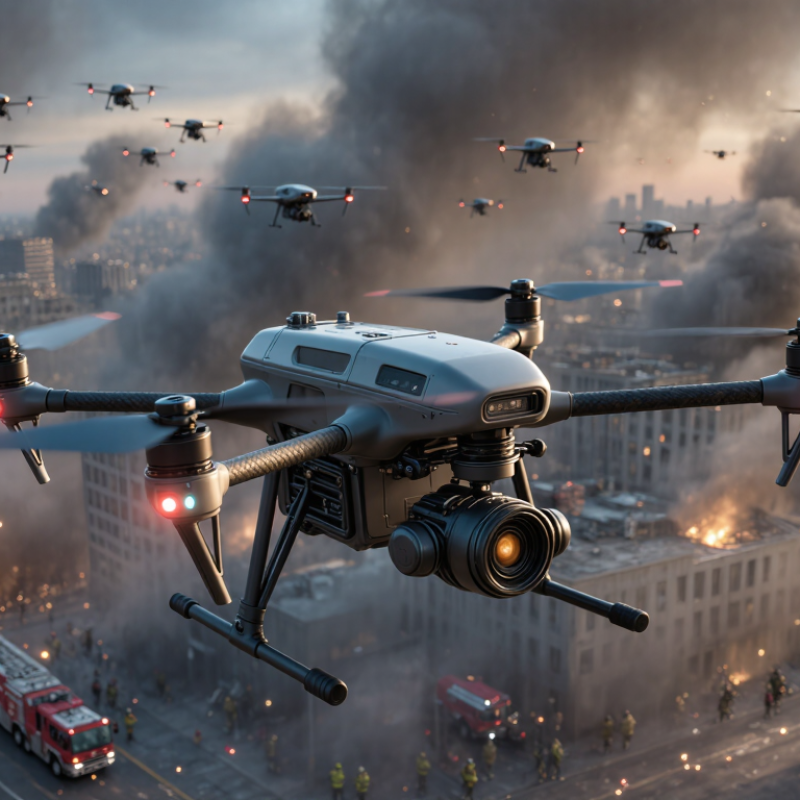
Firefighting drones are remotely operated aircraft built for dangerous fireground tasks. They carry thermal cameras, optical sensors, gas detectors, or compact water systems. Their live video helps commanders see roof heat, hidden flames, and blocked access routes. Some models use tethered power, while others depend on batteries. Battery limits remain a serious weakness.
The U.S. National Fire Protection Association reported 1,504,500 fires in 2022, with property damage reaching about $18.1 billion. That scale explains the demand for faster aerial information. A drone can reach a burning warehouse before crews enter. Its thermal camera may reveal heat behind smoke, while onboard mapping records changing conditions. This is practical, not futuristic.
A firefighting drone usually follows four steps. Sensors collect data. A flight controller stabilizes the aircraft. A secure ground station displays the scene. Operators then guide inspection, mapping, or targeted cooling. High-temperature protection matters greatly. So do wind resistance, payload capacity, signal range, and flight endurance. FAA aerospace forecasts continue to show expanding commercial small-drone operations, but buyers must check local aviation requirements and emergency procedures. A larger water payload may reduce flight time. More automation may also create false confidence. Human judgment still matters. Training gaps can turn useful equipment into an expensive distraction.
When comparing the top 10 firefighting drones for global buyers, examine their sensing systems first. A thermal camera should reveal hot roofs, trapped heat, and hidden fire paths through smoke. Visible-light zoom adds detail around windows, ladders, and damaged structures. Useful data, not dramatic footage. Check resolution, thermal range, stabilization, and performance in rain or darkness.
Flight endurance affects every rescue decision. A drone lasting 25 minutes may support a quick inspection, but larger incidents need battery swaps or tethered power. Payload capacity also matters. Some systems carry loudspeakers, spotlights, gas sensors, or compact delivery equipment. Confirm how payloads change flight time. Obstacle avoidance helps near towers and trees, yet it cannot replace a trained pilot. Brochure numbers may look perfect. Field conditions rarely are.
Reliable communication is essential around concrete buildings and heavy electrical interference. Compare operating range, encrypted data links, return-to-home behavior, and control response during signal loss. Look for clear video transmission and local data storage options. Weather resistance should match the intended climate, not merely a laboratory rating. Operators need practical training, spare parts, battery safety procedures, and documented maintenance intervals. Test the drone with gloves, low visibility, and strong wind before deployment. A short, realistic drill can expose weaknesses that specifications hide. No system is flawless.
Top 10 Firefighting Drones for Global Buyers should be judged by mission capability, not camera size. A practical shortlist includes thermal scouts, long-endurance mapping drones, tethered overwatch systems, water-dropping units, foam-delivery drones, indoor micro drones, smoke-monitoring platforms, command-link relays, night-operations drones, and heavy-lift inspection systems. Each design serves a different emergency scene.
NFPA reported 1,388,500 fires in the United States during 2023. The same report recorded about 3,670 civilian fire deaths and approximately 22.4 billion dollars in direct property damage. These figures explain the demand for faster aerial intelligence.
Thermal imaging can reveal heat behind walls, while optical zoom helps crews inspect roofs from safer distances. Yet smoke, reflective surfaces, and damaged structures can confuse sensors. Human verification remains essential.
Global buyers should examine flight endurance, wind tolerance, payload capacity, encrypted communications, spare batteries, and local operating permissions.
The International Civil Aviation Organization stresses risk-based unmanned aircraft management, especially near airports and populated areas. A drone with a thirty-minute flight time may perform poorly in strong wind. A water-dropping model may also carry too little for a large industrial fire.
The ranking is useful, but not perfect. Real-world trials, operator training, maintenance access, and emergency integration deserve equal attention. Even a clear thermal image can mislead a tired response team.
Choosing a firefighting drone starts with the mission, not the camera. A compact thermal drone suits fast reconnaissance around warehouses, forests, and narrow streets. It should detect hotspots through smoke and provide stable video in strong wind. Look for obstacle avoidance, night operation, and a practical flight time above twenty minutes.
For wildland fires, endurance and range matter more than a small frame. A drone with interchangeable batteries, accurate mapping, and reliable positioning can track changing fire lines. Urban rescue teams may need a heavier platform with a spotlight, loudspeaker, or safe payload capacity. Water-carrying drones sound impressive, but limited payloads may restrict their real value. They often support crews rather than replace helicopters or ground teams.
Consider launch speed, controller clarity, maintenance access, and data security. Field teams should test the drone beside smoke, heat, dust, and poor visibility. Small details matter. Can one person deploy it quickly? Does the thermal image remain readable at distance? Does the system return safely when its battery drops?
Certification, trained operators, and local aviation rules are essential before deployment. Specifications can look excellent on paper. Real conditions are less polite. A drone that performs well in calm weather may struggle near heat columns or heavy rain. Buyers should request independent demonstrations, review service support, and compare the total operating cost. The most advanced option may not be the most useful one.
Top 10 Firefighting Drones for Global Buyers?
Global Regulations, Safety Standards, and Ownership Costs
Choosing a firefighting drone requires more than comparing flight time. Regulations differ across countries, regions, and even individual airports. Buyers should confirm pilot certification, operational permits, airspace restrictions, and remote identification requirements before purchasing. Privacy rules may also affect thermal imaging near homes, roads, and industrial sites. Safety matters more than marketing claims. Look for obstacle avoidance, encrypted control links, return-to-home protection, weather resistance, and tested battery systems. A thermal camera can locate hotspots, but smoke, wind, and reflective surfaces may reduce accuracy.
Ownership costs are often underestimated. The purchase price is only one part. Budget for batteries, charging equipment, software updates, insurance, inspections, replacement parts, and operator training. Water-carrying models may require stronger motors and more frequent maintenance. Tethered systems can support longer observation, but they need careful cable management around structures and emergency vehicles. Independent testing reports are useful, although they are not always complete. No ranking stays perfect.
Tips: Request a compliance checklist before ordering. Ask who performs repairs and how quickly parts arrive. Test the drone in realistic heat, dust, wind, and low-visibility conditions. Keep written flight procedures. Train with local fire authorities, not only in a classroom. A cheaper drone may become expensive after one difficult season. Think carefully.
This benchmark compares representative firefighting-drone configurations by estimated five-year ownership cost. Costs include acquisition, batteries, payload equipment, maintenance, training, insurance, and software, but exclude crew salaries and regulatory application fees. Actual approval requirements vary by country and may include FAA Part 107, EASA UAS rules, UK CAA requirements, Transport Canada CARs, Remote ID, BVLOS authorization, and operational risk assessments.
Values are planning benchmarks based on commonly published specifications and procurement ranges for commercial unmanned aircraft. Payload, endurance, ingress protection, collision avoidance, thermal imaging, night operations, and local aviation approvals should be verified before purchase.
Arsun Engineers is the well-known manufacturer, exporter, and supplier of highly operational machines.