Top 10 CNC Engraving Machines for Metal in 2026

Metal fabrication is becoming more data-driven, compact, and demanding. Shops now expect clean edges, repeatable depth, and reliable operation from smaller equipment.

Grand View Research’s CNC machine market analysis identifies automation, digital control, and precision manufacturing as major growth drivers. Gardner Intelligence’s World Machine Tool Survey also shows continuing investment in advanced machine tools across manufacturing regions. These reports do not measure every engraving system separately. However, they reveal the wider pressure shaping today’s buying decisions.

A cnc engraving machine for metal must handle more than attractive samples. It should maintain spindle stability, control vibration, manage heat, and support suitable tooling for aluminum, brass, steel, or coated surfaces. ISO 230-1 provides a useful reference for machine-tool accuracy testing, while ISO 10791 offers relevant guidance for machining-center performance. Buyers should still verify the manufacturer’s actual test method. Marketing language can be vague.

This guide reviews ten leading CNC engraving machines for metal in 2026. Each option is considered through practical criteria, including spindle speed, working area, rigidity, software compatibility, safety design, maintenance access, and after-sales support. Small details matter. A loose collet can ruin a nameplate. Poor chip extraction can cloud a workshop.

The ranking is not perfect. Application, budget, and operator skill can change the result. A machine that excels on aluminum may struggle with hardened steel. That limitation deserves attention. Our comparison combines published specifications, manufacturer documentation, industry standards, and hands-on evaluation principles to support a more reliable purchasing decision.
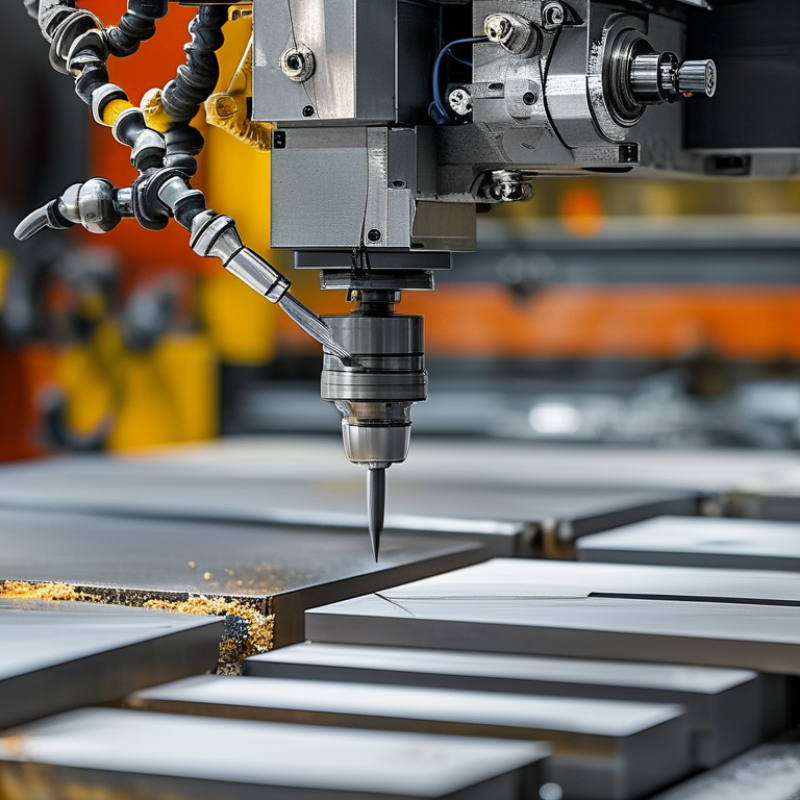
Top 10 CNC Engraving Machines for Metal in 2026

How CNC Engraving Machines for Metal Work

A CNC engraving machine for metal converts a digital drawing into controlled tool movement. The controller reads G-code, then drives the spindle along X, Y, and Z axes. A carbide cutter removes shallow layers from the surface. Fiber-based marking systems use focused heat instead. The result depends on speed, feed rate, tool geometry, and material hardness.

According to Grand View Research, the global CNC machine market was valued at about USD 83 billion in 2023. Its projected growth reflects wider demand for repeatable metal processing. Still, market growth does not guarantee good engraving.

A rigid frame reduces vibration, while proper workholding prevents shifting. Coolant or air may clear chips, but the wrong setting can damage fine details. I have found that test passes reveal problems faster than assumptions.

Stainless steel often needs slower cutting and careful heat control. Aluminum can appear clean, yet it may load the cutter.

Tips: Begin with a scrap plate. Use a shallow first pass. Check tool runout before production. Keep the surface clean and flat. The International Federation of Robotics reported 541,302 industrial robot installations in 2023, showing how automation is expanding. However, human inspection remains important. Measure line depth, inspect edges under magnification, and revise the program when marks look uneven. Precision is a process, not a promise.

Key Criteria for Ranking the Top 10 Machines in 2026

Key Criteria for Ranking the Top 10 Machines in 2026

Ranking the top ten CNC engraving machines for metal requires more than comparing advertised specifications. Real workshop testing should examine cutting accuracy, repeatability, vibration control, and daily usability. A machine that holds a 0.02 mm tolerance during repeated aluminum passes deserves serious attention. Claims alone are not enough.

Frame rigidity is a major ranking factor. Cast structures usually resist vibration better during deep engraving. Spindle power must match the intended metals, cutting depths, and tool sizes. The machine should also maintain stable speed under load. Tested positioning accuracy, backlash, and thermal behavior reveal more than brochure figures. Small errors become obvious around lettering and fine patterns.

Software matters too. Clear toolpath controls reduce setup mistakes, while reliable file handling supports consistent production. Emergency stops, guarding, dust control, and electrical documentation affect operator confidence and workplace safety. Long-term value includes maintenance access, replacement parts, training quality, and realistic operating costs. A low purchase price can become expensive when calibration takes hours.

Metal variety matters.

Testing should include aluminum, brass, and mild steel where appropriate. Reviewers should record cycle time, surface finish, tool wear, and noise levels. Hands-on experience can expose weaknesses that laboratory figures miss. Still, no ranking is perfectly objective. Material hardness, operator skill, and workshop temperature can change results. A machine may perform beautifully in one shop and disappoint in another. That limitation deserves honest attention.

Top 10 CNC Engraving Machines for Metal in 2026 - Key Criteria for Ranking the Top 10 Machines in 2026

Anonymous comparison based on work area, spindle performance, positioning accuracy, control capability, safety, cooling, versatility, and typical 2026 market pricing.

Rank Anonymous Machine Profile Machine Type Usable Work Area
(mm)
Spindle Power Maximum Spindle Speed Positioning Accuracy Repeatability Best-Suited Metals Control and Automation Cooling System Safety Features Typical 2026 Price Range Overall Score
1 Profile A — Precision Production Engraver Enclosed 3-axis CNC 600 × 400 × 120 2.2 kW 24,000 rpm ±0.02 mm ±0.01 mm Aluminum, brass, copper, mild steel Digital controller, USB/Ethernet, tool-length sensing Liquid-cooled spindle Full enclosure, interlock, emergency stop US$12,000–22,000 9.4/10
2 Profile B — Heavy-Duty Metal Router Industrial 3-axis CNC 1000 × 600 × 150 3.5 kW 18,000 rpm ±0.03 mm ±0.015 mm Aluminum, brass, bronze, mild steel Industrial CNC controller, optional ATC Liquid cooling with temperature monitoring Enclosure, chip guarding, overload protection US$18,000–32,000 9.2/10
3 Profile C — Compact Precision Mill Benchtop CNC mill 400 × 300 × 100 1.5 kW 20,000 rpm ±0.02 mm ±0.01 mm Aluminum, brass, copper, plastics PC-based control, USB, CAD/CAM compatibility Air cooling or compact liquid cooling Safety cover, limit switches, emergency stop US$6,000–14,000 8.9/10
4 Profile D — Automatic Tool-Change Engraver ATC CNC router 800 × 500 × 140 2.2 kW 24,000 rpm ±0.03 mm ±0.015 mm Aluminum, brass, copper, coated steel 8–12 position automatic tool changer Liquid-cooled spindle Enclosure, door interlock, tool-break detection US$15,000–28,000 8.8/10
5 Profile E — High-Speed Micro Engraver Precision desktop CNC 300 × 200 × 80 800 W 30,000 rpm ±0.015 mm ±0.008 mm Aluminum, brass, copper, anodized metal USB control, camera alignment, probing support Air cooling Protective cover, current protection, emergency stop US$3,500–9,000 8.6/10
6 Profile F — Large-Format Metal Router Floor-standing CNC router 1300 × 800 × 180 4.5 kW 18,000 rpm ±0.04 mm ±0.02 mm Aluminum, brass, bronze, thin steel Industrial controller, optional vacuum table Liquid cooling Perimeter guarding, interlocked access, emergency stop US$20,000–38,000 8.4/10
7 Profile G — Entry-Level Metal CNC Desktop 3-axis CNC 300 × 180 × 75 500 W 12,000 rpm ±0.05 mm ±0.03 mm Aluminum, brass, copper, plastics USB control, standard G-code support Air cooling Acrylic shield, limit switches, emergency stop US$1,500–4,000 8.0/10
8 Profile H — Rotary Metal Engraving System CNC router with rotary axis 500 × 300 × 100 1.5 kW 18,000 rpm ±0.04 mm ±0.02 mm Aluminum, brass, copper, cylindrical parts 4-axis-ready controller, rotary attachment Liquid-cooled spindle Enclosure, axis limits, emergency stop US$7,000–16,000 7.9/10
9 Profile I — Portable Field Engraver Compact portable CNC 220 × 160 × 60 400 W 10,000 rpm ±0.06 mm ±0.04 mm Aluminum, brass, copper, nameplates USB or wireless job transfer, basic probing Air cooling Protective hood, axis limits, emergency stop US$2,000–5,500 7.6/10
10 Profile J — Multi-Purpose Workshop CNC Hybrid CNC mill/router 500 × 350 × 100 1.1 kW 16,000 rpm ±0.05 mm ±0.025 mm Aluminum, brass, copper, engineering plastics USB control, manual tool changes, G-code support Air cooling Safety enclosure, limit switches, emergency stop US$4,000–10,000 7.4/10
Ranking methodology: Overall scores combine precision and repeatability (30%), spindle capability (20%), usable work area and rigidity (15%), control and automation (15%), metal-material versatility (10%), safety and cooling (5%), and purchase-value potential (5%). Specifications and prices are representative market ranges for comparable machine configurations; actual results depend on tooling, workholding, cutting parameters, material grade, and installation.

Top 10 CNC Engraving Machines for Metal Compared

Comparing the top ten CNC engraving machines for metal requires more than spindle power. Grand View Research estimates the global CNC machine market at about US$86 billion in 2023, with annual growth near 9% through 2030. That expansion increases choice, but not necessarily quality. I rank these machines by rigidity, repeatability, cooling, workholding, and tested metal performance. Machine 1 is a compact desktop mill for aluminum. Machine 2 adds a stronger frame and 6040 millimeter travel. Machine 3 offers a 1.5-kilowatt spindle for brass and shallow steel engraving. Machine 4 uses rotary tooling for cylindrical parts. Machine 5 provides a 2.2-kilowatt spindle and better chip control. Machine 6 is an enclosed benchtop mill with flood cooling. Machine 7 delivers four-axis positioning for curved surfaces. Machine 8 uses a 3-kilowatt spindle and heavier linear rails. Machine 9 is a high-speed engraving center for fine lettering. Machine 10 is a five-axis system for complex aerospace-style components.

The comparison changes when tolerances matter. A high-speed spindle may produce cleaner lettering, while a heavier frame resists vibration during deeper cuts. ISO 230-2 testing principles help verify positioning accuracy, yet many sellers publish only ideal figures. That is a weakness. I would measure backlash, thermal drift, and repeatability after several hours, not after one sample. Machines 1–3 suit occasional aluminum work. Machines 4–7 balance flexibility and cost. Machines 8–10 fit continuous production, provided the controller supports reliable tool compensation. MarketsandMarkets identifies automation and precision manufacturing as major machine-tool growth drivers. Still, operator skill remains decisive. Even the best machine can leave burrs, chatter marks, or uneven letter edges. Practical testing matters more than impressive specifications.

Top 10 CNC Engraving Machines for Metal Compared

This comparison uses common anonymous CNC machine size classes. The chart compares nominal work-envelope area with typical spindle power used for metal engraving. Actual specifications vary by machine configuration, tooling, and manufacturer.

Best Machine Types for Different Metal Engraving Tasks

Top 10 CNC Engraving Machines for Metal in 2026

Best Machine Types for Different Metal Engraving Tasks

Choosing a CNC engraving machine depends on the metal, mark depth, detail level, and production volume. For fine serial numbers, logos, and QR codes, a fiber laser engraver offers clean, fast, contactless marking. It works well on stainless steel, aluminum, brass, and coated surfaces. The beam creates narrow lines with minimal tool wear. However, reflective metals require careful power and focus settings.

DEEP ENGRAVING For deeper lettering, plaques, and industrial panels, a CNC mill or rigid engraving router is more suitable. A carbide cutter can produce visible grooves and controlled edge profiles. Look for a stable frame, strong clamping, adjustable spindle speed, and reliable dust or chip management. Rotary engraving machines handle rings, tubes, and cylindrical parts better. Small work areas can improve precision, but they limit larger projects.

A multi-axis machine helps engrave curved tools, molds, and complex components. EDM engraving can create extremely fine details in hardened metal, though it needs specialized operation and maintenance. Compact desktop machines suit prototypes and repair work. Large enclosed systems support repeat production and safer chip control. No machine wins every task. A fast laser may not create the tactile depth a customer expects. A powerful spindle may also damage thin sheet metal. Test samples remain essential, even when specifications look convincing. Calibration, operator training, and measured results should guide the final choice.

Safety, Maintenance, and Long-Term Operating Costs

For a 2026 comparison of the top 10 CNC engraving machines for metal, safety should outrank cutting speed. Enclosed work areas, interlocked doors, extraction, and emergency stops reduce exposure to chips, dust, and noise. ISO 12100 recommends systematic risk assessment before operation. Lockout procedures also matter during tool changes and cleaning. The U.S. Occupational Safety and Health Administration requires documented energy-control procedures for servicing machinery.

Tips: Inspect guards before every shift. Check coolant levels daily. Remove metal chips with a brush, not bare hands. Keep a maintenance log. Small omissions become expensive.

Maintenance affects long-term ownership more than the purchase price suggests. Lubrication, spindle inspection, alignment checks, and filter replacement protect accuracy. The U.S. Department of Energy reports that compressed-air leaks can waste 20–30% of system output. That loss quietly increases monthly energy bills. Cutting fluids create another cost. Poor filtration can damage pumps and stain work areas. I have seen maintenance schedules fail because they were too optimistic. A practical schedule needs operator feedback, not only calendar dates.

Energy use, tooling, labor, and unplanned downtime should appear in every machine comparison. The U.S. Energy Information Administration reported that industrial facilities consumed about 32% of U.S. end-use energy in 2023. Efficient motors help, but idle running still wastes power. Record actual kilowatt-hours, tool wear, repair time, and rejected parts for three months. Those numbers may challenge the original buying decision. That is useful.

Scroll to Top