What Are the Top 10 Types of Batch Cooking Equipment?
Choosing the right Batch Cooking Equipment can shape a kitchen’s speed, consistency, and operating costs. Large-scale food production depends on more than capacity alone. Heat control, cleaning access, energy use, and operator safety matter every day.
This guide examines ten widely used equipment types for batch preparation. The list includes steam kettles, tilting skillets, braising pans, combi ovens, pressure cookers, and industrial mixers. It also considers rice cookers, batch fryers, pasta cookers, and large-capacity blenders. Each option suits different foods, production volumes, and kitchen layouts.
Practical experience shows that bigger equipment is not always better. A kettle may handle soup efficiently, while a tilting skillet offers broader cooking flexibility. A combi oven can produce consistent results, but only when loading patterns and humidity settings are controlled. Small details matter.
Clean floors do not guarantee clean equipment.
Reliable selection requires technical evidence and honest evaluation. Manufacturers’ specifications should be checked against real production needs, not impressive marketing claims. Staff training, maintenance support, replacement parts, and ventilation requirements also deserve attention. These factors often decide whether equipment performs well after installation.
No kitchen gets every choice right. Some comparisons remain subjective because menus, budgets, and labor skills vary. This article therefore focuses on practical strengths, limitations, and suitable applications. The goal is not to promote one universal solution, but to help foodservice professionals compare Batch Cooking Equipment with greater confidence. Expect useful guidance, but leave room for careful testing.
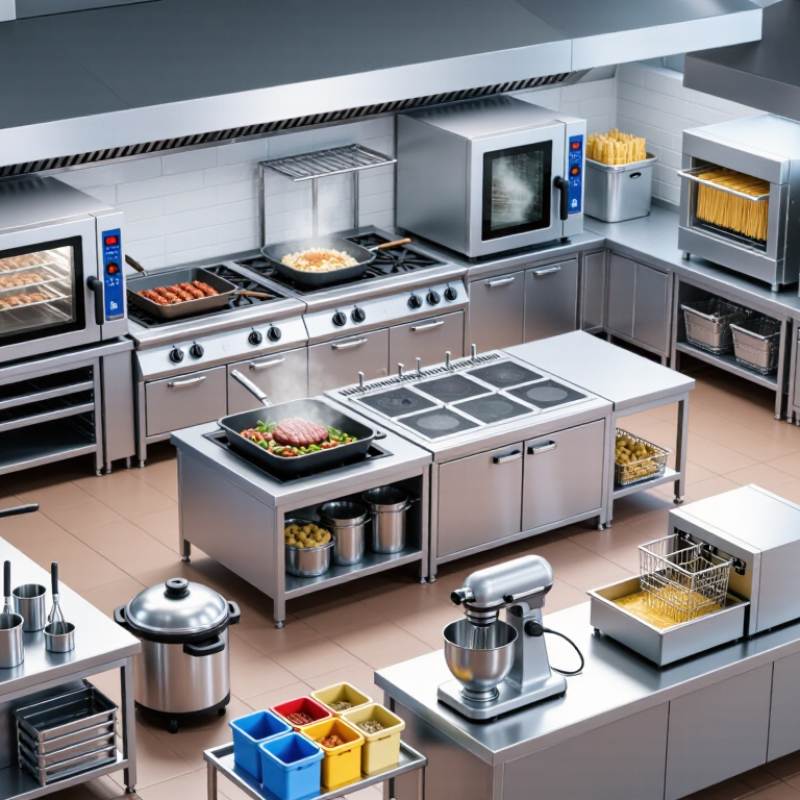
Batch Cooking Equipment: Definition, Uses, and Main Categories
Batch cooking equipment refers to machines designed to prepare large quantities of food consistently. Unlike small cookware, these units support repeated production, controlled temperatures, and faster service. Kitchens use them for soups, sauces, grains, roasted vegetables, fried items, and prepared meals. Capacity matters, but usable capacity matters more.
The top ten types include steam-jacketed kettles, tilting skillets, combi ovens, convection ovens, pressure steamers, rice cookers, batch fryers, planetary mixers, food processors, and blast chillers. Each belongs to a practical category.
Kettles and skillets handle liquid or sautéed foods. Ovens and steamers manage baking, roasting, and moisture-sensitive cooking. Mixers and processors reduce manual preparation. Blast chillers quickly lower food temperature after cooking. They support safer storage and better workflow when used correctly.
In working kitchens, equipment selection should match menu volume, staff skills, floor space, and cleaning routines. A large kettle may look efficient, yet it can waste energy during smaller production runs. I have seen teams overlook loading time and create new bottlenecks. That mistake is easy to repeat. Operators should verify cooking temperatures with calibrated tools and record cooling times according to local food-safety requirements. Removable parts, smooth surfaces, and accessible controls also reduce cleaning errors. Reliable results depend on training, maintenance, and realistic batch sizes, not machinery alone.
Types 1–3: Batch Mixers, Cooking Kettles, and Steam-Jacketed Pans
Batch cooking equipment must match the product, batch size, and production rhythm. Batch mixers, cooking kettles, and steam-jacketed pans serve different process needs. Choosing by capacity alone can create uneven texture, excessive heating time, or difficult cleaning.
Batch mixers are designed to combine ingredients consistently. Paddle mixers suit thick sauces, fillings, and dough-like mixtures. Ribbon mixers handle powders and dry blends more gently. Scraper attachments help reduce material left on the vessel wall. Operators should check mixing speed, blade clearance, and discharge design. Small production trials matter. The stated capacity may not equal the usable capacity.
Cooking kettles provide controlled heating for soups, sauces, grains, and prepared fillings. Direct heating can be responsive, but it may create hot spots near the base. Agitation becomes important when products contain starch, sugar, or suspended solids. Temperature probes should measure the product, not only the vessel surface.
Steam-jacketed pans use circulating steam around the cooking chamber. They distribute heat more evenly and reduce scorching risks. This design works well for larger batches and longer cooking cycles. Insulation can improve efficiency, although poorly maintained seals may waste energy. That detail is easy to overlook. Sanitation access, drain placement, and cleaning verification should influence the purchase decision as much as heating performance.
Types 4–6: Tilting Skillets, Pressure Cookers, and Combi Ovens
Tilting skillets are practical workhorses for large batches of sauces, grains, stews, and browned vegetables. Their wide, heated surface supports even cooking and easier stirring. The tilting mechanism helps staff transfer food into pans without lifting heavy pots. I have found that scraping the corners matters, because food can collect there during long cooking cycles. These skillets also need enough headspace. Overfilling creates uneven temperatures and messy pouring.
Pressure cookers shorten cooking times for beans, tough cuts, and dense root vegetables. They retain moisture, which can improve texture and reduce evaporation. Accurate portioning remains essential. A cooker filled beyond its safe limit may produce inconsistent results. Staff should inspect seals, valves, and pressure indicators before each production period. The cooking chart should include ingredient weight, liquid volume, and release method. Small timing errors can change a batch dramatically.
Combi ovens combine convection heat, steam, or both. They suit roasted meats, steamed vegetables, baked dishes, and reheated trays. In practical use, tray spacing affects airflow more than many cooks expect. Crowded shelves often leave pale patches and uneven moisture. Probe placement also deserves attention. A probe touching a tray can report a misleading temperature. Regular calibration checks improve reliability, although they take time during a busy shift. I once trusted a familiar program too much, and the center of a casserole stayed cold. That mistake reinforced a useful habit: verify the actual food temperature, not only the display.
Types 7–8: Batch Fryers and Large-Capacity Rice Cookers
Batch fryers are designed for kitchens that serve many portions within short service periods. Their deeper baskets and controlled heating systems support consistent frying across repeated loads. I have found that basket size matters as much as oil temperature. Overloading causes greasy food, pale crusts, and uneven cooking. Leave space between pieces when possible. A clear recovery time is also important after each batch. Staff should check oil condition, filter it safely, and record unusual smells or darkening. These simple records improve consistency and support responsible equipment maintenance.
Large-capacity rice cookers suit cafeterias, catering operations, and busy restaurants. They can prepare several kilograms of rice while reducing active cooking labor. The correct water ratio depends on rice variety, batch volume, and equipment design. Small tests are worthwhile. Rice may appear cooked but still feel firm near the center. After cooking, gentle mixing helps release excess steam and reduces clumping. Hot holding also needs attention, because rice quality declines when it sits too long. Follow local food-safety requirements and the cooker’s operating instructions.
Tips: Weigh rice before washing it, and mark the water level clearly. Avoid opening the lid repeatedly. Use clean utensils for every batch. I once trusted a standard ratio too quickly, and the final batch became soft. That mistake showed me why written trials matter. Keep a spare thermometer nearby, but do not treat it as a substitute for proper cleaning, training, or routine inspections.
Types 7–8: Batch Fryers and Large-Capacity Rice Cookers
Representative commercial capacity ranges show how batch fryers are commonly specified by oil volume, while large-capacity rice cookers are specified by dry-rice capacity. Actual production depends on recipe, cooking time, loading level, and equipment design.
Batch fryers typically use 20–60 L of oil per batch. Large-capacity rice cookers commonly handle approximately 10–30 L of dry rice per batch.
