
Choosing a reliable Pos Machine Battery supplier in China requires more than comparing prices. Payment terminals operate in busy shops, restaurants, banks, and delivery counters. Their batteries must support stable charging, repeated daily use, and safe operation under changing temperatures.
This guide introduces ten notable Chinese suppliers for POS machine batteries. It considers manufacturing experience, battery chemistry, customization ability, quality systems, and export support. It also examines practical details, including cell selection, connector design, protection circuits, capacity labeling, and sample testing. A battery may look suitable in a product photo. Real performance appears after repeated charging cycles.
Supplier evaluation should include factory audits, test reports, traceable production records, and clear warranty terms. Buyers should confirm compliance with relevant transport and safety requirements, such as UN 38.3 testing where applicable. IEC-related test evidence can also strengthen confidence, depending on the battery design and target market. These documents do not replace independent verification.
No ranking is perfect. Some suppliers have strong engineering teams but limited communication overseas. Others offer attractive prices but provide fewer customization options. This guide therefore treats the top ten as a practical starting point, not a final purchasing decision. Request samples. Test them inside the actual POS terminal.
A dependable Pos Machine Battery should deliver consistent runtime, secure fitting, and predictable charging behavior. Small details matter, especially during peak payment hours. Careful comparison can reduce replacement costs and protect business continuity.
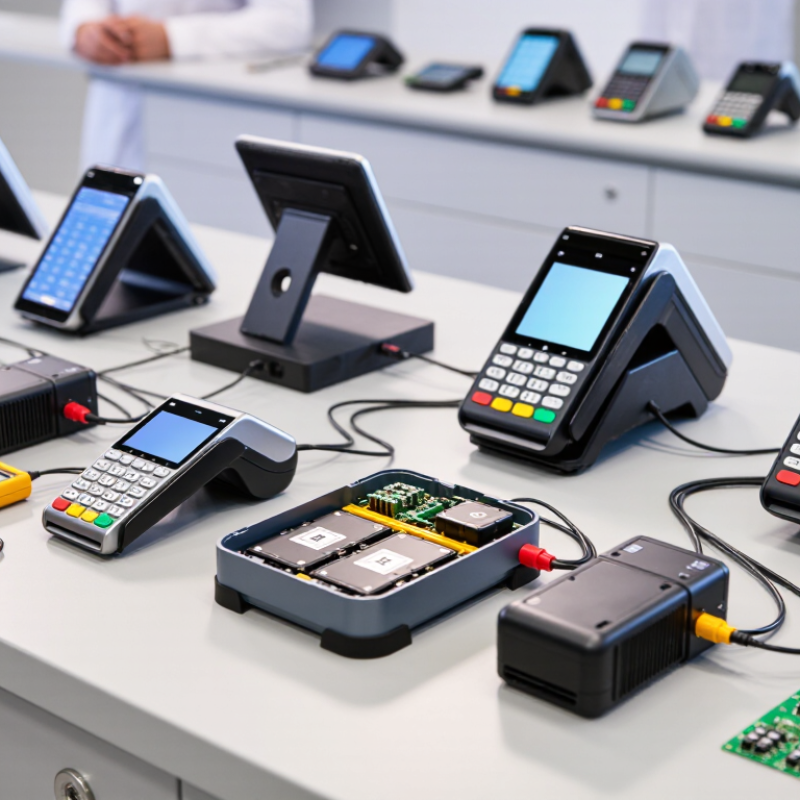
A leading POS machine battery supplier understands that every terminal has different power demands. Battery size, voltage, connector position, and charging limits must match the device precisely. A reliable supplier reviews drawings, samples, and operating conditions before quoting. Guesswork creates expensive returns.
Practical experience matters on the production floor. Engineers should test charging cycles, standby time, temperature changes, and protection against overcharge or short circuits. They should also verify cell consistency between batches. A strong supplier can provide clear test records, traceable materials, and documentation for applicable transport and safety requirements. The paperwork must match the physical product.
Small details often reveal quality. A battery that fits tightly may still damage a housing after repeated expansion. A connector can look correct but fail after thousands of insertions. Sample testing is essential. Mass production should begin only after approval samples pass realistic use tests.
No supplier is perfect. Even experienced teams may overlook unusual sleep modes or cold warehouse conditions. Open communication helps expose these weaknesses early. Ask about quality controls, production capacity, replacement procedures, and response times. The best partner does not promise everything. It explains limits, reports problems honestly, and improves the design with documented evidence.
China’s Top 10 POS Machine Battery Suppliers are often judged by more than price. Reliable suppliers show stable cell sourcing, clear production records, and consistent quality control. They understand the demands of retail counters, mobile terminals, and handheld payment devices. A suitable battery should deliver steady voltage during repeated transactions. It should also fit securely inside a compact housing.
Small details matter.
Tips: Request samples from several suppliers before placing a bulk order. Check capacity, charging time, connector fit, and surface temperature. Ask for test reports, safety documentation, warranty terms, and batch traceability. A factory visit or live production video can reveal process discipline. However, appearances can mislead. Independent testing remains valuable.
Experienced buyers should also examine long-term cooperation standards. Ask how suppliers handle aging tests, failed units, and design changes. Confirm whether custom dimensions require new tooling or only a revised assembly process. In practical use, a battery may face heat, vibration, frequent charging, and long storage periods. Laboratory results do not always reflect these conditions.
I have found that clear communication often prevents more problems than aggressive price negotiation. Still, supplier evaluations should be reviewed regularly, because quality can shift after material changes or production expansion.
Choosing a POS machine battery starts with the device, not the supplier’s catalog. Most portable terminals use lithium-ion or lithium-polymer cells because they offer high energy density in a compact package. Lithium-polymer batteries can fit unusual shapes, while cylindrical lithium-ion cells often provide simpler production and replacement options. Lithium iron phosphate chemistry offers strong thermal stability, but its voltage profile may not match every terminal.
Check the original battery’s voltage, capacity, dimensions, connector, and protection circuit. A common single-cell lithium battery has a nominal voltage near 3.7 volts. Capacity is listed in milliamp-hours, but watt-hours provide a clearer comparison across voltages. A higher mAh rating is not automatically better. It may increase weight, charging time, or internal pressure.
During supplier evaluation, request cell datasheets, sample test reports, cycle-life data, and transport documentation. Confirm overcharge, over-discharge, short-circuit, and temperature protection. I have seen batteries fit physically but fail because the connector polarity was reversed. Small details matter. Ask for samples before approving a production order, then test charging, standby time, receipt printing, and wireless communication under normal workload. Specifications can look perfect on paper. Field behavior is less forgiving.
China Top 10 POS Machine Battery Suppliers?
Comparing Chinese POS battery suppliers requires more than checking prices or online rankings. A reliable evaluation starts with battery chemistry, nominal voltage, capacity, cycle life, and dimensions. Confirm whether the battery matches your terminal’s charging circuit and operating temperature. Ask for recent test reports, safety documentation, and production traceability. These records show how seriously a supplier manages quality.
Request samples before placing a large order. Test them during continuous transactions, standby periods, charging, and low-battery alerts. Measure actual capacity instead of trusting the label alone. Check connector fit, cable length, insulation, and protection against overcharge or short circuits. I have seen specifications look complete while small connector differences caused installation delays. That detail is easy to miss.
Tips: Compare at least three suppliers using the same checklist. Review sample performance, not only quotations. Ask about minimum order quantities, lead times, replacement procedures, and warranty terms. Clear answers matter. Also inspect communication speed and technical support. A supplier that explains limitations may be more dependable than one promising perfect results. Recheck certificates and test data before approval, because documents can become outdated. Consider requesting a small pilot batch; it costs more time, but it can reveal packaging damage, inconsistent capacity, or unclear labeling before full production.
When comparing China’s top POS machine battery suppliers, begin with technical fit, not catalog size. Share the device model, battery dimensions, voltage, capacity, connector, and operating temperature. A clear specification sheet prevents costly misunderstandings.
Ask each supplier for factory experience, production capacity, quality certificates, and recent inspection records. Request photos of cell markings, protection circuits, wiring, and packaging. Do not rely only on polished samples. Send a sample to an independent laboratory when safety or performance matters. Test charging cycles, standby time, heat buildup, and connector stability. Small details matter.
Use a written purchase agreement covering capacity tolerance, battery aging, defect handling, inspection timing, and replacement terms. Confirm whether the quoted price includes testing, packaging, export documents, and transport. Battery shipments require accurate classification and suitable safety documentation. Requirements may differ by destination, so verify them with a qualified logistics provider.
Keep communication practical. Ask for a pilot order before committing to large volume. Record test results with dates and photographs. One weakness remains: supplier claims can change after production begins. I would repeat random checks.
Do not choose the lowest quotation automatically. A cheaper battery may have inconsistent capacity or shorter service life. A stable supplier should explain limitations clearly, accept reasonable audits, and provide traceable batch information. That behavior is often more valuable than a long product list.
Arsun Engineers is the well-known manufacturer, exporter, and supplier of highly operational machines.