What is Industrial Automation and How Does It Work?
Industrial automation represents a significant shift in how industries operate today. It involves the use of technology to control and monitor processes, machines, and systems. The goal of industrial automation is efficiency. Companies aim to reduce manual labor and errors while increasing production speed.
Automation systems can vary from simple mechanical devices to complex software that manages entire production lines. Many industries, such as manufacturing and food processing, rely heavily on these systems. However, the implementation of industrial automation is not without challenges. Workers may fear job loss, while businesses must invest heavily in new technologies.
Understanding how industrial automation works is crucial for companies looking to evolve. It is essential to weigh the benefits against potential drawbacks. This balance will determine the future of industries as they navigate this technological landscape.
What is Industrial Automation?
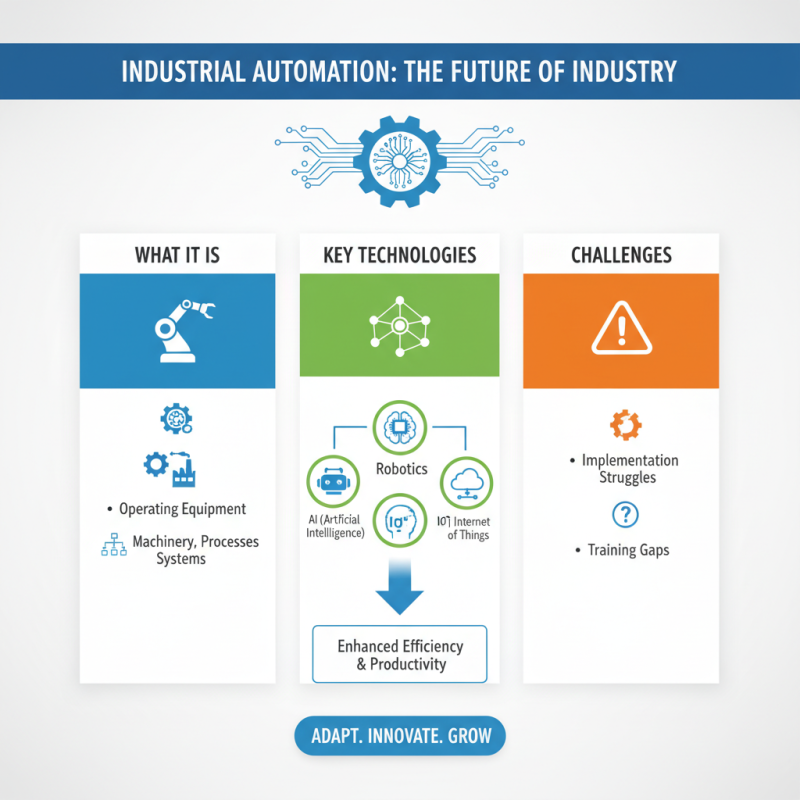
Industrial automation refers to the use of control systems for operating equipment. This includes machinery, processes, and systems in various industries. By integrating technologies like robotics, AI, and IoT, businesses can enhance efficiency. However, this transition is not without challenges. Many companies struggle with implementation and training.
Automation reduces human labor for repetitive tasks. Machines handle assembly lines, quality control, and packaging. This can lead to increased productivity. But there are concerns about job displacement. Workers may fear losing their roles. Reskilling programs are often needed but may not be enough.
Moreover, the reliability of automated systems can sometimes falter. Equipment failures or software bugs can lead to production delays. Human oversight remains crucial. In complex scenarios, human intervention is still required. The balance between automation and human input is delicate and requires ongoing evaluation.
Key Components of Industrial Automation Systems
Industrial automation relies on various key components to streamline processes and enhance efficiency. One of the most critical elements is sensors. These devices detect changes in the environment, such as temperature or pressure. They provide real-time data, crucial for making informed decisions. Actuators are another essential part. They convert electrical energy into mechanical motion. This mechanism enables machines to perform tasks like opening valves or moving conveyor belts.
Control systems form the brain of automation. They process input from sensors and send commands to actuators. Programmable Logic Controllers (PLCs) are widely used in this role. They offer flexibility and reliability. However, programming them requires expertise. If done incorrectly, it can lead to system failures. Communication networks also play a vital role. They allow different components to share data efficiently. A weak network can cripple an automation system.
Adding these elements together creates a cohesive system that can adapt to various industrial needs. However, it’s important to frequently assess each component. Regular maintenance prevents potential breakdowns. A proactive approach in monitoring components helps reduce unforeseen challenges. By understanding these key parts, companies can better navigate their automation journeys.
Industrial Automation Systems: Key Components Overview
This chart represents the importance level of key components in industrial automation systems. Each component plays a crucial role in the overall functionality and efficiency of automated solutions.
How Industrial Automation Works: A Step-by-Step Process
Industrial automation revolutionizes manufacturing by leveraging technology to control processes. It involves a series of steps that enhance efficiency, reduce human error, and lower production costs. The Industrial Internet of Things (IIoT) plays a crucial role in connecting equipment and systems. According to a report by MarketsandMarkets, the global industrial automation market is projected to reach $300 billion by 2025, reflecting a significant shift in operations.
Implementing industrial automation typically starts with assessing existing processes. Analyzing workflows helps identify areas that need improvement. Data collection is vital; sensors gather metrics like temperature, speed, and output. This information informs decision-making and facilitates real-time adjustments. Programming is another key stage, where systems are configured to execute tasks autonomously.
Tips: Test your automated systems regularly. This helps catch overlooked issues early. Training employees is essential too. They need to adapt to new technologies for smooth operations. Ultimately, continuous evaluation enhances automation efficiency. As with any system, flaws can surface. Reflect on the outcomes and be open to making necessary adjustments.
Benefits of Industrial Automation in Modern Manufacturing
Industrial automation plays a critical role in modern manufacturing. It enhances efficiency by streamlining production processes. Machines and robots take over repetitive tasks. This reduces human error and increases output. Automated systems operate 24/7, leading to higher productivity. Manufacturers can meet rising demand while maintaining quality.
Another benefit is cost reduction. Automation lowers labor costs and minimizes waste. It allows better resource management. However, the transition to automation is not without challenges. Training employees to work alongside machines requires time and effort. Some workers may fear job loss, leading to resistance. Companies must address these concerns thoughtfully.
Moreover, automation can lead to greater consistency in product quality. However, reliance on technology can be risky. A system failure might halt production. Businesses need backup plans in place. Balancing automation with human oversight is crucial for success. The journey towards efficiency is filled with learning opportunities.
What is Industrial Automation and How Does It Work? - Benefits of Industrial Automation in Modern Manufacturing
| Dimension |
Description |
Benefits |
| Efficiency |
Automation increases production speed by reducing human intervention. |
Higher output with consistent quality and reduced labor costs. |
| Safety |
Reduces the risk of accidents by using machines to carry out dangerous tasks. |
Creates a safer working environment and decreases workplace injuries. |
| Quality Control |
Automated systems can monitor quality at each stage of production. |
Ensures higher product consistency and reduces errors. |
| Flexibility |
Automated systems can be programmed to handle varying tasks and product types. |
Adaptable production lines, allowing quick shifts in production priorities. |
| Data Analysis |
Collecting real-time data to improve decision-making and process optimization. |
Enhanced operational efficiency and reduced downtime through predictive maintenance. |
Challenges and Considerations in Implementing Automation
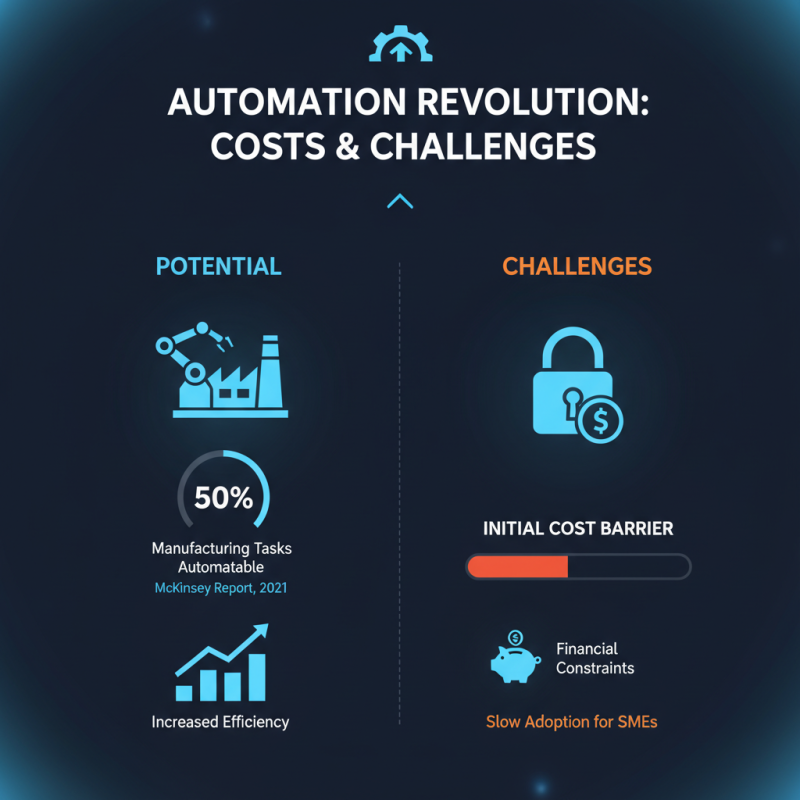
Automation can revolutionize industries, but implementing it comes with significant challenges. One major issue is the initial cost. According to a 2021 report by McKinsey, up to 50% of tasks in manufacturing could be automated, yet the investment required can be a barrier for many businesses. Financial constraints can lead to slow adoption rates, especially for small to medium enterprises.
Another challenge lies in workforce adaptation. Employees may resist changes. A study from Deloitte found that 40% of workers fear job loss due to automation. This creates an atmosphere of anxiety. Training programs are essential. Companies need to invest in skill development to prepare employees for new roles.
Tips: Engage all stakeholders. Transparent communication builds trust and eases fears. Regular feedback can also help identify issues before they become significant problems. Consider piloting automation in smaller areas first. This approach allows companies to learn and adapt without overwhelming the entire operation. Also, regularly reviewing goals and outcomes is crucial. It helps in assessing the return on investment and refining processes over time.