
Choosing the right Storage Racking system begins with understanding the warehouse, not browsing attractive product photos. Every decision should reflect the actual load, available floor space, handling equipment, and daily work pattern. A pallet weighing 800 kilograms creates different demands from cartons stored by hand. A narrow aisle may save space, yet it can slow forklift movement and increase contact risks.
As John Paxton, former president and CEO of MHI, has stated, “Material handling is about moving, storing, protecting, and controlling products.” That principle keeps the discussion practical. Selective pallet racking may suit varied stock and direct access. Drive-in racking can improve density, but it offers less selectivity. Cantilever racking works better for long materials, such as pipes, timber, or steel profiles.
Good planning also requires accurate measurements. Record ceiling height, column positions, sprinkler clearances, aisle widths, and floor capacity. Check pallet dimensions carefully. A small mismatch can leave unstable overhangs or wasted space. Ask how often products rotate. Ask whether forklifts can turn comfortably. Ask what happens during peak season.
The most expensive mistake may be choosing capacity that looks impressive but does not match operations. I have seen layouts that appeared efficient on paper become awkward after the first delivery. That possibility deserves honest attention. Reliable Storage Racking should include suitable protection, visible load information, trained operators, and scheduled inspections. Local engineering requirements and manufacturer guidance must also shape the final design. Safety is not a decorative feature. It is the foundation of usable storage.
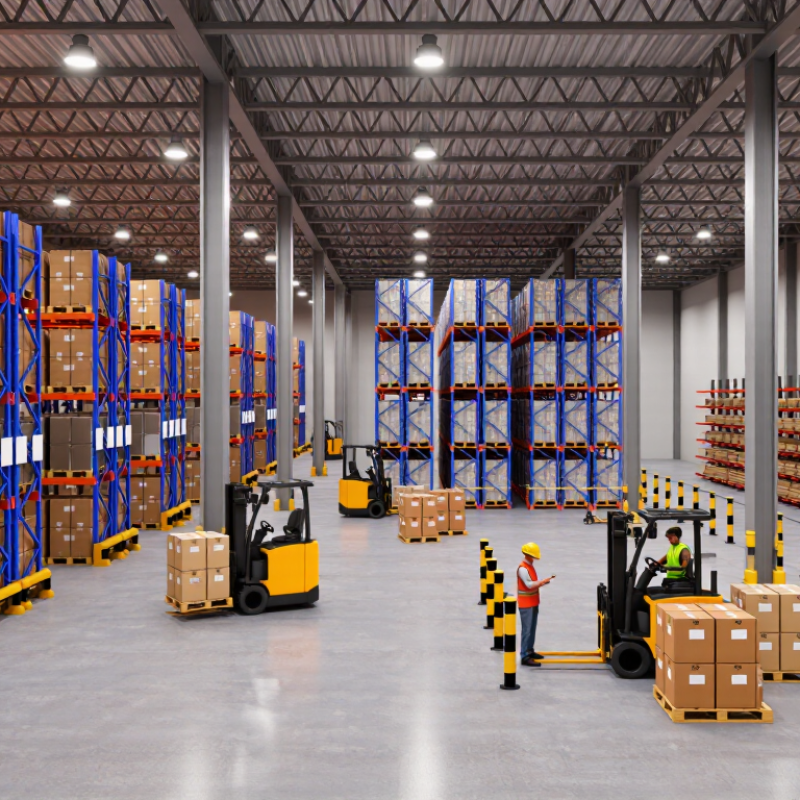
Choosing the right storage racking begins with defining the work, not browsing equipment catalogs. Record SKU dimensions, unit weight, pallet type, daily receipts, order lines, and required picking frequency. Note seasonal peaks too. A rack that fits today may restrict tomorrow’s movement.
The MHI 2024 Annual Industry Report found that 55% of surveyed supply-chain professionals expected to increase technology investment within two years. That figure matters because racking must support future systems, not obstruct them. Leave clear locations for scanners, conveyors, charging points, or automated handling. Still, technology should not dictate every decision. Manual picking may remain more practical for irregular cartons.
Measure the warehouse carefully. Capture ceiling height, column spacing, sprinkler clearance, floor condition, aisle width, dock locations, and emergency routes. The Occupational Safety and Health Administration requires storage systems to remain stable and safely loaded, but real facilities are rarely perfect. Floors slope. Pallets vary. Operators make mistakes. Plan for those facts. I have seen layouts fail because a “standard” pallet was several centimeters wider than expected. Use actual load samples and inspect damaged pallets before finalizing the design. WERC’s 2024 DC Measures report also emphasizes operational benchmarks, including inventory accuracy and picking performance, which can expose whether a layout supports the required service level. A useful design leaves measurable room for growth, inspection, and occasional human error.
Choosing storage racking starts with the inventory, not the available wall space. Selective pallet racking suits warehouses handling many product types with regular access. Each pallet remains visible and reachable. It works well for mixed cartons, spare parts, and fast-moving goods. However, it uses more floor space than denser systems. Measure pallet size, load weight, aisle width, and lifting equipment before confirming the layout.
Drive-in racking stores large quantities of similar products with limited variation. It reduces aisles and increases storage density. This design fits stable inventory, such as seasonal materials or identical packaged goods. It is less suitable for products requiring strict first-in, first-out rotation. A small loading error can also disturb several pallets. Density is useful, but access can become inconvenient.
Cantilever racking handles long items, including pipes, timber, and metal profiles. Adjustable arms support different lengths without fixed shelf openings. For smaller cartons, boltless shelving offers easier manual picking and clearer stock visibility. Mobile racking can increase capacity where floor space is tight, but movement requires careful planning and reliable operating procedures. A practical review should include daily picking routes, future SKU changes, and floor loading limits. The cheapest option often becomes expensive after product growth. Even experienced planners can underestimate aisle congestion. Test one rack section with real loads before expanding.
How to Choose the Right Storage Racking?
Calculate Load Capacity, Dimensions, and Available Space
Choosing storage racking starts with measurements, not a catalog picture. In warehouse surveys, I measure the longest pallet, its actual load, and every obstruction. Record ceiling height, column positions, door openings, lighting, sprinklers, and floor joints. Leave usable clearance above each load. A few centimeters matter. Measure twice.
Calculate the maximum load for each beam level, then compare it with the rack’s rated capacity. Include pallet weight, uneven loading, impact, and future inventory changes. Never divide total rack capacity casually across levels. A four-level frame holding 800 kilograms per level needs 3,200 kilograms of planned capacity, before the required engineering margin. The floor matters too. Check point loads, slab condition, and anchoring requirements with a qualified engineer. Rack height also depends on forklift reach, mast tilt, and safe visibility. A drawing may fit, yet operation may not.
Use clear aisle widths based on the actual handling equipment, not an assumed vehicle. Add space for turning, pedestrian separation, fire access, and damaged pallets awaiting inspection. I often sketch the layout with cardboard footprints; this exposes awkward corners quickly. Digital plans are useful, but they can hide human behavior. One mistake is trusting nominal pallet dimensions. Real pallets sag, overhang, or arrive wrapped unevenly. Recheck a representative batch. If the result feels too tight, it probably is. Good racking leaves room for safe movement, maintenance, and change.
| Racking Type | Typical Load per Level | Recommended Bay Width | Recommended Frame Depth | Typical Height Range | Required Aisle Width | Space Efficiency | Best Application | Example Capacity Calculation | Selection Result |
|---|---|---|---|---|---|---|---|---|---|
| Light-Duty Shelving | 100–300 kg | 900–1,200 mm | 300–600 mm | 1,800–2,400 mm | 900–1,200 mm | High for small items | Cartons, parts, tools, and archive boxes | 4 levels × 200 kg = 800 kg per bay | Suitable for manual picking |
| Longspan Shelving | 300–800 kg | 1,200–2,000 mm | 450–900 mm | 2,000–3,000 mm | 1,000–1,400 mm | Good for medium-sized products | Bulk cartons, packaging materials, and components | 4 levels × 500 kg = 2,000 kg per bay | Suitable for mixed-size inventory |
| Selective Pallet Racking | 800–3,000 kg per beam level | 2,400–3,600 mm | 900–1,100 mm | 3,000–10,000 mm | 2,800–3,600 mm | High accessibility | Palletized goods with many stock-keeping units | 3 levels × 2,000 kg = 6,000 kg per bay | Suitable for direct pallet access |
| Double-Deep Pallet Racking | 800–2,500 kg per beam level | 2,400–3,600 mm | 1,800–2,200 mm | 4,000–10,000 mm | 3,200–4,000 mm | Higher density than selective racking | Large quantities of similar pallets | 4 levels × 2,000 kg = 8,000 kg per bay | Suitable for increased storage density |
| Drive-In Racking | 800–1,500 kg per pallet position | Loading lane: 1,350–1,500 mm | Custom to pallet depth | 4,000–10,000 mm | 3,500–4,500 mm | Very high density | Low-SKU products using last-in, first-out rotation | 4 lanes × 5 pallets deep × 1,000 kg = 20,000 kg | Suitable for high-volume storage |
| Mobile Racking | 800–2,500 kg per beam level | 2,400–3,600 mm | 900–1,100 mm | 2,500–6,000 mm | One active aisle, usually 2,800–3,600 mm | Very high floor-space utilization | Cold stores, archives, and limited-floor-area facilities | 6 bays × 4 levels × 1,500 kg = 36,000 kg | Suitable when floor space is limited |
| Cantilever Racking | 250–1,500 kg per arm | 1,200–2,400 mm | 600–1,200 mm | 2,000–6,000 mm | 1,000–1,500 mm | Efficient for long products | Steel bars, pipes, timber, profiles, and panels | 4 levels × 4 arms × 500 kg = 8,000 kg per column | Suitable for long or irregular loads |
| Pallet Flow Racking | 800–1,500 kg per pallet position | 2,400–3,600 mm | 2,400–3,600 mm | 3,000–8,000 mm | 3,000–4,000 mm | High density with FIFO rotation | Perishable goods and fast-moving palletized products | 3 lanes × 6 pallets deep × 1,000 kg = 18,000 kg | Suitable for first-in, first-out storage |
Safety should guide every storage racking decision, not only the purchase price. Check load ratings, beam capacity, frame strength, and floor conditions. Each level should display its permitted load clearly. Use guards near forklift routes and protect exposed uprights from impact.
Follow applicable workplace regulations, building requirements, and manufacturer installation instructions. A qualified engineer should review unusual loads, seismic risks, and uneven floors.
From my experience, small installation errors can create large problems later. One poorly tightened connection may remain unnoticed for months.
Schedule inspections after installation and after any collision.
Accessibility affects daily performance.
Measure aisle widths for the actual handling equipment, not an idealized layout. Workers should reach frequently used cartons without stretching or climbing. Label every location at eye level, and keep emergency paths unobstructed.
Good lighting helps operators read labels and notice damaged components.
I once saw a warehouse lose time because similar cartons were stored too closely together. The rack was safe, but access was frustrating.
Plan for expansion before filling the first bay.
Leave space for additional frames, future aisles, and changing inventory sizes. Select a modular design with compatible components and adjustable levels. Record floor loads, rack dimensions, and installation details for later changes.
However, expansion plans can be wrong. Review them every year using order volume, equipment changes, and actual walking patterns.
A flexible layout is useful, but unused space still costs money.
Choosing storage racking starts with the goods, not the available wall space. Measure pallet length, width, height, and actual weight. Include packaging changes and seasonal inventory. These details affect beam levels, frame depth, and load capacity.
Walk through the warehouse during a busy shift. Observe forklift routes, turning space, emergency access, and picking frequency. Select adjustable racking for changing stock. Choose drive-in layouts only when many pallets share the same product. Small-item operations may need shelving or carton-flow equipment instead. A specialist should verify calculations against floor strength, rack deflection, and local safety requirements. Guesswork is expensive.
Plan installation from the finished layout backward. Mark column positions on the floor before drilling anchors. Check slab condition and keep sprinkler clearance above the highest load. Install frames plumb, beams fully locked, and protectors at vulnerable corners. Use clear load signs at every rack bay. Keep aisles visibly wider than the minimum forklift turning requirement.
Place trial loads on several levels. Watch for damaged components, uneven floors, or unexpected vibration. I once underestimated replenishment traffic and created a picking bottleneck. The racking was sound, but the workflow was not. Revise the layout before full installation when movement feels awkward. Schedule routine inspections, record impact damage, and retrain operators after any significant change. Reliable storage depends on both engineered capacity and disciplined daily use.
Arsun Engineers is the well-known manufacturer, exporter, and supplier of highly operational machines.