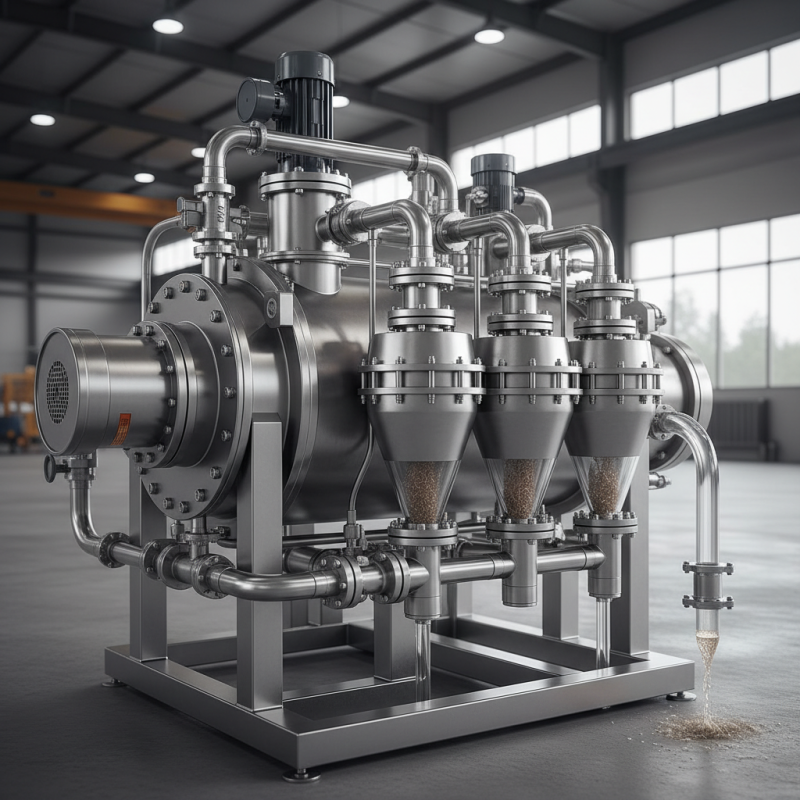
Top 10 High Efficiency Ultra-Fine Particle Desanders You Need?
In today's industrial landscape, managing particulate matter is crucial. A High Efficiency Ultra-Fine Particle Desander is pivotal in ensuring optimal performance. This advanced equipment targets extremely small particles that traditional systems often miss.
Many industries are facing challenges with fine particles. They can lead to equipment wear, decreased efficiency, and operational failures. Investing in high-quality desanding solutions can prevent costly downtime. However, choosing the right model can be overwhelming.
The market offers various options, each with unique features and capabilities. Evaluating these high efficiency desanders requires understanding your specific needs. It's essential to consider efficacy, reliability, and user feedback. The right choice will ensure clean processes and protect valuable machinery.
Overview of Ultra-Fine Particle Desanding Technologies
Ultra-fine particle desanding technologies are essential in various industries, including oil and gas, water treatment, and manufacturing. These systems efficiently remove tiny particles from liquids, which can cause damage or inefficiencies. Efficient designs tend to focus on maximizing particle removal while minimizing energy usage. Different methods, such as hydrocyclones and membrane filtration, have distinct advantages and limitations.
Hydrocyclones use centrifugal force to separate particles based on size and density. They are effective, but challenges remain in handling very fine particles. Alternative methods like membrane filtration provide high precision but can be less energy-efficient. It's essential to assess the specific needs of your operation when selecting a technology. Each option requires careful optimization.
Furthermore, maintenance and operational costs can vary significantly between methods. Some systems may show reliability issues under heavy loads. Evaluating long-term performance is crucial. Industries must prioritize both immediate efficiency and sustainability to minimize environmental impact. As advancements continue, staying informed about the latest technologies can lead to better decision-making.
Key Features to Look for in High Efficiency Desanders
When selecting high-efficiency ultra-fine particle desanders, focus on several key features. One important aspect is the separation efficiency. Desanders should effectively remove fine particles from the liquid, reducing environmental impact. Look for models that offer high separation rates, ideally above 95%.
Another vital feature is the material of construction. Durable, corrosion-resistant materials enhance longevity and performance. Stainless steel or specialized alloys are excellent choices. They withstand harsh conditions and prolong the lifespan of the equipment.
Tips: Regular maintenance is crucial. Schedule routine checks to ensure optimal function. Watch for signs of wear and replace components timely. A small investment in maintenance can lead to significant savings. Efficiency matters greatly.
Lastly, consider the desander's footprint and ease of installation. Compact designs save valuable space. Make sure installation is straightforward to minimize operational downtime. Fewer complications on-site improve workflow. We can often overlook these practical aspects, but they play a key role in overall efficiency.
Top 10 Ultra-Fine Particle Desanders: Performance Comparison
When examining ultra-fine particle desanders, performance is key. Recent studies show that these devices can efficiently reduce particle sizes below 10 microns. A notable report indicates that systems can achieve up to 99.5% separation efficiency for specific fine particles. This is crucial in industries where ultra-pure conditions are necessary, such as in semiconductor manufacturing or pharmaceuticals.
The varying designs and materials impact their effectiveness. For instance, hydrocyclone-based desanders typically excel in solid-liquid separation tasks. However, these may have limitations in particle type or flow rates. While membrane-based systems offer enhanced filtration, they often come with higher maintenance needs. Data suggests that operational costs can escalate when handling complex mixtures due to fouling.
Operators must continuously refine their choices based on efficiency metrics. Understanding specific application needs, such as particle composition and size distribution, is essential for optimal performance. One recent analysis pointed out that misjudgments in selecting equipment can lead to significant downtime or production losses. Despite advancements, there's still a need for better monitoring and process adjustments in real time. This highlights the importance of ongoing research and development in this field.
Applications of Ultra-Fine Particle Desanders in Various Industries
Ultra-fine particle desanders are pivotal in several industries. They enhance efficiency by removing fine particles from liquids. These desanders are vital for maintaining equipment and improving product quality.
In the oil and gas sector, ultra-fine particle desanders prevent abrasives from damaging pipelines. They play a key role in extending the lifespan of equipment. This leads to reduced downtime and maintenance costs. In the water treatment industry, they ensure clean water by removing contaminants. Cleaner water improves public health and meets regulatory standards.
**Tip:** Regular maintenance of desanders is essential for optimal performance. Monitor the particle removal rates to identify efficiency drops.
In the food and beverage industry, ultra-fine particle desanders ensure product purity. They help in removing unwanted particles during production. This is crucial for consumer safety and brand reputation. However, some desanders may struggle with specific particle types. This is an area that requires ongoing improvement.
**Tip:** Consider conducting routine assessments of desander performance. It can highlight potential improvements and help adjust processes as needed.
Maintenance and Operational Best Practices for Desander Efficiency
Maintaining high efficiency in ultra-fine particle desanders requires attention to detail. Regular inspections are crucial. Checking for wear and tear can prevent major failures. Operators should establish a routine maintenance schedule. This includes cleaning and replacing worn parts as needed. Accumulated debris can severely impact performance.
Operational best practices also play a key role. Operators should monitor flow rates consistently. Deviations can indicate potential issues. System adjustments may be necessary to adapt to varying conditions. Training staff on proper procedures enhances overall efficiency. Knowledgeable operators make informed decisions during unexpected situations.
Unexpected challenges can arise. Desanding systems might not function as intended due to environmental factors. Operator awareness and readiness to troubleshoot are essential. Continuous evaluation of system performance should occur. Not every approach will yield perfect results. Learning from inefficiencies leads to improved practices over time.