How to Choose the Best Trailer Mounted Drainage Pump?
Selecting the right Trailer-mounted drainage pump is crucial for efficient water management. According to industry reports, the global pump market is expected to reach $74 billion by 2025. This growth highlights the increasing need for quality drainage solutions. A trailer-mounted drainage pump offers high mobility and versatility, making it suitable for various applications, from construction sites to agricultural needs.
When choosing a trailer-mounted drainage pump, consider the performance specifications. Different pumps provide varying flow rates and pressure levels. For instance, a pump with a high flow rate may seem ideal, but it could lead to increased fuel costs. It’s essential to balance these factors with your specific requirements. Many users overlook maintenance needs, which can affect the pump's long-term reliability. Regular checks can prevent failures and ensure consistent performance.
Understanding the pump’s design and features is equally important. A poorly designed trailer could limit accessibility and operational efficiency. This can lead to frustration during critical moments. Therefore, investing time in research can pay off. It’s not just about immediate needs but also about future adaptability and durability in the evolving landscape of drainage solutions.
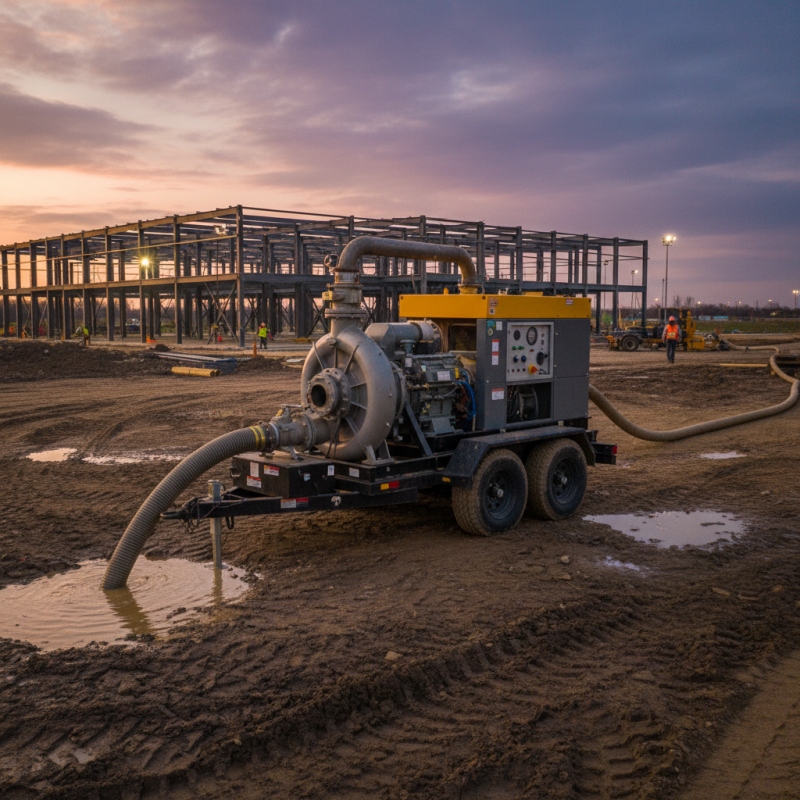
Understanding Trailer Mounted Drainage Pumps: Key Terminology
Understanding trailer mounted drainage pumps is essential. These pumps are designed to manage water flow in various settings, from construction sites to farms. Key terminology helps clarify their function.
The term "flow rate" is crucial. It measures the volume of water a pump can move per minute. Higher flow rates indicate a more powerful pump. However, a powerful pump may not always be necessary. Assess your specific needs before deciding.
"Head height" is another vital term. It refers to the maximum vertical distance a pump can lift water. A pump with a high head height is suitable for deep drainage. Yet, consider the terrain and the obstacles in your path. This can impact the pump’s efficiency.
Lastly, "suction lift" is important. It defines how far a pump can draw water from a low point. A pump with ample suction lift can operate effectively in varied environments. But, it is essential to evaluate the specific conditions where you plan to use the pump. Understanding these terms will guide you in selecting the right equipment for your drainage needs.
Evaluating Pump Specifications: Flow Rate, Head Pressure, and Power
When selecting a trailer mounted drainage pump, it's crucial to evaluate key specifications like flow rate, head pressure, and power. The flow rate indicates the volume of water a pump can move in a given time. Pumping speeds are often expressed in gallons per minute (GPM) or liters per second (LPS). Higher flow rates mean faster drainage, which can be vital in emergencies. However, it is essential to match the flow rate to the specific drainage requirements. An overly powerful pump can waste energy, while an underpowered one may fail to keep up.
Head pressure refers to the maximum height a pump can lift water. It’s critical for applications with significant vertical obstacles. A pump's efficiency diminishes with increased head pressure. Understanding the relationship between flow rate and head pressure can help you choose a pump that meets your needs without compromising efficiency.
Power consumption is another critical factor when assessing pumps. A pump may have high flow and head ratings but could be inefficient in energy use. It's not always about getting the power; it’s about balancing it with efficiency. Reflecting on these specifications before making a purchase can save you time and money. Always reassess your needs, as a pump that excels in one area might lack in another.
Assessing Mobility and Size: Impact on Transport and Installation
When selecting a trailer-mounted drainage pump, size and mobility are crucial factors. A compact design is often easier to transport. Consider the dimensions of your vehicle and the pump. Will it fit? Larger pumps may offer more power, but they can be cumbersome during transport. Assess the weight, too; carrying a heavy pump can impact your crew's efficiency.
Mobility affects installation speed. A pump that can be easily moved saves time on-site. Some pumps have wheels or tracks for easy maneuverability. Evaluate the terrain where you'll work. Rough surfaces may require a more robust design. Also, look at the pump's features—integrated lifting points can facilitate installation.
It's vital to reflect on how these aspects align with your specific needs. Assume a pump that fits in your vehicle but lacks power may underperform. Conversely, a powerful pump that's challenging to move can slow down operations. Evaluate both factors carefully to avoid costly mistakes.
Comparison of Trailer Mounted Drainage Pump Sizes and Weights
Analyzing Material Durability and Corrosion Resistance for Longevity
When selecting a trailer mounted drainage pump, considering material durability is crucial. The right materials can significantly impact performance and lifespan. Look for pumps made from high-grade stainless steel or durable thermoplastics. These materials resist corrosion and wear, making them suitable for various environments. A pump that withstands harsh chemicals or abrasive materials will perform reliably over time.
Corrosion resistance is another critical factor. Pumps exposed to moisture and different chemicals should feature protective coatings. These coatings prevent rusting and degradation, ensuring the pump functions effectively. Regular maintenance remains essential. Even the most durable materials can wear down without care. Inspecting and cleaning the pump can prolong its life.
Don't overlook the quality of seals and fittings. These components are often the weakest link. A good seal prevents leaks and protects the pump from corrosive elements. Choosing a pump with high-quality seals can make a noticeable difference in durability. While researching, ensure you review user feedback on long-term performance. Real-world experiences provide valuable insights, highlighting potential challenges and areas for improvement.
How to Choose the Best Trailer Mounted Drainage Pump? - Analyzing Material Durability and Corrosion Resistance for Longevity
| Feature | Material | Corrosion Resistance | Durability Rating | Weight (lbs) |
| Pump Housing | Cast Iron | High | Excellent | 75 |
| Impeller | Composite Plastic | Moderate | Good | 20 |
| Suction Screen | Stainless Steel | Very High | Excellent | 5 |
| Frame | Aluminum | High | Very Good | 40 |
| Pump Shaft | Carbon Steel | Moderate | Good | 10 |
Comparing Cost-Effectiveness and Maintenance Requirements in the Market
When selecting a trailer-mounted drainage pump, cost-effectiveness is crucial. Analyzing the initial purchase cost is important, but it shouldn’t be the only factor. Consider the longevity of the pump and its overall performance. A cheaper model may save you money upfront but could lead to higher maintenance costs later. This often happens when pumps have low build quality, resulting in frequent breakdowns.
Maintenance requirements can differ significantly among models. Some pumps need regular oil changes and seal replacements. Others might require less frequent servicing but can be harder to maintain when issues arise. Selecting pumps with easy access to components simplifies maintenance. However, some designs prioritize compactness over serviceability, which can be frustrating.
Environmental conditions impact pump performance as well. For instance, heavy silt can clog pumps and increase maintenance needs. It can be challenging to assess how a pump handles these variables without real-world testing. This reveals the necessity of user reviews and expert recommendations. Understanding both cost implications and maintenance needs will lead to better decision-making. Aim for a balance between initial cost and longevity for efficient use.
