
How to Choose an Aluminum Fin Press Machine in 2026?

Choosing an Aluminum Fin Press Machine in 2026 requires more than comparing tonnage and purchase prices. The right machine must match fin height, material thickness, alloy behavior, production volume, and required tolerances. A compact workshop may value flexibility, while an automotive heat-exchanger line may need continuous feeding, rapid die changes, and stable high-speed operation.

Dr. Diran Apelian, a respected authority in aluminum manufacturing, offers a useful principle: “A machine should be judged by the value it creates, not by its purchase price.” This idea matters on the factory floor. A press may look affordable, yet consume excessive energy or require frequent alignment. Those hidden costs become visible after thousands of cycles.

Look closely at servo control, press rigidity, feeder accuracy, die compatibility, safety systems, and maintenance access. Examine sample fins under real conditions. Sharp edges, uneven pitch, or small cracks can reveal problems that brochures often hide. Ask for production data, not only impressive demonstrations.

Energy efficiency matters more now. So does digital monitoring. A reliable Aluminum Fin Press Machine should record force, stroke, speed, and fault history. These details support preventive maintenance and consistent quality. However, automation is not always the best answer. Some plants may buy complex features they rarely use.

The imperfect choice is often the expensive lesson. A thoughtful evaluation should include operators, maintenance staff, and process engineers. Their experience may challenge the initial specification, which is exactly why it matters.
How to Choose an Aluminum Fin Press Machine in 2026?

What Is an Aluminum Fin Press Machine?

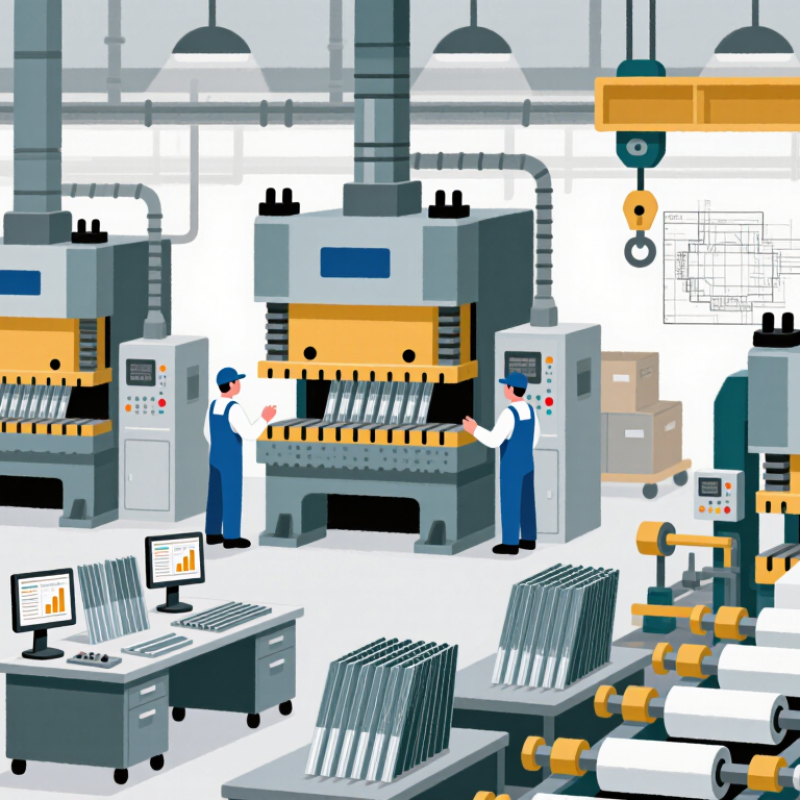
An aluminum fin press machine is a precision forming system for producing thin fins used in radiators, condensers, evaporators, and other heat exchangers. It feeds aluminum coil through a progressive die, then performs punching, louvering, cutting, and sometimes collar forming. The finished fins may look simple. They are not.

The International Energy Agency reported that global electric car sales exceeded 17 million in 2024. This growth increases demand for compact battery cooling systems and lightweight heat exchangers. The IEA also notes that cooling demand could more than triple by 2050 under current trends. These figures explain why fin production needs stable speed, accurate feeding, and repeatable forming. A practical machine should match the aluminum thickness, coil width, fin height, pitch, and required production volume.

A faster press is not automatically better. A machine running at 300 strokes per minute may waste material if feed accuracy is poor. Check dimensional tolerance, die-change time, scrap monitoring, and automatic lubrication. In my view, this is where many buyers misjudge equipment. They focus on rated speed and overlook vibration near the die. Ask for sample fins made from your actual alloy and thickness. Measure burrs, pitch, flatness, and collar height. The test may reveal uncomfortable weaknesses before installation. Useful references include the IEA Global EV Outlook 2025 and The Future of Cooling report.

Key Specifications to Compare Before Buying

How to Choose an Aluminum Fin Press Machine in 2026?

Key Specifications to Compare Before Buying

Choosing an aluminum fin press machine requires more than checking its listed tonnage. Match the press force to the alloy, strip thickness, fin height, and pitch. Excessive force can increase energy use and tool wear. Insufficient force may create uneven fins or damaged edges. Check the maximum feed width and material range carefully. These limits should match your current orders, not only future plans.

Stroke length, production speed, and repeatability directly affect output. A short stroke may suit compact fins, while deeper profiles need more clearance. Ask for measured cycle data, not optimistic estimates. Confirm dimensional repeatability with sample parts from your material. Tooling compatibility also matters. Verify die-changing time, adjustment access, and spare-part availability. Safety sensors, guarding, emergency stops, and overload protection deserve equal attention. They protect operators and reduce costly interruptions. A higher speed looks attractive, but unstable feeding can cancel the benefit.

Tips: Request a real production trial before buying. Measure fin height, pitch, burrs, noise, and power consumption. Review maintenance records from similar installations. Check whether technicians can reach lubrication points without removing major covers. My checklist is not perfect; local workload and operator skill can change the best choice. Leave a practical margin, but avoid paying for capacity you will rarely use.

How to Choose an Aluminum Fin Press Machine in 2026? - Key Specifications to Compare Before Buying

Typical specification ranges and purchasing benchmarks for aluminum fin press machines
Specification Entry-Level Range Production-Level Range High-Volume Range Why It Matters
Compatible Aluminum Thickness 0.08–0.20 mm 0.08–0.30 mm 0.08–0.40 mm Confirm that the machine supports the full thickness range required for the fin designs and aluminum alloys used in production.
Maximum Strip Width 100–300 mm 300–600 mm 600–1,200 mm The available strip width determines the maximum fin blank size and whether multiple lanes can be processed.
Fin Height Capability 8–30 mm 10–45 mm 15–70 mm Higher fins may require greater forming clearance, longer tooling, and more precise material guidance.
Fin Pitch Range 1.5–3.0 mm 1.0–3.0 mm 0.8–3.5 mm Fin pitch affects heat-transfer surface area, airflow resistance, tooling selection, and final heat-exchanger performance.
Production Speed 40–100 strokes/min 100–250 strokes/min 200–400 strokes/min Compare rated speed with the actual speed at your target fin height, material thickness, and pitch rather than relying only on the maximum rating.
Feed Accuracy ±0.10–0.20 mm ±0.05–0.10 mm ±0.02–0.05 mm Accurate feeding improves fin length consistency, reduces scrap, and helps maintain reliable assembly dimensions.
Press Capacity 10–40 tonnes 30–100 tonnes 80–200 tonnes Required capacity depends on material thickness, tool geometry, fin height, forming method, and operating speed.
Drive Motor Power 3–7.5 kW 5.5–15 kW 11–30 kW Motor sizing influences continuous-duty performance, acceleration, energy consumption, and the machine’s ability to handle demanding tooling.
Material-Coil Capacity 100–300 kg 300–800 kg 500–1,500 kg Larger coil capacity reduces changeover frequency but may require stronger decoiler components and more floor space.
Straightener and Feeder Manual setup, 5–7 rollers Motorized setup, 7–9 rollers Servo feeder, 9–11 rollers A suitable straightener and feeder help prevent strip deformation, feeding errors, and uneven fin geometry.
Control System Basic digital controller PLC with touchscreen interface PLC, servo control, recipe storage, and production monitoring Look for simple parameter adjustment, alarm history, recipe management, and compatibility with factory data systems.
Tooling Changeover Time 2–4 hours 1–2 hours 30–90 minutes Fast and repeatable changeovers are important when producing different fin heights, pitches, lengths, or strip widths.
Tooling Material Hardened tool steel Heat-treated alloy tool steel Precision-ground, wear-resistant tool steel Tool material and heat treatment affect service life, edge quality, dimensional stability, and maintenance intervals.
Length Tolerance ±0.30–0.50 mm ±0.15–0.30 mm ±0.05–0.15 mm Choose the tolerance according to downstream assembly requirements and the dimensional specifications of the heat exchanger.
Compressed-Air Requirement 0.5–0.7 MPa; 100–250 L/min 0.5–0.7 MPa; 200–500 L/min 0.6–0.8 MPa; 400–800 L/min Check both pressure and flow rate, especially when pneumatic clamps, scrap separation, or automated unloading are included.
Electrical Supply Three-phase, 380–415 V, 50/60 Hz Three-phase, 380–415 V, 50/60 Hz Three-phase, 380–480 V, 50/60 Hz Verify voltage, frequency, current rating, grounding, and local electrical-code requirements before installation.
Safety Features Emergency stop and fixed guards Interlocked guards, overload protection, and safety relay Full guarding, light curtains, safety PLC, and monitored access doors Safety equipment should protect operators from moving tooling, pinch points, stored energy, and unexpected machine restart.
Machine Footprint 2.0–4.0 m² 4.0–8.0 m² 8.0–15.0 m² Allow additional space for coil loading, operator access, maintenance, scrap collection, and material handling.
Expected Availability 85–92% 90–95% Availability depends on setup time, preventive maintenance, tooling life, operator skill, material quality, and spare-parts support.
Recommended Buyer Profile Prototype work, small batches, and limited product variety Regular production with several fin specifications Continuous production with high output and strict dimensional control Select the machine according to annual volume, product mix, required tolerance, labor availability, and planned expansion.

Buying note: The ranges above are general industry benchmarks rather than guarantees for every machine configuration. Request a sample run using your actual aluminum grade, thickness, fin pitch, fin height, and target production speed before placing an order.

How to Match Machine Type with Fin Production Needs

How to Choose an Aluminum Fin Press Machine in 2026?

The right machine starts with the fin, not the machine catalog. Define strip thickness, width, fin height, pitch, and required output first. Thin aluminum strip may need stable feeding and careful tension control. A small variation can create uneven louver angles or damaged edges.

For high-volume production, a mechanical press with progressive tooling usually offers fast, repeatable strokes. It suits standard fin profiles and long production runs. A servo press provides better control over stroke timing and forming depth. It fits mixed orders, changing pitches, and frequent tooling adjustments. Hydraulic presses can handle specialized forming tasks, but they may deliver lower cycle speeds. That trade-off matters.

Match the press capacity to the real load, not the advertised maximum. A 40-ton requirement should not leave the machine operating at its limit. Extra capacity reduces vibration and protects tool life. Check feed accuracy, straightener performance, die access, noise levels, and maintenance space. These details affect daily output more than impressive speed figures.

Ask for a sample trial using your actual aluminum grade and coil dimensions. Measure burr height, fin spacing, scrap rate, and setup time. Do not judge results from one successful test. Production changes. Operators may also need more adjustment access than expected. A machine that looks efficient on paper can become frustrating beside a crowded line.

Which Materials, Dies, and Features Affect Performance?

Choosing an aluminum fin press machine starts with the strip, not the brochure. In production trials, I compare alloy temper, thickness, width, and surface condition before discussing speed. Soft aluminum forms easily but may stick to a poorly polished die. Harder tempers need greater force and more controlled feeding. Thin strips demand stable guidance because a small lateral shift can distort fin pitch. Test actual coil samples whenever possible. Supplier data alone can miss behavior caused by lubricants or storage.

Die design directly affects heat, burrs, and repeatability. Use hardened tool steel with a suitable surface finish for continuous forming. Protective coatings can reduce adhesion, but they are not a cure for poor alignment. Clearance must match the alloy and thickness. Excessive clearance leaves ragged edges, while tight clearance increases wear.

Check fin height, louver angle, and pitch with gauges, not visual judgment. A trial at production speed is valuable. Slow testing can hide vibration and feeding errors.

I once focused too heavily on nominal press force and underestimated die alignment. That mistake produced acceptable samples but inconsistent batches.

Useful features include servo feeding, adjustable stroke, overload protection, and closed-loop monitoring. A force sensor can reveal rising resistance before a crack appears. Automatic lubrication helps, but it cannot replace inspection.

Look for accessible die changes, clear guarding, and maintenance records. Measure noise, vibration, and temperature during a full shift.

Some machines offer impressive cycle rates, yet the fastest setting may shorten die life. Choose the setting that protects dimensional stability. Verify it with repeat samples. One successful run proves very little.

How to Evaluate Cost, Safety, Automation, and Service in 2026

Choosing an aluminum fin press machine in 2026 requires more than comparing purchase prices. Calculate total cost across energy, tooling, maintenance, scrap, and operator training. The International Aluminium Institute reports that recycled aluminum needs about 5% of the energy used for primary aluminum. Therefore, stable forming accuracy and low scrap can influence costs significantly. Request measured cycle data, not optimistic estimates.

Safety deserves practical inspection. Check guarding, emergency stops, two-hand controls, die access, and lockout procedures. ISO 12100 supports a risk-based approach to machinery safety. Ask for documented risk assessments and test records. Stand beside the machine during a trial. Watch hand clearance, noise, vibration, and awkward loading movements. Small details matter. A shiny enclosure proves little.

Automation should solve a production problem, not decorate the quotation. Deloitte’s 2024 smart manufacturing research found that 86% of surveyed manufacturers viewed smart manufacturing as important for competitiveness. Useful features include automatic fin feeding, pressure monitoring, recipe control, and traceable alarms. Confirm whether operators can edit settings safely. Service is equally measurable. Demand spare-parts lead times, remote diagnostics, training hours, and technician response targets. The International Federation of Robotics reported 162 robots per 10,000 manufacturing employees globally in 2023, but automation still needs capable people. I would challenge any supplier promising “zero downtime.” That claim sounds attractive, yet real factories remain imperfect.

Scroll to Top