
How to Choose the Right Mold Machine for Your Business?
Choosing the right mold machine is a production decision, not merely an equipment purchase. It affects cycle time, part consistency, energy use, maintenance, and future capacity. A machine that looks affordable may become expensive after repeated downtime, oversized motors, or poor process control.
Market reports show why this decision deserves careful analysis. Grand View Research estimated the global injection molding machine market at USD 15.78 billion in 2023, with continued growth expected through 2030. Fortune Business Insights reports different figures because its scope and methodology differ. That difference matters. Buyers should examine definitions, regions, and machine categories before trusting any forecast. Data is useful, but never complete.
John Bozzelli, founder of Scientific Injection Molding, is widely associated with the practical warning, “You cannot control what you do not measure.” His point applies directly to mold machine selection. Record shot weight, clamping force, cycle time, material temperature, and rejected parts. Then compare machines using real production evidence. For example, a 250-ton machine may suit a small automotive housing, but not if the mold requires unusual pressure or rapid injection speed. Hydraulic, electric, and hybrid systems also create different cost and maintenance patterns. Sometimes, the “best” machine is not the newest one. It may be the model your technicians can service quickly. This guide examines machine type, tonnage, automation, energy consumption, mold compatibility, supplier support, and total ownership cost. Some assumptions may prove wrong. That is why measurement should come before commitment.
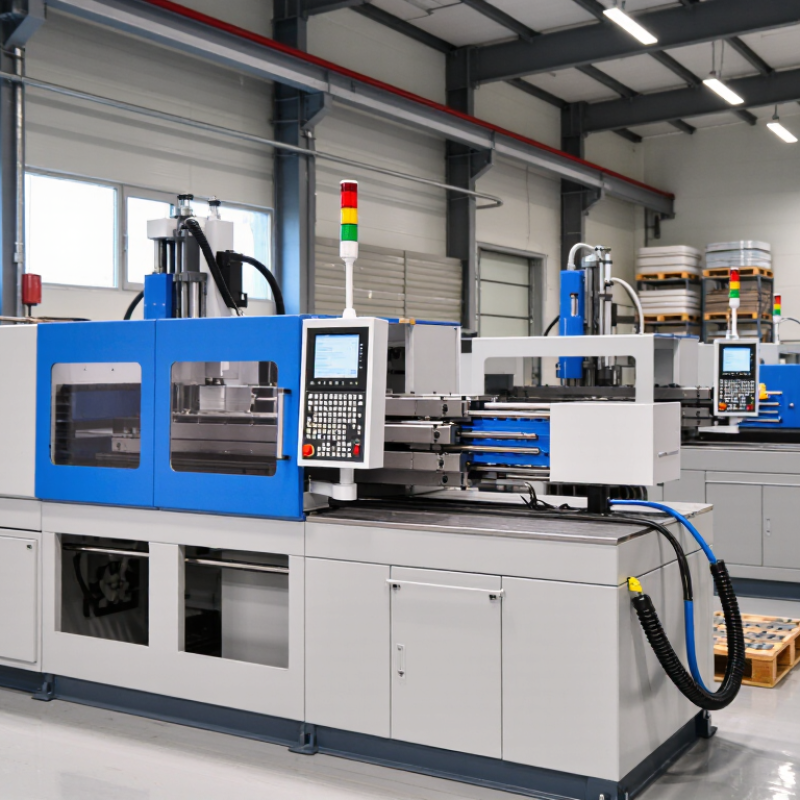
Define Your Production Needs and Mold Requirements
Choosing a mold machine starts with the part, not the machine catalog. Define annual volume, material, cycle time, cavity count, and acceptable scrap. PlasticsEurope reported 413.8 million tonnes of global plastics production in 2023. That scale hides major differences between short runs and continuous production. Your forecast matters.
Measure the mold carefully. Calculate projected area, then verify the required clamping force with the material supplier and mold engineer. A rough estimate can mislead, especially with thin walls or uneven filling. Select a shot size that keeps the planned shot within the machine’s stable operating range, rather than using maximum capacity. Check mold dimensions, tie-bar spacing, ejection stroke, cooling connections, and controller compatibility. Small oversights become expensive downtime.
Utilities also shape the decision. The U.S. Department of Energy reports that compressed-air leaks can waste 20–30% of compressor output. This deserves attention when the process uses pneumatic auxiliaries. Compare energy per cycle, maintenance access, and changeover time—not only purchase price. Record actual cycle data from similar molds when possible. Perfect forecasts are impossible. Leave room for learning. A slightly larger machine may support future molds, but excessive capacity can reduce efficiency and raise operating costs. Review the choice after pilot production, because real scrap rates often challenge the original spreadsheet.
Sources: PlasticsEurope, Plastics – the Fast Facts 2024; U.S. Department of Energy, Improving Compressed Air System Performance.
How to Choose the Right Mold Machine for Your Business? — Define Your Production Needs and Mold Requirements
Use this comparison to match machine configuration, clamping capacity, injection performance, mold construction, and operating priorities with your production plan. Values are typical engineering ranges and should be confirmed against the selected material, part geometry, mold design, and quality standard.
| Machine Configuration | Typical Clamp-Force Range | Best Production Profile | Recommended Mold Requirements | Typical Cycle Capability | Energy and Maintenance Profile | When It Is Usually the Right Choice |
|---|---|---|---|---|---|---|
| Hydraulic Injection Machine | 50–4,000 tonnes | General-purpose parts, technical components, household products, and medium-to-high production volumes | Conventional two-plate or three-plate molds; standard cooling channels; robust mold base for repeated clamping cycles | Approximately 15–90 seconds, depending on part thickness, material, and mold cooling | Moderate energy use Strong and widely serviceable; hydraulic oil and filtration require scheduled maintenance |
Choose this option when broad processing flexibility, high clamping force, and established service capability are more important than minimum energy consumption. |
| All-Electric Injection Machine | 30–1,000 tonnes | Precision parts, medical components, electronics, packaging, and clean production environments | High-precision molds with balanced runners, accurate cavity alignment, controlled ejection, and stable mold-temperature regulation | Approximately 3–40 seconds for many thin-wall and precision applications | Lower energy use Reduced hydraulic maintenance; requires clean electrical and servo-control conditions |
Choose this option when repeatability, low contamination risk, energy efficiency, and precise injection or ejection control are primary requirements. |
| Hybrid Injection Machine | 80–2,500 tonnes | Mixed production schedules requiring hydraulic force with improved servo-driven efficiency | Standard production molds or moderately complex molds; mold design should support stable pressure, speed, and cooling control | Approximately 8–60 seconds, depending on part design and process settings | Moderate-to-low energy use Lower operating demand than many conventional hydraulic systems while retaining familiar machine architecture |
Choose this option when the business needs a balance between investment cost, versatility, energy performance, and high-force capability. |
| Vertical Injection Machine | 20–500 tonnes | Insert molding, overmolding, cable assemblies, seals, connectors, and small-batch customized work | Insert-friendly molds with accessible cavity areas, secure positioning fixtures, and reliable operator or robot loading provisions | Approximately 20–120 seconds, often influenced by manual or semi-automatic insert placement | Moderate energy use Simple access for insert loading; automation level strongly affects labor and throughput |
Choose this option when inserts, overmolding, ergonomic loading, or flexible low-to-medium volume production are central to the product. |
| Two-Color or Multi-Material Machine | 100–1,600 tonnes | Two-material parts, soft-touch products, integrated seals, multi-color components, and reduced secondary assembly | Rotary, core-back, transfer, or sequential molds; precise cavity balance, material compatibility, and adequate mold-rotation clearance are essential | Approximately 20–90 seconds, depending on the number of materials, cooling demand, and mold-transfer method | Moderate-to-high energy use More complex mold and process maintenance; higher tooling and setup requirements |
Choose this option when combining materials or colors in one cycle can eliminate assembly steps and justify the additional mold complexity. |
| High-Speed Thin-Wall Machine | 80–600 tonnes | Thin-wall packaging, caps, closures, disposable items, and high-volume lightweight products | High-cavitation molds with balanced hot runners, fast filling capability, efficient cooling, robust cavity materials, and automated part removal | Approximately 2–15 seconds for suitable thin-wall parts and optimized molds | High process demand High throughput potential; mold wear, cooling performance, and process stability require close monitoring |
Choose this option when annual volume is very high and cycle-time reduction has a direct effect on unit cost and production capacity. |
| Large-Part or Structural-Foam Machine | 500–6,000+ tonnes | Automotive panels, containers, appliances, furniture components, pallets, and large industrial parts | Large-format molds with high stiffness, uniform cooling, adequate venting, generous tie-bar clearance, and controlled filling of large cavities | Approximately 30–180 seconds, depending on wall thickness, material, mold temperature, and cooling time | High utility demand Large molds and machines require substantial floor space, material handling, and maintenance planning |
Choose this option when projected part size, projected part weight, mold dimensions, or required clamping force exceed the practical limits of standard machines. |
Related Posts
-
2026 Best Mold Machine for Global Buyers to Consider?
-
Why Choose a Metal Engraving Machine for Your Business Needs?
-
Why Choose Precision Machining for Global Manufacturing?
-
2026 Best Engraving Machine Options for Every Need and Budget?
-
10 Essential Tips for Optimizing PLC Automation Efficiency
-
How to Choose the Best Industrial Engraving Machine in 2026?