
KMnO4 Activated Alumina is often selected to control hydrogen sulfide and other odor-causing gases in ventilation and process streams. Yet a purple granule in a product photo tells buyers very little. Bed depth, airflow, humidity, contaminant concentration, and contact time can all affect performance. Small specification gaps matter.
The U.S. Environmental Protection Agency’s Air Pollution Control Cost Manual discusses packed-bed systems in relation to gas flow, pressure drop, and operating conditions. Its guidance is useful context, though it does not certify any particular alumina product. That distinction matters. A supplier’s capacity figure may come from controlled testing, not your actual site conditions. Ask for the test method, operating assumptions, and supporting documentation before comparing quotations. Also check particle size, potassium permanganate content, bulk density, moisture limits, and packaging. These details influence handling and bed design.
There is no universal “best” grade. A product suitable for a steady, dry stream may not fit a humid room with changing contaminant loads. I have seen buyers focus on price per kilogram and overlook replacement intervals; it is an understandable shortcut, but not always a sound one. The following seven tips explain how to assess supplier evidence, match media to operating conditions, and compare total service life—not just the initial purchase price. Ask specific questions. Keep the answers on record.
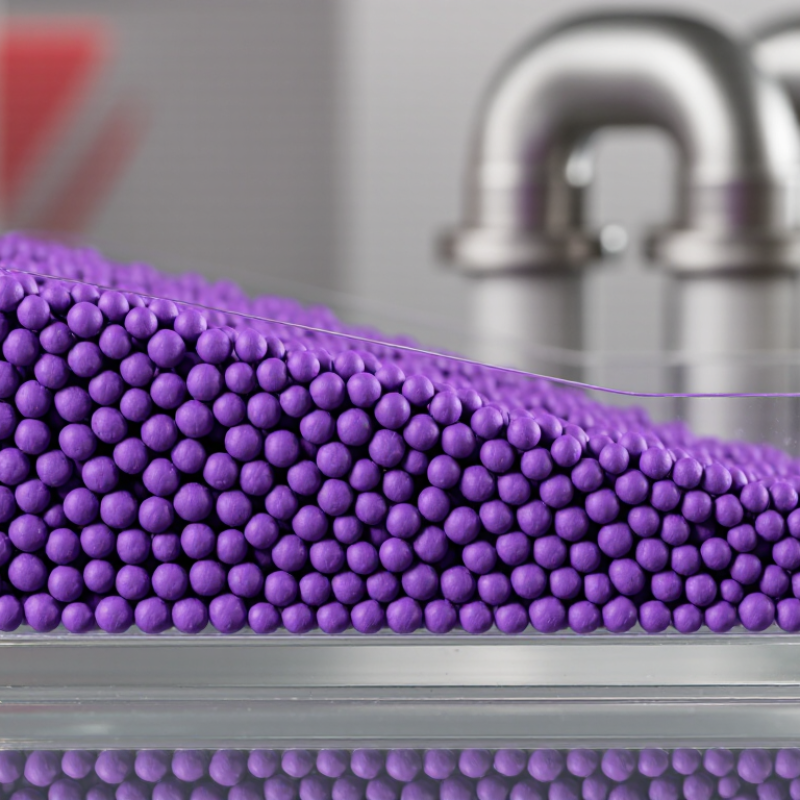
KMnO₄-activated alumina is a porous alumina support coated with potassium permanganate. Its many small pores expose a large surface to passing air. The permanganate acts as an oxidizing agent, reacting with certain contaminants, including hydrogen sulfide and some odor-causing sulfur compounds. The alumina helps hold the active chemical in place; it does not simply “soak up” every gas.
The chemistry is useful, but not magic. Performance depends on the target gas, airflow, humidity, temperature, and contact time. For example, a fast-moving stream may pass through the bed before enough reaction occurs. Some reaction products remain in the media, so capacity gradually declines. A color change can offer a clue, but it is not a reliable replacement schedule by itself.
When comparing media, check which contaminants it is designed to treat and whether test data match your operating conditions. Ask for recommended bed depth, service limits, and handling guidance. Dust, channeling, or uneven packing can reduce effective contact; even a good media can disappoint in a poorly designed vessel. Keep the material dry and stored as directed, and review its safety information before handling. “Activated alumina” alone is not a full specification. The details matter.
Before purchasing KMnO4-activated alumina, test the source water for the specific contaminants you need to control. A reddish-brown stain may suggest iron, while black deposits can indicate manganese, but appearance alone is not a reliable diagnosis. Ask an accredited laboratory to measure iron, manganese, arsenic, pH, and any other site-specific concerns. Test untreated water, not just water from an existing filter. Small details matter.
Set a measurable treatment goal before comparing media. The US EPA’s 2001 arsenic rule set a drinking-water limit of 10 micrograms per liter. EPA secondary standards list 0.3 milligrams per liter for iron and 0.05 milligrams per liter for manganese; these address aesthetic effects, not health-based limits. Check whether your results exceed the target, and confirm the media is rated for that contaminant and water chemistry. Arsenic’s chemical form, pH, and competing ions can affect removal. Ask suppliers for performance data under conditions close to yours, plus recommended flow rate, contact time, and replacement criteria. I would not rely on a generic removal claim. A jar test or pilot trial may reveal issues a datasheet misses. That extra step can feel slow, but guessing costs more.
Capacity is not a single number unless the test conditions are clear. Ask how much contaminant the media can hold before breakthrough, and which inlet concentration and outlet limit were used. Compare results measured on the same basis. A higher advertised capacity may not translate to longer service in your system. Check the expected contaminant mix, humidity, and target replacement point.
Pellet size affects both contact and pressure drop. Smaller pellets expose more surface area, but they can restrict airflow in a deep or tightly packed bed. Larger pellets may reduce resistance, yet offer less external area per unit volume. Match the size to your vessel, flow rate, and available fan pressure. Measure the bed depth, too. Small details matter.
Operating conditions can shift performance. High flow may shorten contact time; changing humidity or temperature can alter adsorption and reaction behavior. Review the media supplier’s test data, then compare it with your actual inlet conditions. A small pilot bed can reveal what a datasheet misses. It is not perfect, but it is useful. During operation, log flow, pressure drop, and outlet readings at consistent intervals. A simple sampling routine beats guessing from color alone.
7 Tips for Buying KMnO4 Activated Alumina
Check Product Quality, Safety, and Supplier Documentation
When comparing KMnO4 activated alumina, ask for a current certificate of analysis tied to the production lot. Check the stated permanganate loading, alumina grade, particle size, moisture, and appearance. A uniform purple coating can be a useful visual check, but color alone cannot confirm performance. Small detail, big difference. Request test methods and acceptance limits, not just a polished data sheet.
Read the safety data sheet before opening a package. It should describe suitable protective equipment, dust control, storage conditions, and spill response. Inspect the actual packaging for intact seals, clear lot numbers, and handling instructions. Store media as directed, away from incompatible materials and excess moisture. If the paperwork and label disagree, pause and ask the supplier to clarify in writing.
Supplier documentation should also explain recommended operating conditions and known limits. Ask how the product’s capacity is measured, and whether results reflect your water chemistry and flow rate. Request traceability records and a process for reporting damaged or out-of-spec material. I would not assume that a generic performance figure predicts results in every system; that deserves a second look. Compare answers across suppliers, and keep the documents with the receiving inspection record.
Check product quality, safety, and supplier documentation before placing an order.
Percentages are calculated from the KMnO₄ formula and standard atomic weights. They describe pure potassium permanganate, not finished KMnO₄-impregnated alumina; the active-material loading of a finished product varies by specification.
Plan the vessel around the actual flow rate, not just its diameter. Leave clearance above the bed for expansion and provide safe access for loading and removal. KMnO4-treated alumina can create dust during handling; use the current safety data sheet, suitable respiratory protection, and controlled transfer methods. Rinse the new bed as specified, then check for fines or unusual color before connecting it to service. Small details matter.
Set replacement triggers before startup. Track pressure loss, flow, and treated-water results at consistent intervals; record changes after maintenance. For manganese treatment, the US EPA’s Secondary Drinking Water Standards list 0.05 mg/L as the guideline level. That figure is a useful reference, not proof that a particular bed will reach it. Water chemistry and competing contaminants can affect performance. The EPA’s Arsenic Treatment Technology Evaluation Handbook also identifies 10 μg/L as the federal arsenic limit; do not assume this media meets that separate target without testing.
Plan disposal before the first media change. Spent material may contain contaminants removed from the water, so arrange representative sampling and waste characterization through a qualified laboratory or waste professional. Follow the applicable local disposal requirements, and keep the media contained during transport. I would not rely on appearance alone. Media can look clean and still need careful handling.
7 Tips for Buying KMnO4 Activated Alumina - Plan for Installation, Replacement, and Disposal
| Tip | What to Confirm Before Buying | Installation Planning | Replacement Planning | Disposal and Safety |
|---|---|---|---|---|
| 1 | Identify the target contaminant and its inlet concentration. Permanganate-impregnated alumina is used for oxidation of specified contaminants, but performance depends on the media formulation and operating conditions. | Provide the supplier with gas or liquid flow rate, operating temperature, humidity or moisture conditions, and the required outlet concentration. Confirm that the proposed grade is suitable for the actual service. | Set up a way to monitor outlet quality or contaminant breakthrough. Do not rely on a fixed service life unless it is supported by site-specific operating data. | Review the product safety data sheet and local waste rules. Disposal classification can depend on the unused media, the contaminants captured, and applicable regulations. |
| 2 | Ask for the media’s technical data, including particle size range, bulk density, moisture information, and recommended operating limits. Confirm the quoted specifications apply to the supplied grade. | Match particle size to the vessel’s support screens and retainers. Confirm that the screens prevent media carryover without creating excessive flow restriction. | Record the grade, lot information, fill quantity, and installation date so future performance comparisons use consistent details. | Keep the product in its original, labeled packaging until use. Follow the supplier’s handling instructions and keep the material away from incompatible substances identified in the safety data sheet. |
| 3 | Request performance information under conditions comparable to the planned application, including contaminant concentration, flow, temperature, and humidity where relevant. | Size the vessel using the supplier’s design guidance for flow distribution, contact time, and pressure drop. Avoid assuming one vessel size or contact time suits every application. | Track pressure drop as well as outlet contaminant levels. A rise in pressure drop may indicate plugging or other flow problems, but does not by itself prove the media is chemically exhausted. | Before removal, determine whether captured contaminants could affect the waste classification. Use the site’s waste assessment process rather than assuming all spent media has the same disposal route. |
| 4 | Check packaging quantity and delivery format against the vessel’s usable volume and the supplier’s recommended loading method. Allow for the stated bulk density when estimating mass. | Provide safe access for filling and removal, and plan for dust control. Follow the safety data sheet and site procedures for suitable protective equipment during handling. | Allow enough space and labor for controlled unloading, inspection, and refill. Have compatible replacement media and approved waste containers available before changeout. | Avoid creating or breathing dust. Collect spilled media using the cleanup method specified by the safety data sheet and site procedures; do not wash it into drains unless expressly permitted. |
| 5 | Confirm storage life, storage conditions, and packaging requirements with the supplier. Check that packaging will remain intact during transport and storage at the site. | Store unopened material in the conditions specified by the supplier. Keep it protected from contamination and segregated from incompatible materials identified in the safety data sheet. | Use inventory rotation and inspect packages before use. Do not install material from damaged or contaminated packaging without first consulting the supplier. | Potassium permanganate is an oxidizing chemical. Follow the product-specific safety data sheet for segregation, spill response, and precautions around combustible or reducing materials. |
| 6 | Ask how operating moisture and temperature affect the selected grade. Do not infer suitability from the term “activated alumina” alone; the impregnation and application requirements matter. | Confirm any requirements for preconditioning, startup, or flow ramp-up with the supplier. Ensure the vessel and associated equipment are compatible with the process conditions. | Use representative sampling or site monitoring, where appropriate, to help distinguish media exhaustion from channeling, maldistribution, or other equipment issues. | Do not mix spent media with other wastes unless the site’s waste assessment and applicable rules allow it. Keep containers closed and identified according to site procedures. |
| 7 | Compare quotations using the same grade, quantity, packaging, delivery terms, and technical requirements. Request written confirmation of the product specification and intended application. | Prepare a changeout plan covering isolation, depressurization or draining as applicable, access, dust management, and protection of downstream equipment from media fines. | Define replacement triggers in advance using outlet-quality limits, operating history, and pressure-drop trends. Confirm the procedure for safe removal and vessel recommissioning. | Consult the safety data sheet, site environmental staff, and local waste authority or licensed waste contractor to determine the permitted disposal or recovery route. |
Planning note: Media performance, changeout interval, handling requirements, and waste classification are application- and product-specific. Confirm them with the supplier, the product safety data sheet, and applicable local regulations.
Arsun Engineers is the well-known manufacturer, exporter, and supplier of highly operational machines.