
Choosing the best Powder Coating Spray Booth in 2026 is less about buying the largest model and more about matching the booth to the work. A compact shop coating steel brackets has different needs from a production line handling long panels. Part dimensions, coating type, batch size, airflow, and available floor space all shape the decision. Small details matter. A filter that loads quickly can slow a shift. Poorly placed lighting can hide thin coverage along a panel edge. And a booth that looks impressive in a catalog may still be awkward to clean.
Powder-coating consultant Kevin Biller offers a useful principle: “Choose the booth for the parts and process, not the brochure.” That is a practical buying lens, not a substitute for checking a manufacturer’s specifications or site requirements. This guide compares booth designs, ventilation and filtration features, controls, maintenance needs, and costs. It also considers the less glamorous question of daily use: Can operators reach the filters easily? Is the work area bright enough to inspect corners? Will the layout leave room for carts and hanging parts? No single booth wins for every shop. Some buyers may even find that their first choice needs revisiting after measuring the largest part. The goal is a setup that supports consistent coating, manageable upkeep, and a realistic production pace.
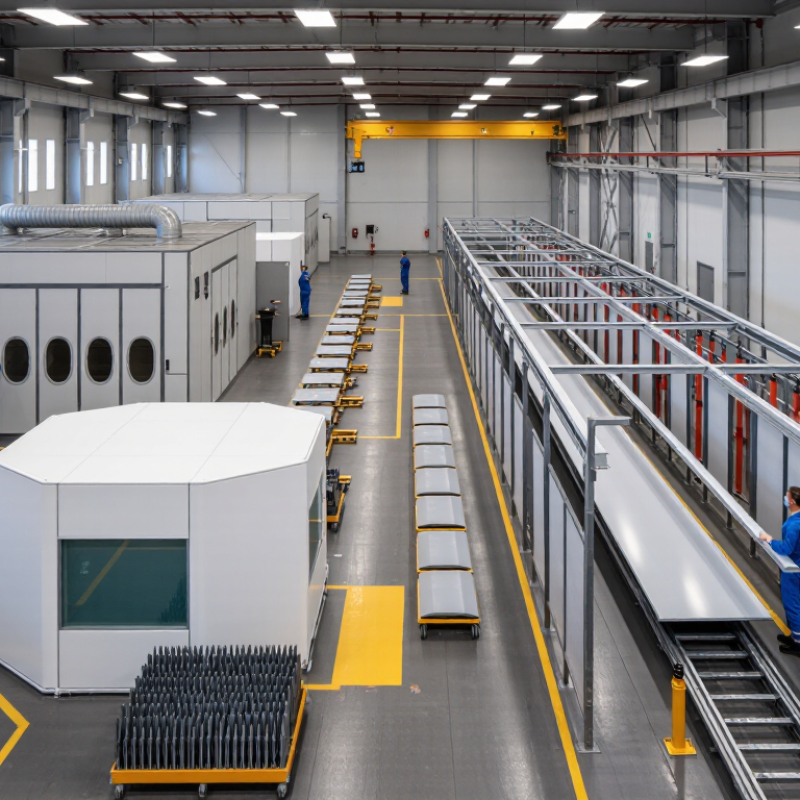
A powder coating spray booth is a controlled space that captures overspray and guides clean air through the work area. The operator hangs a grounded metal part, checks airflow, then applies charged powder with an electrostatic spray gun. The powder particles cling to the grounded surface. Thin edges and recessed corners can be tricky. They may need a slower pass or a changed gun angle.
Airflow carries stray powder toward filters or a recovery system, keeping it from drifting around the shop. A well-designed booth maintains steady extraction without pulling powder off the part. Operators should monitor filter condition, airflow indicators, and grounding connections. Small checks matter. After spraying, the coated part moves to a curing oven, where heat melts and hardens the powder into a durable film. Booth design, part shape, powder characteristics, and operator technique all affect the result, so no single setup suits every job. A booth can look clean and still have uneven airflow; that is easy to overlook. Choose equipment based on part dimensions and production volume, then verify its performance under real working conditions.
The best booth depends on part size, production volume, and color-change frequency. An open-face booth suits occasional repairs and small parts, such as brackets or chair frames. It offers easy access but may provide less control over powder containment. Enclosed batch booths suit varied parts and shorter production runs. Operators can load one cart, coat it, then clean the booth before changing colors. Small jobs differ.
For steady, high-volume production, conveyorized booths move parts through a fixed coating zone. Cartridge-filter recovery systems are common where frequent color changes matter; cyclone recovery can suit longer runs with consistent colors. Each setup involves trade-offs. A recovery system may reduce powder waste, but cleaning it takes time. Grand View Research estimated the global powder coatings market at USD 15.8 billion in 2023 and projected 5.5% annual growth from 2024 to 2030. That growth signals demand, not a universal booth choice. There is no perfect booth; color-change downtime is easy to underestimate.
Tips: Measure your largest part, allow clearance for hanging and airflow, and track daily color changes before choosing. Ask suppliers for airflow and recovery performance data, then verify it during a production trial. Clean air matters.
Choosing a powder coating spray booth in 2026 means judging working conditions, not just the enclosure. Stable airflow helps carry overspray toward the collection system and limits powder drifting onto nearby surfaces. Ask for documented airflow performance under operating conditions, including loaded filters.
Airflow matters. A clean floor and clear sightlines also make daily checks easier.
Safety depends on several linked details. Confirm the booth, ducting, and collection equipment are designed for the intended powder and process. Verify grounding provisions, accessible emergency stops, and practical filter-inspection access. Check that cleaning and maintenance instructions are clear.
Small details count. Operators should be able to spot unusual dust buildup, damaged seals, or pressure changes before continuing work.
Compare filter access, replacement time, noise, lighting, and recovery needs against your actual production schedule. Ask a qualified ventilation or safety professional to review the layout and applicable local requirements.
A sales drawing is not a performance test.
One assumption deserves a second look: the biggest booth is not automatically the safest or most efficient. Poorly matched airflow can waste powder and complicate cleanup. Choose equipment that supports repeatable coating, routine inspection, and safe maintenance, then reassess it after installation.
A powder coating spray booth does more than contain overspray. Its airflow affects transfer efficiency, finish consistency, and how often operators stop to clean. A well-sized enclosure directs powder toward collection points without pulling it away from the part. Too much draft can waste powder; too little can leave clouds near corners and openings. Small details matter.
Booth dimensions should suit the largest workpiece and how it enters, turns, and exits. A narrow doorway can force awkward handling, while poor lighting can hide thin spots and missed edges. Smooth interior panels and accessible filters make color changes quicker. They also reduce powder buildup in seams. This sounds obvious, but it is often overlooked.
Operating costs include more than the purchase price. Fan power, filter replacement, compressed air, cleanup labor, and unrecovered powder all add up. A recovery system may reduce material loss, yet it needs maintenance and can complicate frequent color changes. There is no perfect layout. A simpler booth may suit a low-volume shop; a busy line may benefit from automated airflow and recovery. Not always. Compare part sizes, color-change frequency, and daily production before choosing.
Choosing the best powder coating spray booth in 2026 starts with your actual parts, not the largest booth you can afford. Measure the longest workpiece, hanger spacing, and daily color changes. A booth that fits a cabinet may struggle with a long frame or crowded hooks. The Grand View Research Powder Coatings Market report estimated the global market at USD 13.7 billion in 2023, with continued growth projected through 2030. That growth makes flexible capacity useful, but it does not mean every shop needs automation.
Match airflow and recovery to your process. Ask suppliers for documented airflow, filter-loading, and powder-recovery figures under comparable operating conditions. Check that the booth gives operators clear sightlines and enough room to move parts without brushing freshly coated edges. For frequent color changes, look closely at cleanout access and reclaim arrangements; a complicated changeover can quietly consume production time. A technically impressive booth can still be the wrong fit. I would also leave room for imperfect batches and future part changes.
Tips: Bring a real part and hanger to the site review. Record current changeover time, powder use, and rejected-part causes before comparing quotes. Ask how those figures were measured, and request a test using your powder and part geometry. Safety and maintenance matter, too: confirm that ventilation, grounding, and routine filter access suit your facility and documented operating procedures.
Compare booth configurations against your production priorities. Scores are indicative planning estimates on a 1–5 scale, not measured performance or manufacturer specifications. Actual throughput and flexibility depend on part size, coating process, staffing, and system design.
For varied, lower-volume work, a manual batch booth can offer greater flexibility. For steady, high-volume production, a conveyorized booth may be a better fit. Confirm booth dimensions, airflow, powder recovery, fire protection, and local code requirements before selecting equipment.
Arsun Engineers is the well-known manufacturer, exporter, and supplier of highly operational machines.