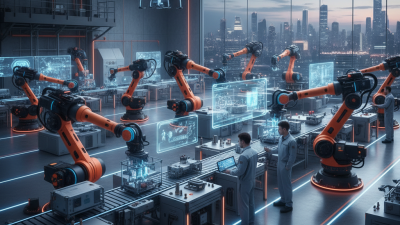
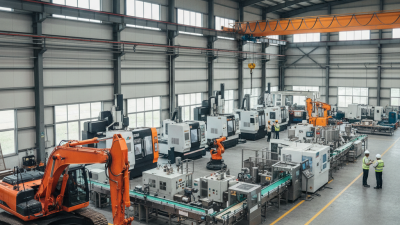
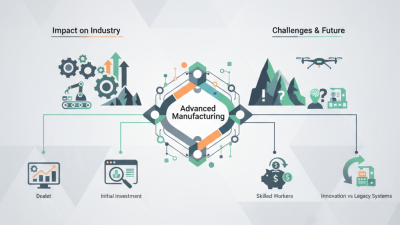
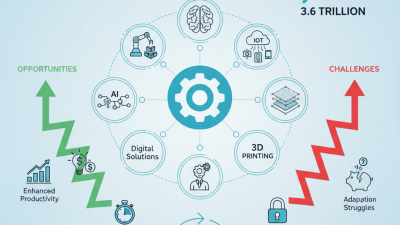
In 2026, manufacturing technology is no longer judged by novelty alone. Factory leaders must connect productivity, resilience, safety, sustainability, and measurable business value. A robotic cell may reduce repetitive labor, while artificial intelligence can identify defects before products leave the line. Digital twins can test layout changes without stopping production. Additive manufacturing may shorten prototyping cycles, especially for customized parts and complex geometries.
The best choice depends on the factory’s real conditions. A high-volume automotive plant needs different tools from a small medical-device manufacturer. Existing equipment, workforce skills, energy costs, data quality, and compliance requirements all influence the decision. Practical experience shows that integration often matters more than purchasing the newest machine. A fast robot cannot compensate for poor process design or unreliable sensors.
This article compares leading manufacturing technologies through performance, scalability, cost, workforce impact, and environmental responsibility. It also considers evidence from industrial applications rather than relying on promotional claims. Some predictions may prove wrong. Technology adoption rarely follows a perfect plan. That is normal.
The strongest solution in 2026 may be a coordinated system, not one spectacular invention. Human expertise still matters. Workers understand unusual sounds, material behavior, and production bottlenecks that software can miss. Meanwhile, responsible manufacturers must validate artificial intelligence outputs, protect operational data, and measure results over time. A balanced evaluation can reveal which manufacturing technology delivers genuine improvement, and which only creates an impressive demonstration.
Manufacturing technology in 2026 means more than machines on a factory floor. It covers the tools, processes, software, and data systems that convert materials into reliable products. Its scope now includes robotics, additive manufacturing, digital twins, industrial sensors, artificial intelligence, and energy management. Cybersecurity and workforce training also belong in this definition.
The scale is significant. The International Federation of Robotics reported 541,302 industrial robots installed worldwide in 2023, showing how automation has moved beyond specialist plants. Deloitte’s 2024 Smart Manufacturing and Operations Survey found that 86% of surveyed leaders considered smart manufacturing important for competitiveness during the next five years. These figures suggest a wider shift from isolated equipment toward connected production systems. A technician may now inspect a robotic cell, review vibration data, and adjust a digital production model during one shift.
The scope remains practical, not magical. A digital twin can reveal heat buildup near a cutting tool, but poor sensor placement can produce misleading results. Artificial intelligence may detect defects, yet it still needs clean images and experienced operators. That gap matters. The best technology depends on product complexity, production volume, energy use, maintenance skills, and data quality. It also requires traceable decisions, safe human-machine interaction, and responsible handling of operational data. Reports often measure investment and adoption, but they cannot fully measure local maintenance realities. A factory with fewer advanced tools may outperform a highly automated site with weak processes.
Manufacturing technology in 2026 includes subtractive, formative, additive, digital, and automated production methods. There is no single best technology for every application: the optimal choice depends on tolerance, production volume, material, geometry, tooling requirements, and cost.
The chart compares representative typical dimensional tolerances. Lower values indicate tighter dimensional control. Actual results vary with machine configuration, material, part size, tooling, process parameters, and inspection conditions.
What Is the Best Manufacturing Technology in 2026?
The best manufacturing technology should be judged by evidence, not novelty. The right choice depends on the product, workforce, and production environment. Start with measurable criteria: output rate, dimensional accuracy, energy use, maintenance time, and total cost. A fast machine loses value when calibration delays production. Ask for data from similar materials and batch sizes. Lab demonstrations can mislead. On-site trials reveal vibration, dust, changeover problems, and operator learning curves.
Safety, reliability, and compliance require equal attention. Evaluate guarding, emergency controls, software updates, training demands, and documented maintenance procedures. Independent testing can strengthen confidence, especially when performance claims seem unusually high. Calculate the full lifecycle cost, including installation, spare parts, technical support, downtime, and eventual replacement. Energy efficiency matters too, but it should be measured during real production, not idle operation.
Scalability is another practical test. Can the system handle new materials, larger batches, or tighter tolerances without major rebuilding? Integration with existing equipment may determine success more than processing speed. Skilled operators should be involved early. They notice awkward interfaces and cleaning tasks that spreadsheets miss. Cybersecurity and data ownership also deserve clear answers. Some evaluations overvalue automation and undervalue repairability. That is a weakness. A technology may perform brilliantly for six months, then expose hidden costs through difficult maintenance. Leave room for uncertainty, and record what the trial does not prove.
What Is the Best Manufacturing Technology in 2026?
The answer depends on the factory’s process, workforce, and product complexity. Leading manufacturing technologies now include industrial robots, artificial intelligence, digital twins, additive manufacturing, and industrial Internet of Things systems. Each solves a different problem. Robots handle repetitive welding, packing, and material movement with consistent precision. AI examines vibration, temperature, and production data to detect equipment failures earlier.
According to the International Federation of Robotics’ World Robotics 2024 report, manufacturers installed 541,302 industrial robots globally in 2023.
Applications are becoming more connected. Digital twins can simulate a production line before engineers change physical equipment. This helps reduce stoppages and material waste. Additive manufacturing supports lightweight prototypes, customized tools, and complex replacement parts. Industrial sensors provide live visibility across machines, energy use, and product quality.
The World Economic Forum’s Future of Jobs Report 2025 states that 86% of employers expect artificial intelligence and information-processing technologies to transform their businesses by 2030.
However, advanced technology is not automatically better. A small factory may gain more from reliable sensors than an expensive autonomous line. Deloitte’s 2024 Smart Manufacturing and Operations Survey found that 86% of respondents viewed smart manufacturing as important for future competitiveness.
That figure is persuasive, but implementation remains difficult. Poor data can mislead AI systems. Untrained operators can weaken a strong investment. The best technology may be the one workers can maintain at 2 a.m. Mistakes still happen. That reality deserves more attention.
What Is the Best Manufacturing Technology in 2026?
The best manufacturing technology depends on the production need, not the newest machine. A high-volume line may require automated forming, stable cycle times, and continuous quality checks. Small batches need flexible equipment, quick changeovers, and simple programming. For complex parts, additive manufacturing can reduce tooling costs and shorten development cycles. However, it may not deliver the surface finish or speed required for large orders.
Start with the part and process. Measure material behavior, dimensional tolerances, batch size, labor availability, and expected product changes. A factory producing metal brackets may benefit from automated machining, while a facility making customized medical components may need advanced printing and inspection. Energy use matters too. A fast machine can still be expensive if it consumes excessive power or demands frequent maintenance.
Look beyond the purchase price. Calculate tooling, training, downtime, spare parts, inspection, and waste over several years. Ask operators to test the technology with real materials. Their feedback often reveals practical issues that brochures miss. I once underestimated setup time during a process evaluation. The machine performed well, but changeovers reduced its actual output. That mistake changed the recommendation.
No single answer fits every factory. The right choice balances quality, speed, flexibility, safety, and long-term reliability. Keep testing. Production conditions change.
What Is the Best Manufacturing Technology in 2026?
Manufacturing beyond 2026 will not be defined by one superior machine. It will depend on connected systems that respond quickly to real production conditions. Digital twins can simulate a production line before engineers change it. Edge-based artificial intelligence can detect vibration, heat, and alignment problems near the machine. International Federation of Robotics data recorded 541,302 industrial robot installations worldwide in 2023, a 2% annual increase. That growth suggests automation is becoming practical, not merely experimental.
The strongest factories will combine robotics, additive manufacturing, advanced sensors, and low-carbon process technologies. A technician may inspect a printed metal part beside a robotic cell, while software adjusts production from live energy data. The Energy Technology Perspectives 2024 report identifies clean-energy manufacturing as a rapidly expanding industrial opportunity. Yet implementation remains uneven. Older equipment often lacks reliable data connections. Human training also matters. The World Economic Forum’s Future of Jobs Report 2025 estimates that 39% of workers’ core skills may change by 2030. That figure feels realistic on a factory floor.
Not every process needs artificial intelligence. Some systems create complexity without measurable gains. I have seen simple visual checks outperform expensive software when workers understand the defect clearly. The better question is practical: can this technology reduce waste, improve safety, and remain useful when conditions change? Capability matters, but disciplined deployment matters more.
Comparative outlook based on industrial maturity, implementation value, scalability, resilience, sustainability, and workforce impact. Scores use a five-point assessment scale.
| Manufacturing Technology | 2026 Maturity | Productivity Potential (1–5) |
Quality Potential (1–5) |
Sustainability Potential (1–5) |
Resilience Potential (1–5) |
Most Suitable Applications | Main Benefits | Key Constraints |
|---|---|---|---|---|---|---|---|---|
| Industrial Artificial Intelligence and Machine Learning | Scaling | 5/5 | 5/5 | 4/5 | 4/5 | Predictive maintenance, production scheduling, process optimization, demand forecasting, and automated root-cause analysis. | Faster decisions, lower unplanned downtime, improved yield, and better use of production data. | Data quality, cybersecurity, model validation, integration with legacy equipment, and shortage of analytical skills. |
| Digital Twins and Industrial Simulation | Scaling | 4/5 | 4/5 | 4/5 | 5/5 | Factory layout planning, production-line balancing, virtual commissioning, asset monitoring, and scenario testing. | Lower commissioning risk, improved capacity planning, faster engineering changes, and reduced physical prototyping. | High-quality data models are required; deployment can be complex across multiple sites and suppliers. |
| Collaborative Robots and Autonomous Mobile Robots | Commercial | 4/5 | 3/5 | 3/5 | 4/5 | Material handling, machine tending, assembly assistance, internal logistics, packaging, and repetitive inspection tasks. | Flexible automation, reduced ergonomic strain, shorter changeover times, and support for labor-intensive operations. | Safety validation, workflow redesign, limited performance in highly unstructured environments, and integration costs. |
| Industrial Internet of Things and Edge Computing | Commercial | 4/5 | 4/5 | 4/5 | 4/5 | Real-time equipment monitoring, energy management, condition monitoring, traceability, and connected production assets. | Real-time visibility, faster responses, reduced data latency, and improved equipment utilization. | Interoperability, device management, network security, sensor calibration, and inconsistent data standards. |
| AI-Powered Machine Vision and Inspection | Scaling | 4/5 | 5/5 | 3/5 | 3/5 | Surface inspection, dimensional verification, defect detection, sorting, and compliance documentation. | Consistent inspection, earlier defect detection, lower scrap, and improved traceability. | Requires representative training data, stable lighting, process-specific validation, and regular model monitoring. |
| Additive Manufacturing and Advanced 3D Printing | Commercial | 3/5 | 4/5 | 4/5 | 5/5 | Rapid tooling, spare parts, customized components, lightweight structures, and low-volume production. | Shorter development cycles, lower material waste in suitable applications, part consolidation, and localized production. | Material qualification, production speed, surface finishing, certification, and cost competitiveness at high volumes. |
| Advanced Process Control and Autonomous Manufacturing | Scaling | 5/5 | 5/5 | 4/5 | 4/5 | Continuous processing, chemical production, food processing, semiconductor operations, and high-volume discrete manufacturing. | Stable process conditions, reduced variation, higher throughput, and improved repeatability. | Requires reliable instrumentation, process expertise, robust controls, and strong change-management practices. |
| Low-Carbon Manufacturing and Industrial Energy Management | Scaling | 3/5 | 3/5 | 5/5 | 4/5 | Energy-intensive plants, electrified processes, heat recovery, renewable-power integration, and carbon-accounting systems. | Lower energy consumption, reduced emissions, improved regulatory readiness, and greater exposure to energy-price volatility. | Capital requirements, infrastructure constraints, process heat limitations, and variable energy availability. |
| Industrial Cybersecurity and Zero-Trust Architecture | Essential | 3/5 | 3/5 | 3/5 | 5/5 | Operational technology networks, connected factories, remote maintenance, supplier access, and critical production systems. | Reduced operational risk, improved continuity, stronger access control, and faster incident response. | Legacy equipment, limited security budgets, skills shortages, and the need to avoid disrupting production. |
| Advanced Materials and Functional Coatings | Developing | 3/5 | 4/5 | 4/5 | 4/5 | Lightweight components, corrosion protection, wear resistance, thermal management, batteries, and high-performance tooling. | Longer component life, lighter products, improved operating efficiency, and potential material reduction. | Scale-up complexity, qualification requirements, supply-chain availability, and recycling considerations. |
| Human-Centered Manufacturing and Augmented Reality | Developing | 3/5 | 4/5 | 2/5 | 4/5 | Operator training, guided assembly, remote expert support, maintenance instructions, and complex work instructions. | Faster onboarding, fewer assembly errors, improved knowledge transfer, and support for aging workforces. | Worker acceptance, content creation, device ergonomics, integration with production systems, and data privacy. |
Arsun Engineers is the well-known manufacturer, exporter, and supplier of highly operational machines.