Top Benefits of Using Intensive Mixers in China for Global Buyers?
In the evolving landscape of manufacturing, the role of Intensive mixers has gained significant attention. These advanced blending machines provide remarkable efficiency and consistency in the production process. Global buyers, especially those in China, find themselves at the crossroads of innovation and practicality.
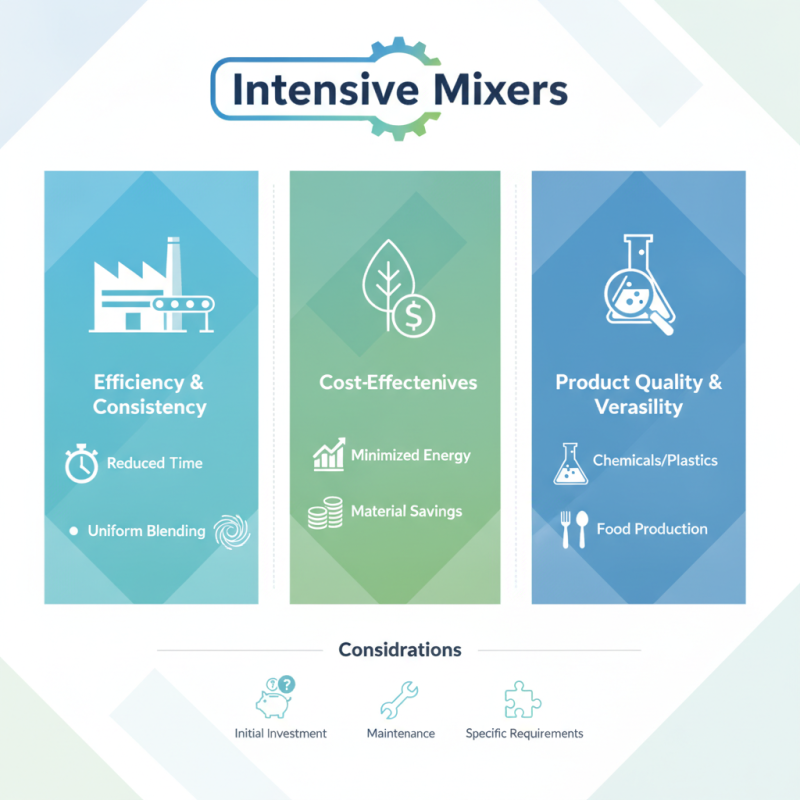
Intensive mixers excel in the mixing of various materials, enhancing product quality. They are particularly useful in industries like plastics, chemicals, and food production. This equipment not only reduces mixing time but also minimizes energy consumption, making it a cost-effective choice. The unique design of an intensive mixer allows for thorough blending, ensuring that even the most challenging materials reach a uniform consistency.
However, potential buyers must consider several factors before making a decision. The initial investment can be substantial, and maintenance is crucial for optimal performance. Moreover, understanding the specific requirements of your production line is vital. A mismatch in expectations may lead to unsatisfactory outcomes. As global buyers explore the benefits of intensive mixers, they must weigh the advantages against their operational needs and financial constraints.
Top Benefits of Using Intensive Mixers in China for Global Buyers
Intensive mixers are gaining popularity among global buyers sourcing from China. These machines offer a unique blend of efficiency and performance, crucial for various industries. They are designed to handle complex mixes with precision. This capability results in uniformity, which is essential for product quality. Many manufacturers appreciate how well these mixers integrate into their production lines.
One advantage is their versatility. They can process a wide range of materials. This flexibility can enhance a company’s product offerings. However, it requires careful selection to meet specific production needs. Additionally, the energy efficiency of these mixers is notable. Reducing energy consumption means lower operational costs. Businesses aim to remain competitive and sustainable.
Quality control remains a significant concern. Buyers must ensure they work with reliable suppliers. Some suppliers might overlook quality during mass production. Thus, visiting factories or obtaining samples can provide clarity. Establishing a good relationship with manufacturers can mitigate risks related to sourcing. Communication is key to achieving optimal results.
Advancements in Intensive Mixer Technology and Their Impact on Efficiency
Intensive mixers have evolved significantly, enhancing production processes in various industries. The latest technology in these mixers focuses on improving efficiency. These advancements allow for better mixing quality while reducing energy consumption. With features like real-time monitoring, operators can adjust parameters instantly for optimal results.
China’s manufacturing sector benefits greatly from these innovations. The ability to achieve uniform consistency in materials boosts overall product quality. Additionally, the reduction in mixing time translates to faster production cycles. However, not all mixers are created equal. Some users report challenges in adapting to new technologies. Training is critical to harness the full potential of these machines.
As buyers look to invest in intensive mixers, they should consider the specific needs of their operations. Understanding the nuances of each design can lead to better choices. Continuous improvement in technology will undoubtedly shape the future landscape of mixing solutions. Global buyers must stay informed to make reliable decisions.
Cost-Effectiveness: Analyzing Savings from Using Intensive Mixers
When considering cost-effectiveness in manufacturing, intensive mixers stand out. These machines use advanced technology, leading to reduced processing times. This efficiency often results in lower operational costs. For global buyers, this translates into significant savings over time.
Intensive mixers also require less energy compared to traditional mixing methods. This means that companies can benefit from lower electricity bills. Additionally, they maintain consistent quality, reducing waste. Each batch produced meets quality standards, minimizing rework. The investment in an intensive mixer can pay off quickly in a streamlined process.
However, buyers should evaluate the initial costs and potential return on investment. Not all mixers are the same, and performance may vary. Conducting thorough research is essential. Understanding these machines helps buyers make informed decisions. Balancing short-term expenses against long-term savings is crucial for success.
Quality Improvement: How Intensive Mixers Enhance Product Consistency
Intensive mixers play a crucial role in enhancing product consistency across various industries. In China, these machines facilitate the production of high-quality materials. They ensure that ingredients are uniformly mixed, which improves not only texture but also performance. A recent industry report highlighted that using intensive mixers can reduce production variability by up to 30%. This consistency is essential for maintaining brand reputation and customer satisfaction.
Quality improvement involves careful monitoring during production. Implementing rigorous testing protocols can reveal inconsistencies in mixes. Using an intensive mixer provides the control needed to minimize these issues. Data shows that companies adopting these mixers report a 20% decrease in product defects. It’s vital to train operators to understand the equipment's capabilities to maximize benefits.
Tip: Regular maintenance of your mixer is key. Schedule frequent checks to prevent unexpected breakdowns.
Moreover, user feedback is critical. Collecting insights from production workers can reveal problems quickly. They often notice issues that automated systems miss. Investing in employee training can further bolster quality assurance.
Tip: Develop a culture of continuous improvement. Encourage team discussions about mixing processes to enhance outcomes.
Market Trends: The Growing Demand for Intensive Mixers in Global Markets
The demand for intensive mixers is on the rise globally, especially in China. These machines are crucial in various industries, enhancing the efficiency of material processing. They are particularly valued for their ability to achieve uniformity in mixing processes. This consistency reduces waste and improves the quality of the final products. Buyers appreciate how these mixers streamline production lines.
Furthermore, the market for intensive mixers is adapting to changing consumer needs. Innovations in technology are improving their design, making them more energy-efficient and user-friendly. This shift reflects broader trends in sustainability and automation across industries. Despite the advantages, some buyers express concerns about the upfront investment costs. Evaluating long-term benefits versus initial expenditure is essential.
As global competition intensifies, producers must balance quality and cost. The evolving preferences for sustainability encourage manufacturers to refine their processes. There are risks in adopting new technologies without thorough understanding. It is crucial for buyers to conduct diligent research. Engaging with industry experts enhances knowledge about the latest advancements and market dynamics.
Top Benefits of Using Intensive Mixers in China for Global Buyers
Conclusion
Intensive mixers have become a pivotal tool for global buyers seeking efficiency in various industries. The advancements in intensive mixer technology have significantly enhanced production processes, leading to improved operational efficiency. With a focus on cost-effectiveness, these mixers are designed to provide substantial savings by optimizing resource use, thereby lowering production costs. Additionally, intensive mixers contribute to quality improvement by ensuring product consistency, which is essential for businesses aiming to meet and exceed customer expectations.
The growing demand for intensive mixers in global markets reflects a shift towards more sustainable manufacturing practices. Many producers are adopting eco-friendly practices in the production of intensive mixers, aligning with the increasing emphasis on sustainability. As industries continue to evolve, the adoption of intensive mixers not only meets current market trends but also positions businesses to thrive in a competitive landscape by enhancing efficiency and promoting sustainable practices.
